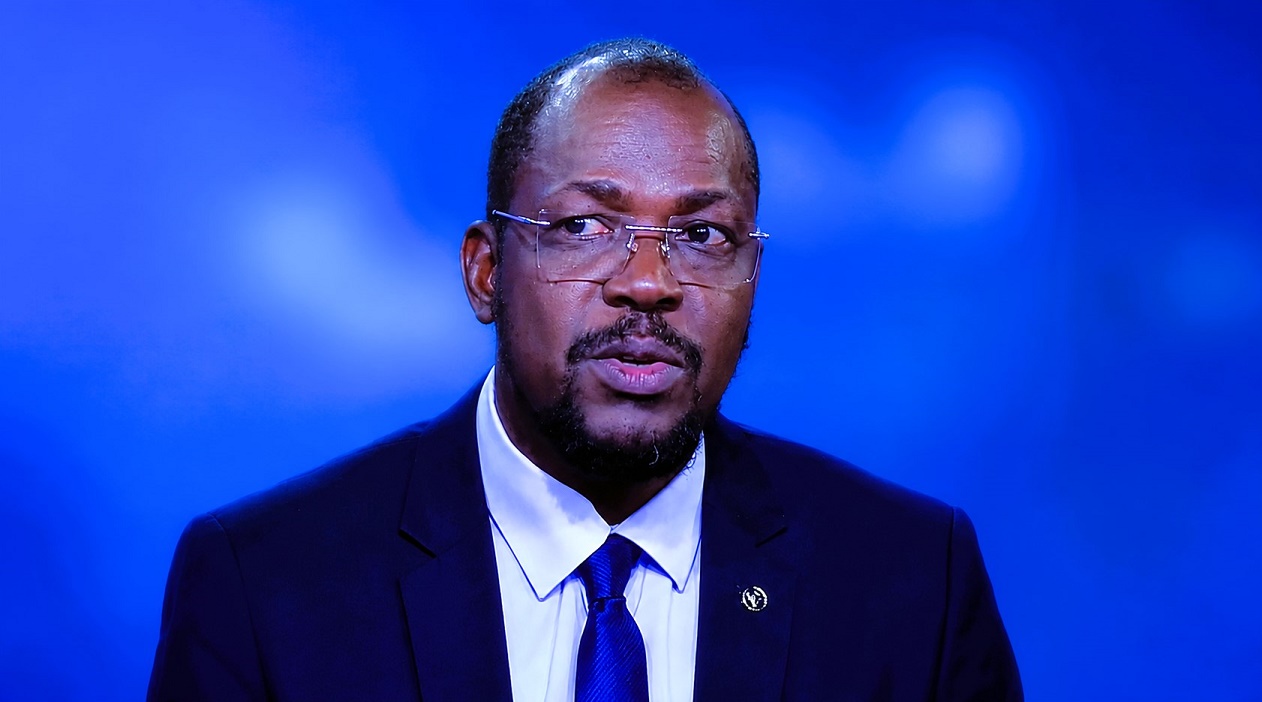
Can dialogue with armed groups in northern Mali lead to lasting peace without compromising national unity? What role could religious leaders play in a potential transition? In an exclusive interview, Étienne Fabaka Sissoko, spokesperson for the Coalition of Forces for the Republic (CFR), outlines his vision for resolving the crisis, sets clear red lines, and emphasizes that “dialogue does not mean alliance.”
Security crisis in Mali and Bamako
Étienne Fabaka Sissoko assesses the current security situation in Mali, particularly in Bamako, and addresses the impact of blockades. He rejects the idea that blockades could ever be considered a viable strategy, stating that they primarily inflict suffering on civilians rather than resolving conflict. The CFR spokesperson highlights the fragility of supply chains in Bamako, rising prices, and the growing anxiety among families. He stresses that for a landlocked nation like Mali, controlling supply corridors is a matter of national sovereignty.
The CFR does not endorse military-only solutions. Instead, it advocates for a political response that protects civilians, secures supply routes, and lays the groundwork for a sustainable exit from war.
Malian peace: a top priority
Since its establishment in December 2025, the CFR has gained traction as a platform for national salvation. Sissoko notes a genuine demand among Malians for peace and an alternative to the current crisis. The CFR positions itself not as a traditional political party but as a unifying force offering a responsible and structured Malian voice. Its goal is to bridge the gap between prolonged military rule and national stagnation.
Relationship with armed groups
When asked about the CFR’s relationship with the Azawad Liberation Front (FLA), Sissoko clarifies that the CFR is not the political wing of the FLA, nor is the FLA its military counterpart. Dialogue with all stakeholders does not equate to alliance or coordinated action. The CFR is a civilian movement that abstains entirely from military activities. Its core principles include rejecting any partition of Mali and advocating for political solutions to territorial and governance issues.
No automatic legitimacy for armed groups
Sissoko reflects on the CFR’s readiness to assume political responsibilities in the event of a regime collapse. The CFR does not base its strategy on violent state collapse or the military victory of armed groups. The coordinated attacks of April 25, 2026, have pushed Mali into a dangerous political zone. However, this does not grant armed groups automatic legitimacy to shape the country’s future.
The CFR envisions a civilian-led transition aimed at restoring public freedoms, securing populations, initiating national dialogue, drafting a new Constitution, and organizing elections. The presidential election should mark the culmination, not the starting point, of this process. Without minimal security and national consensus, history risks repeating itself.
Role of Imam Mahmoud Dicko
Sissoko dismisses the notion of Imam Mahmoud Dicko as a substitute political leader. Instead, Dicko could serve as a moral authority to ease tensions, facilitate dialogue, and restore trust among Malians. However, executive responsibilities must rest with legitimate civilian institutions. Political legitimacy must derive from the people and the ballot box.
Dialogue with JNIM: red lines
The CFR supports dialogue with the Group for the Support of Islam and Muslims (JNIM) but emphasizes that such dialogue is neither capitulation nor reward. It is a tool to end war and protect civilians. The primary challenge lies in JNIM’s affiliation with Al-Qaeda, which is incompatible with a national peace process.
The CFR’s non-negotiable red lines include preserving Mali’s unity, maintaining a republican state, protecting fundamental freedoms, severing ties with transnational armed agendas, halting attacks on civilians, and ensuring accountability for grave crimes. Regarding Iyad Ag Ghali, the CFR does not base its strategy on presumed intentions. Only verifiable actions matter. If factions within JNIM wish to engage in a strictly Malian peace process, they must demonstrate it through concrete steps: halting attacks, protecting civilians, facilitating humanitarian access, severing ties with Al-Qaeda, and accepting Mali’s unity. The attacks in neighboring countries underscore that the issue extends beyond Mali’s borders. Any rupture with transnational agendas must be proven, not merely asserted.
Decentralization and governance
Sissoko addresses the debate on decentralization and federalism, rejecting the reductionist focus on the application of Sharia law in certain regions. The real issue, he argues, is the collapse of local governance. In many areas, the state is absent, justice is inaccessible, and public services are failing. The CFR does not advocate for Sharia law but proposes a Malian Republic that integrates local mediation within a strictly constitutional framework. Principles include respect for the Constitution, equality of citizens, protection of women and children, and the right to appeal to national justice.
The debate on decentralization must center on governance and state efficiency, not caricatures.
The CFR envisions a unitary, sovereign, and indivisible Mali, but one that is more regionalized. Local authorities should have greater responsibilities and resources, while the state retains its sovereign functions. Concentrating everything in Bamako is inefficient for a country as vast as Mali. The state must guarantee national unity while empowering territories to manage local affairs.
Transition and state restoration
Sissoko outlines the CFR’s transition program, which prioritizes restoring a functional state. Key proposals include reopening schools, strengthening the judiciary, protecting populations, and reviving the economy. The CFR advocates for an independent judiciary, support for teachers, enhanced security forces, and securing economic corridors. The crisis is also humanitarian. Restoring access to education, justice, security, energy, and food is the first step toward national reconstruction.
Alliance of Sahel Democrats
The CFR’s emergence coincided with the creation of the Alliance of Sahel Democrats (ADS). Sissoko describes the ADS as a civic and democratic convergence among Malian, Burkinabé, and Nigerien citizens who share a common diagnosis: the Sahel crisis is institutional and democratic. The ADS is not a military structure or a unified political command. The CFR remains a Malian initiative addressing Mali’s crisis. The ADS aims to coordinate advocacy, defend public freedoms, and foster solidarity among Sahelian democrats facing shrinking political spaces.
The CFR does not propose revenge, partition, theocracy, or a mechanical return to the old system. It advocates for a transition led by civilians, a structured national dialogue, territorial refoundation, a republican army, and the restoration of popular choice. The conviction is clear: Mali will not be saved by a strongman but by a strong national pact.