Libreville tackles urban chaos with renewed vigor
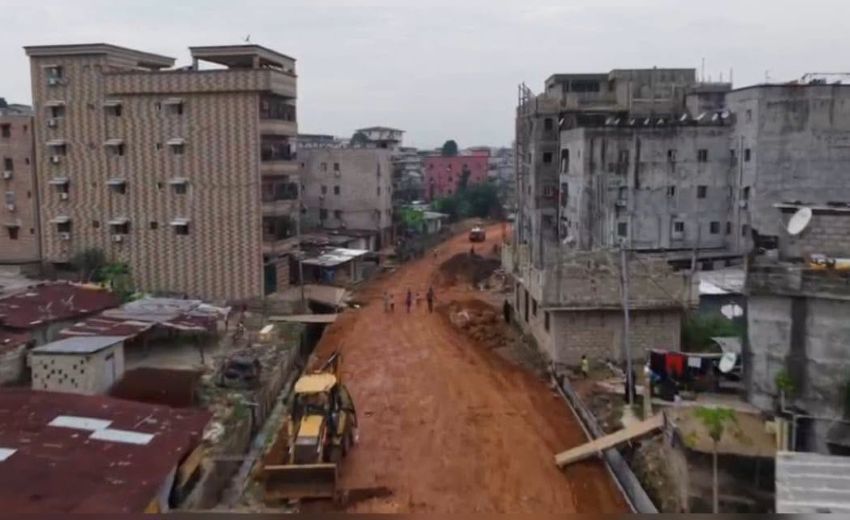
Libreville, July 13, 2026 — The 72-hour ultimatum issued by Libreville’s Mayor Eugène M’ba expires tonight. Within hours, the capital’s long-awaited cleanup campaign will shift into high gear, targeting illegal street vendors, unauthorized structures, abandoned vehicles, and informal businesses occupying public spaces.
The municipality’s stated goal is unambiguous: restore order to the urban landscape, improve mobility, enhance hygiene, and position Gabon’s capital as a modern, clean, and inviting city. Few would dispute the urgency of this mission. Over time, sidewalks, intersections, and even roadways in Libreville have been progressively claimed by makeshift markets, private extensions, and unregulated commerce, undermining the city’s functionality.
For many residents, the mayor’s intervention is long overdue. A political and economic hub cannot thrive amid chronic urban disorder—safety risks, sanitation hazards, and economic stagnation inevitably follow. The campaign reflects a genuine demand for better urban governance, one where public spaces are respected and communal assets are protected.
Yet as the deadline approaches, another perspective is gaining traction. Not one that opposes municipal authority, but one that urges a broader, more constructive approach.
Beyond demolition and eviction
A truly modern municipality isn’t measured solely by its enforcement capacity. It’s judged by its ability to guide citizens, anticipate social shifts, and deliver sustainable solutions.
This viewpoint isn’t meant to undermine the campaign’s legitimacy. Rather, it’s a call to deepen its impact. Behind every sidewalk vendor or unlicensed garage lies a deeper economic reality: youth unemployment, low household incomes, scarce affordable commercial space, high rental costs, and the relentless expansion of survival economies that spill into public areas by default.
The risk is clear: displaced vendors and businesses may simply resurface elsewhere, in new forms, in other neighborhoods. Experience from African metropolises—including Libreville—shows that eviction campaigns rarely yield lasting results without parallel strategies for relocation and economic inclusion.
Addressing root causes, not just symptoms
The conversation has evolved. It’s no longer just about restoring order—it’s about shaping the kind of city Libreville will become in the coming decades.
Practical solutions could include developing new neighborhood markets, designating zones for artisans, guiding informal traders toward formalization, and fostering dialogue between city services and communities. These aren’t just ancillary measures—they are the building blocks of a long-term urban policy.
As urban analyst Raphaël Mouissi-Ntoko aptly puts it, treating the fever without curing the illness is a losing strategy. The lesson resonates across rapidly urbanizing African capitals like Lagos, Kigali, Abidjan, and Casablanca—cities that have learned the hard way that urban renewal requires a balance of firm regulation and social support.
Authority is non-negotiable. A city cannot prosper without rules, without respect for public property, or without protecting shared infrastructure. Yet history teaches that enduring authority is built on more than enforcement—it’s built on clarity, education, and real solutions.
A new urban contract in the making
Libreville’s campaign could mark more than a sanitation drive—it could herald a new social contract between the city and its people. The municipal team now has a rare opportunity: to restore order without severing dialogue, to uphold the law without ignoring social realities, and to enforce rules while creating opportunity.
The stakes transcend sidewalks and unauthorized structures. They touch on whether African capitals in the 21st century can harmonize population growth, economic development, and social cohesion. Libreville has chosen to act swiftly in the face of a critical situation. The next challenge will be to address the problem at its source—ensuring that the reclamation of public space isn’t just a bureaucratic win, but the first step toward a more inclusive, humane, and sustainable urban future for Gabon’s capital.