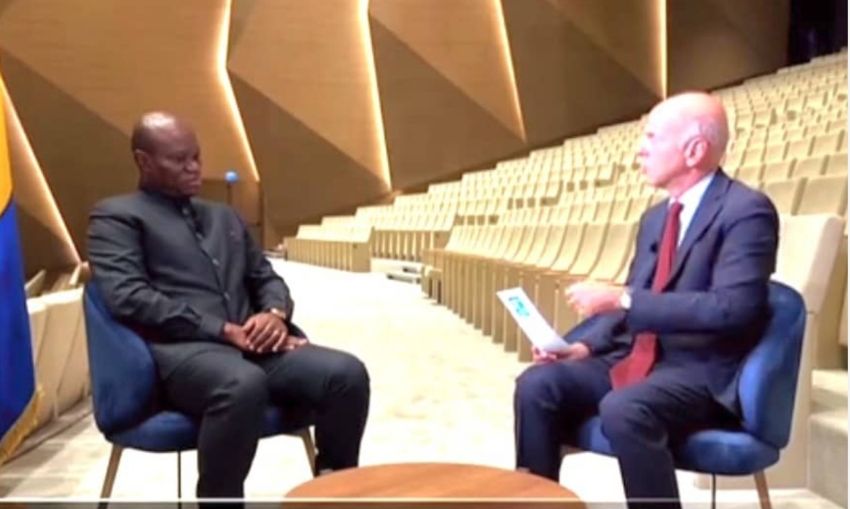
Libreville, June 3, 2026 — President Brice Clotaire Oligui Nguema has used a high-profile interview to outline Gabon’s strategic direction, emphasizing economic sovereignty, progressive reforms, and a commitment to democratic governance free from dynastic rule.
Reforms rooted in long-term vision
Addressing criticisms about the pace of infrastructure development, particularly in water and electricity access, Oligui Nguema defended his administration’s multi-year timeline. With over 800 billion CFA francs invested in energy projects, he underscored that meaningful change requires patience, framing his seven-year mandate as a marathon rather than a sprint.
The president acknowledged public frustrations but insisted that structural transformation—rather than quick fixes—will define his legacy. This patient approach has become a hallmark of his governance strategy.
Economic sovereignty as a guiding principle
The most consequential remarks centered on Gabon’s economic direction. Oligui Nguema confirmed plans to engage with the International Monetary Fund but only after a comprehensive audit of the country’s finances. This cautious stance signals a desire to regain control over debt negotiations before committing to external agreements.
A landmark decision was announced: a 2029 ban on exporting raw manganese. As one of the world’s top producers, Gabon now seeks to process more of its mineral wealth locally. The move sends a clear message to foreign firms like Eramet—local processing facilities must be operational by the deadline or risk losing export privileges. This policy aims to shift Gabon from a raw material exporter to a value-added producer.
Balanced diplomacy without isolation
Oligui Nguema emphasized that sovereignty does not equate to isolation. His upcoming state visit to France in July reflects efforts to maintain strong ties with Paris while avoiding overdependence. Similarly, Gabon declined a U.S. proposal to host deported migrants, reaffirming that such decisions will align with national interests.
The president also highlighted the return of Camp de Gaulle to Gabonese authorities as part of a cooperative—not confrontational—partnership model, contrasting Gabon’s approach with recent trends in the Sahel.
Breaking the cycle of dynastic rule
In a region where power often lingers within families, Oligui Nguema firmly rejected any notion of a political dynasty under his name. He reaffirmed the inviolability of the single seven-year term, renewable once—a pledge that positions Gabon as a champion of democratic alternation.
The interview also touched on former President Ali Bongo Ondimba’s health, with Oligui Nguema framing accountability for past mismanagement as a broader institutional issue rather than a personal one.
The test of implementation
While Oligui Nguema commands significant political capital, public expectations remain sky-high. Gabonians will judge his presidency not by rhetoric but by tangible results. His strategy—sovereign economics, local transformation, balanced diplomacy, and institutional renewal—faces its ultimate trial: execution.
One year into his mandate, the president’s message is clear: Gabon will reclaim control of its economic and political destiny. Whether this vision endures depends on turning promises into progress.