Gabon unveils bold biodiversity roadmap for 2030
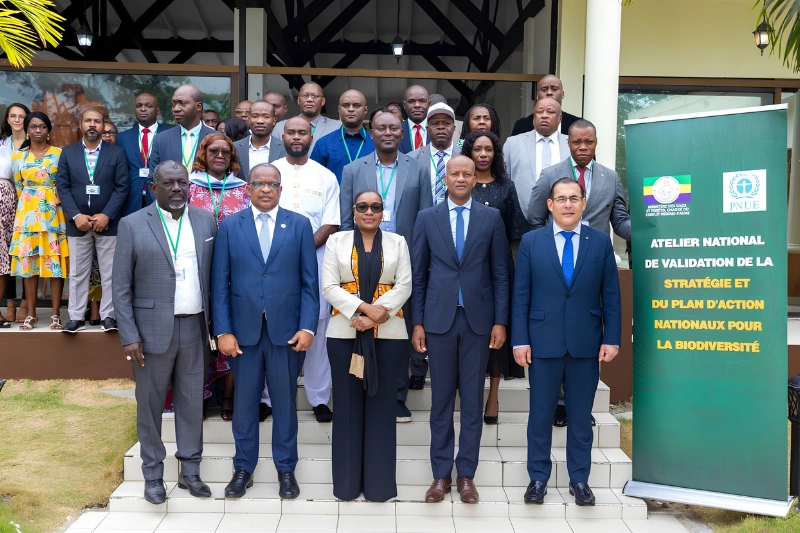
Gabon has taken a decisive step toward safeguarding its natural heritage. Following intensive consultations, the national workshop for validating the National Biodiversity Strategy and Action Plan (SPANB) 2022-2030 concluded this week in Libreville.
The new framework sets ambitious conservation targets, aiming to protect at least 30% of the country’s land, coastal, and marine territories. Designed as a guiding compass for public policies, this strategy seeks to strengthen ecosystem protection while ensuring the sustainable management of Gabon’s remarkable biological wealth.
At its core, the SPANB 2022-2030 aligns with the global commitments adopted under the Kunming-Montréal Agreement. Four key priorities have been identified to drive action by 2030:
- Conservation: Safeguarding 30% of terrestrial, coastal, and marine areas
- Restoration: Revitalizing degraded ecosystems
- Mitigation: Combating threats such as poaching, deforestation, and pollution
- Sustainable financing: Mobilizing resources for long-term conservation efforts
The finalized strategy, incorporating feedback from stakeholders, will be submitted to the Government for final approval before being officially presented to the Convention on Biological Diversity Executive Secretariat. This move will formalize Gabon’s dedication to global biodiversity goals.
From vision to action
Ms. Tsayi Mouvagha, the strategy coordinator, emphasized that the real challenge lies ahead: « The next phase will focus on engaging government agencies, private enterprises, local communities, and civil society to ensure the strategy’s practical implementation across the nation. »
Gabon’s commitment to biodiversity is underscored by its vast forest cover—88% of the country—and 13 national parks. The SPANB 2022-2030 is poised to strike a balance between economic development, resource utilization, and conservation.
However, success hinges on robust funding and genuine collaboration with local authorities, businesses, and riverside communities. Without these pillars, the strategy risks remaining an unfulfilled pledge.