Gabon rejects Trump’s migrant deal in sovereignty stand
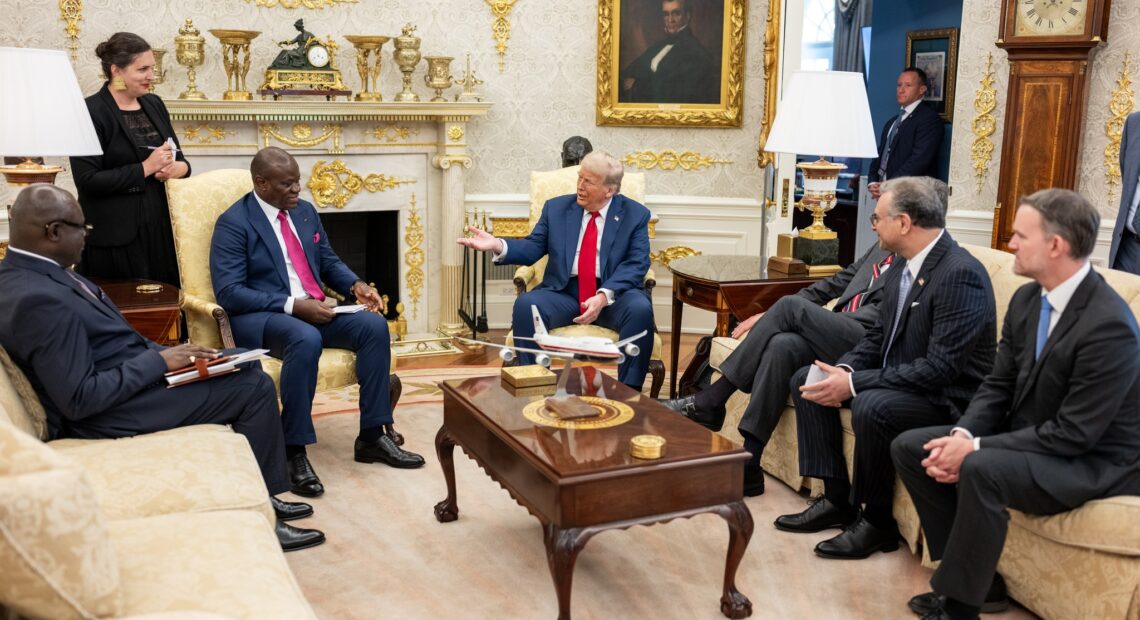
Libreville, June 4, 2026 – By declining to accept migrants expelled from the United States, Gabon’s President Brice Clotaire Oligui Nguema has delivered a political statement that extends far beyond migration policy. His stance underscores a bold assertion of national sovereignty and a fresh diplomatic direction prioritizing Gabon’s interests while maintaining balanced ties with global powers.
Addressing international media, the Head of State left no room for doubt. Responding to a U.S. proposal to transfer deportees to Gabon, he made Gabon’s refusal unequivocally clear to Washington.
« We did not reach an agreement on this issue. I did not accept them on Gabonese soil. I say this openly. Gabon will not endorse an arrangement that does not benefit us. It’s that simple, » declared Brice Clotaire Oligui Nguema.
Migration: a growing global challenge
For years, migration control has emerged as one of the most pressing geopolitical challenges worldwide. Western nations, including the United States under Donald Trump’s administration, have intensified efforts to relocate migrants facing deportation to third-party countries willing to cooperate.
While some African states have entered such agreements—most notably Rwanda with the United Kingdom—Gabon’s refusal to participate carries significant weight.
A refusal without rupture
Gabon’s decision does not signal a diplomatic rift with Washington. On the contrary, during the discussion, Brice Clotaire Oligui Nguema emphasized the strength of relations between Libreville and the U.S., even playfully referring to Donald Trump as « my red-tie friend. »
The message is clear: partnerships and cooperation can continue, but Gabon’s priorities come first.
Sovereignty as guiding principle
This move aligns with a series of recent actions reflecting Gabon’s growing commitment to reasserting national control. Whether in local processing of manganese, renegotiating economic partnerships, or reclaiming the De Gaulle military base, the government is crafting a narrative centered on sovereignty.
In this context, the migration question becomes a symbolic battleground. Accepting expelled migrants would have entailed administrative, social, security, and financial implications difficult to quantify. For a nation focused on economic and social modernization, meeting domestic needs remains the priority.
This position also resonates with a widely shared sentiment across Africa: the continent should not become a dumping ground for the migration crises of wealthy nations.
Balanced diplomacy in action
The true significance of this move may lie in its diplomatic finesse. Gabon has demonstrated that it can refuse a major power’s request without escalating into open confrontation.
In a world where migration disputes often spark political crises, Gabon’s approach—public refusal coupled with respectful discourse toward Washington—projects an image of a sovereign state confident in defending its interests without resorting to hostility.
To international observers, this decision reflects a broader shift in Africa’s relations with global powers. Partnerships remain essential, and cooperation is still vital. Yet African nations now seek to engage in negotiations with greater confidence and autonomy.
Beyond migration, the message from Libreville is unambiguous: Gabon remains open to the world but will not allow its future to be dictated by external forces. In an increasingly fragmented international landscape, this assertion of sovereignty could mark a defining feature of Gabon’s diplomacy in the years ahead.