Gabon builds trust through regional engagement and visible progress
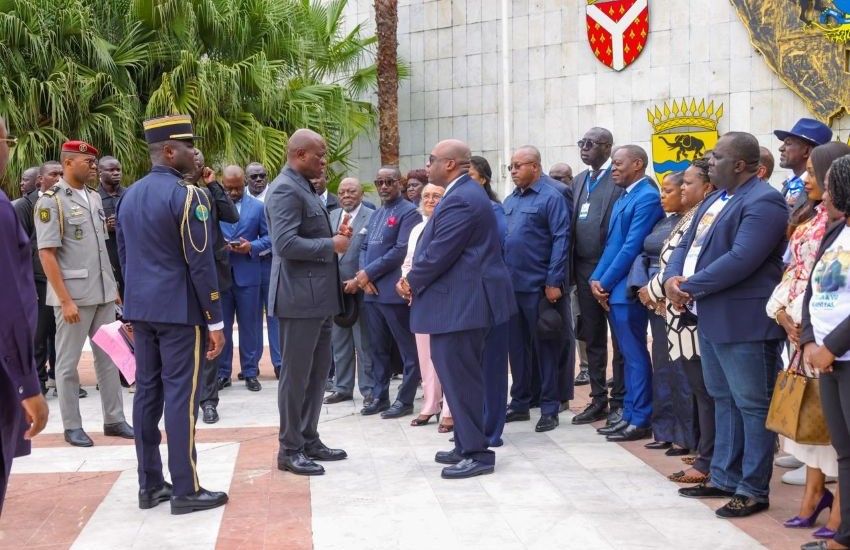
Libreville, Wednesday, July 15, 2026 – An unusual scene in African political practice unfolded recently. A delegation of 150 representatives from Gabon’s Ogooué-Maritime province traveled to the capital, toured key development sites, and engaged directly with the Head of State to assess progress and discuss national priorities.
This institutional initiative, centered on the delegation’s meeting with President Brice Clotaire Oligui Nguema on July 14, reflects a governance approach rooted in tangible results, political proximity, and public policy education.
After days of immersion in Libreville’s major infrastructure projects, representatives from Port-Gentil, Omboué, and Gamba witnessed a capital city undergoing rapid transformation—evidence of the new direction set since the President took office.
Far from a ceremonial visit, the initiative underscores a deliberate effort to bridge the gap between regional territories and national decision-making centers while fostering public understanding of policies shaping Gabon’s future.
Leading by example
The delegation from Ogooué-Maritime was notably diverse, including mayors, municipal and departmental councilors, traditional leaders, neighborhood chiefs, entrepreneurs, influencers, and opinion leaders—an uncommon mix for such an exercise.
The selection of participants was strategic. In any society, opinion leaders significantly influence public perception. Citizens trust what they see over what they hear, placing greater value on firsthand experiences than official statements.
By enabling local actors to witness the progress of infrastructure and key projects firsthand, the executive prioritizes evidence-based communication over political rhetoric.
This approach reinforces transparency and collective accountability while reducing the disconnect between national ambitions and the realities of distant provinces. In a geographically vast country with diverse regional realities, such a strategy strengthens national cohesion and shared ownership of development goals.
Territorial balance as a political necessity
A defining message from the meeting was President Oligui Nguema’s reaffirmation of a gradual, balanced, and inclusive national transformation.
For decades, territorial imbalances have hampered African development, with investments disproportionately favoring capitals while provinces lag in infrastructure and public services.
The President emphasized that every province will receive targeted, phased investments to improve living conditions sustainably. This distinction is critical: equitable territorial development does not mean uniformity but tailored interventions aligned with local needs and potential.
For Ogooué-Maritime—a historically strategic region due to its oil sector and maritime access—this vision paves the way for economic diversification through infrastructure, services, tourism, and blue economy initiatives.
Proximity as a new governance tool
Following their immersion, the provincial representatives requested a direct dialogue with the President to share observations and expectations. The swift approval of this request sends a powerful political signal.
In an era where many democracies struggle with growing distances between leaders and citizens, direct engagement spaces are vital for legitimacy and public efficacy. The President’s emphasis on proximity aligns with a broader goal: making dialogue with national stakeholders a cornerstone of governance.
Today, local elected officials, economic actors, community authorities, and opinion leaders are increasingly invited to contribute to national dynamics. This reflects a more participatory governance model where policy design integrates ground realities alongside central directives.
The reception of Ogooué-Maritime’s stakeholders exemplifies a political method prioritizing listening, education, and concrete demonstration. In a continent where institutional distrust often obstructs reforms, leading by proximity and evidence may well become Gabon’s most enduring legacy.