The French and Moroccan governments have officially declared a “renewed trust” in their bilateral relations following a high-level meeting in Rabat between Prime Minister Sébastien Lecornu and his Moroccan counterpart Aziz Akhannouch. The visit, marked by an emphasis on strategic partnership, comes as part of a broader diplomatic thaw that began in 2024.
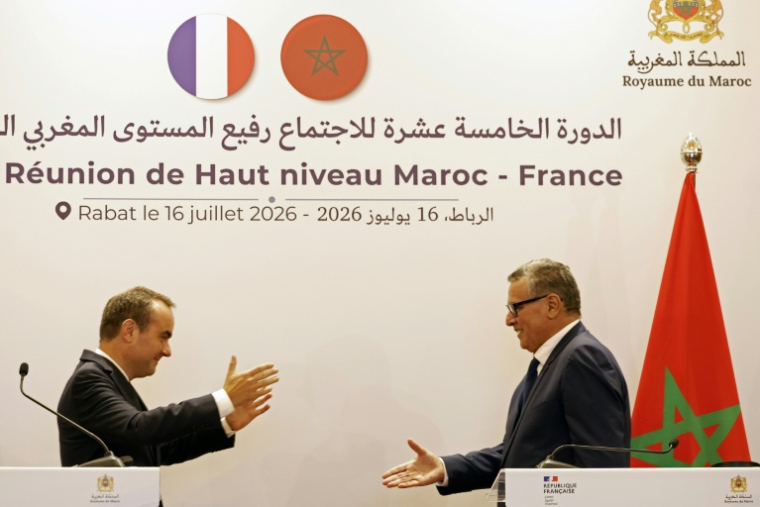
French Prime Minister Sébastien Lecornu (left) and Moroccan Prime Minister Aziz Akhannouch at a press conference in Rabat on July 16, 2026
Lecornu highlighted the “exceptionally positive” state of Franco-Moroccan ties, which have flourished since French President Emmanuel Macron formally recognized Morocco’s sovereignty over Western Sahara in mid-2024—a move that strained relations with Algeria. Macron’s subsequent state visit to Rabat in October 2024 marked the end of three years of diplomatic strain, fueled by espionage allegations and visa restrictions.
This visit culminated in the signing of a landmark “exceptional strengthened partnership,” along with multiple commercial agreements. Now, the two nations are poised to elevate their cooperation to a new level, with a potential state visit by King Mohammed VI to France on the horizon.
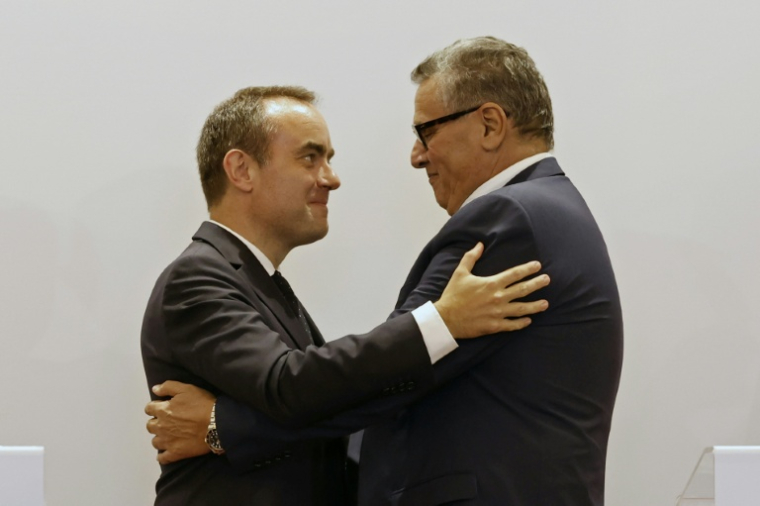
French Prime Minister Sébastien Lecornu (left) and Moroccan Prime Minister Aziz Akhannouch embrace at a joint press conference in Rabat
Addressing bilateral priorities and regional security
Lecornu, leading a delegation of twelve French ministers—including Foreign Minister Jean-Noël Barrot and Interior Minister Laurent Nuñez—stressed the need to strengthen institutional cooperation and deepen mutual trust. The two sides discussed expanding collaboration on security, counterterrorism, and trans-Mediterranean mobility, particularly for students and entrepreneurs.
“Our goal is to take our partnership to the next level,” Lecornu stated, emphasizing the importance of joint action in the Sahel, where both countries face growing jihadist threats. He praised the “excellent cooperation” between French and Moroccan intelligence services, citing recent operational successes against organized crime and drug trafficking.
Morocco’s Foreign Minister Nasser Bourita echoed this sentiment, describing the partnership as grounded in “shared strategic vision, mutual trust, and common ambition.” He also welcomed the resumption of high-level dialogue after a seven-year hiatus, noting that this meeting represented a turning point in bilateral relations.
Challenges and future outlook
Despite the positive momentum, tensions lingered over reports of alleged Moroccan surveillance using the Pegasus spyware—a claim Rabat has consistently denied as “false and unfounded.” French officials declined to comment, with some within the delegation dismissing the issue as outdated.
The 15th edition of the “high-level meeting” between the two delegations concluded with the signing of over a dozen agreements. These include a call for expressions of interest in cross-border electricity interconnection and financing agreements with the French Development Agency for water infrastructure and a new Rabat regional express rail line.
With Morocco now a top priority in French diplomacy in the Maghreb—beyond its historical balancing act with Algeria—both sides are positioning themselves for deeper collaboration across Africa. The outcome of these talks underscores a shared commitment to advancing mutual interests and regional stability.
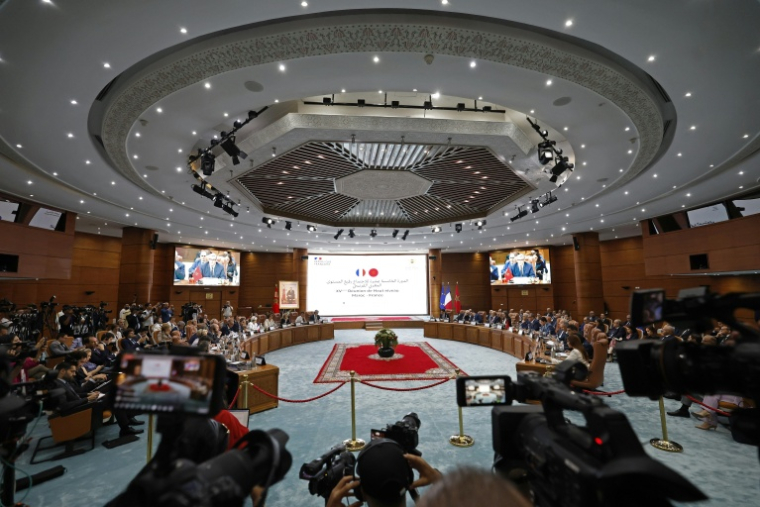
French Prime Minister Sébastien Lecornu and Moroccan delegation at a plenary session in Rabat