French Prime Minister Sébastien Lecornu arrived in Rabat on Wednesday for a landmark official visit, marking a decisive step in deepening Franco-Moroccan relations under a renewed diplomatic framework. The visit, which follows President Emmanuel Macron’s historic 2024 recognition of Morocco’s sovereignty over Western Sahara, signals a strategic realignment in North Africa that has unsettled regional dynamics.
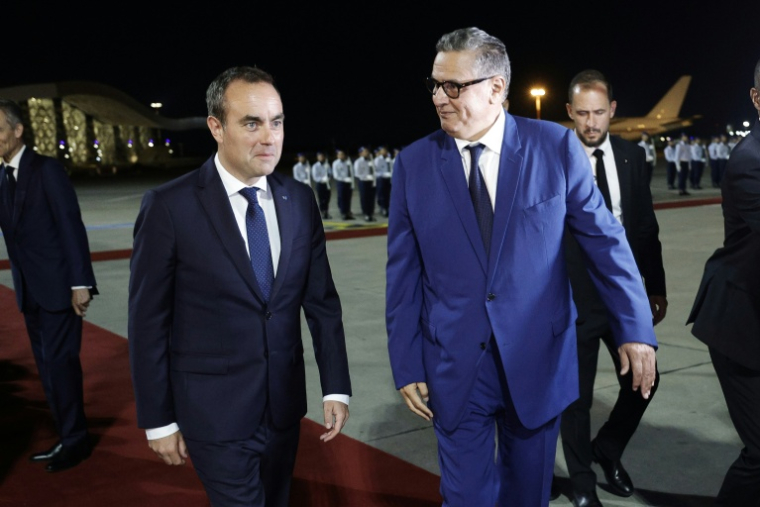
Thursday’s meetings between Lecornu and Moroccan Prime Minister Aziz Akhannouch aimed to solidify a partnership described by both sides as a “game-changer.” The French leader emphasized the need to “scale up” cooperation across security, counterterrorism, and economic domains, framing Morocco as a key ally in addressing shared challenges such as jihadist threats in the Sahel. Earlier, Lecornu paid respects at the Mausoleum of Mohammed V and Hassan II alongside Moroccan government spokesperson Mustapha Baitas, reinforcing the symbolic weight of the visit.
Diplomatic thaw after years of tension
The two nations have navigated rocky waters in recent years, including visa disputes and espionage allegations—particularly regarding Morocco’s alleged use of the Pegasus spyware against French officials and personalities. While Rabat has consistently denied these claims as “false and baseless,” the issue resurfaced this week amid fresh investigations by international media outlets. French and Moroccan officials declined to comment when pressed on the revelations.
Despite these controversies, Macron’s 2024 visit to Rabat—following a three-year standoff—ushered in a new era of cooperation, culminating in a “reinforced exceptional partnership.” This progress sets the stage for a potential state visit by King Mohammed VI to Paris and the drafting of an unprecedented “friendship treaty,” though no timeline has been confirmed.
Sahel security and economic collaboration take center stage
Lecornu, accompanied by twelve ministers including Foreign Affairs’ Jean-Noël Barrot and Interior’s Laurent Nunez, underscored France’s pivot toward Rabat as its primary partner in the Maghreb, prioritizing Morocco over Algeria in counterterrorism efforts. The shift reflects Algeria’s reluctance to share intelligence despite resumed bilateral cooperation with Paris.
Over a dozen agreements are expected to be signed by the end of the talks, spanning sectors from infrastructure—including a proposed Rabat regional express rail network—to defense. Defense collaborations may explore arms procurement partnerships, while migration and cultural exchanges will also feature prominently in the bilateral roadmap.
The revival of the High-Level Meeting, a dialogue mechanism dormant since 2019, was hailed by Lecornu as a “pivotal moment” to redefine Franco-Moroccan ties. Akhannouch, for his part, stressed the urgency of implementing 2024 commitments and preparing for future milestones, signaling a shared commitment to long-term strategic alignment.