Dioura attack: nearly 80 Malian soldiers killed, a blow that tests the junta’s security promises
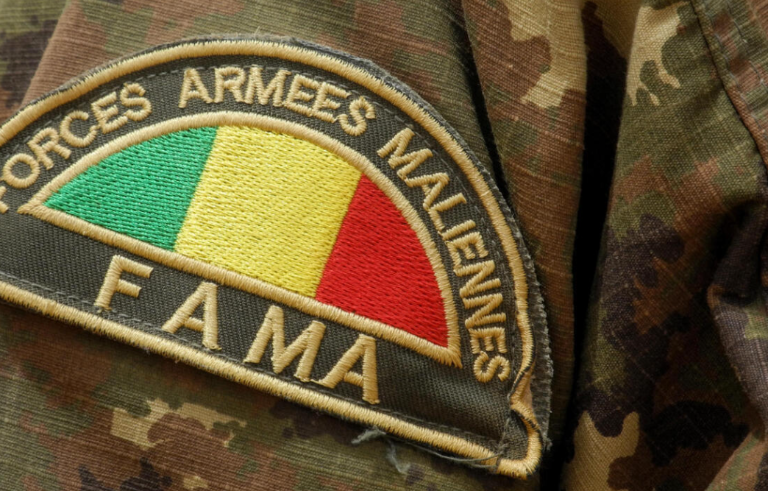
Close to 80 Malian soldiers are believed to have lost their lives on 10 September when assailants stormed the FAMa camp at Dioura, in the Mopti region. A few hours after the fighting, the Group for the Support of Islam and Muslims (JNIM), an Al-Qaeda affiliate, claimed the operation, stating that it had seized the base before withdrawing. Several troops remain unaccounted for, while others are said to have been taken prisoner. In the villages surrounding the camp, dread has quickly turned into a well-worn question: if the army cannot hold its own positions, who will shield the communities living beside them?
The heaviest single loss for the Malian army in months
The assault on Dioura stands among the most lethal episodes endured by Mali’s armed forces in recent times. From the figures available, roughly 80 soldiers were killed during the attack, a toll that lays bare how exposed the FAMa remain despite years of counter-insurgency campaigning.
A strategic base taken, then abandoned by its attackers
In the hours that followed, JNIM stepped forward to claim responsibility. The jihadist group said its fighters took control of the position and later pulled out, a sequence that underscores how even a site considered militarily important can still be hit hard and held for a time.
That reality is deeply unsettling for the wider region. A camp viewed as a strategic anchor was overwhelmed with considerable violence, and the lesson drawn locally is a simple one: no position appears untouchable.
For civilians near Dioura, the fighting keeps edging closer
Residents of Dioura and the surrounding hamlets have lived for years in the rhythm of clashes, forced displacements and the everyday restrictions that insecurity imposes. A military camp is supposed to act as a shield for the people around it.
So when such a base falls to an armed group, the signal sent to those households is grim. The disappearance of soldiers, possible captures and the uncertainty hanging over the fate of several troops thicken the anxiety. Families are still waiting for news. Communities brace for reprisals or fresh confrontations.
Ordinary life suffers too. Movement becomes limited, trade is disturbed and access to essential services grows more fragile. Over time, a military crisis quietly turns into a social one.
A political setback for the authorities in Bamako
The events at Dioura land in a highly sensitive political moment. The junta in power has built much of its legitimacy on retaking national territory and restoring sovereignty, presenting Mali’s forces as stronger and more self-reliant in the fight against jihadist groups.
The Dioura raid abruptly exposes the limits of that narrative. How can a significant military position be held for hours by a jihadist group while the authorities have promised for years to bring the whole country back under control?
Sovereignty as a strategy, measured against its results
The question stings all the more because Bamako has progressively scaled back cooperation with certain foreign partners while embracing a more autonomous security approach. That choice can be defended in the name of sovereignty, but it must also be assessed by what it delivers. And for the people of Mopti, the outcome remains troubling: insecurity persists, and attacks on Malian forces can still inflict mass casualties.
Abandonment, a danger as real as fear itself
In Dioura, as in other rural stretches of central Mali, inhabitants are squeezed between several threats at once. They must navigate armed groups, military operations and the economic fallout of chronic instability.
When a population stops believing that the state can keep it safe, confidence in public institutions wears away, and the feeling of being left behind can become as corrosive as the fear itself. Rebuilding that trust takes far more than political speeches. What people need is concrete: communities protected over the long term, roads made safe, farmers able to return to their fields, and guaranteed access to public services.
- Lasting protection for villages rather than temporary reassurance
- Secure roads so that trade and travel can resume
- Conditions that allow farmers to work their land again
- Reliable access to basic public services
Why Dioura matters far beyond the battlefield
Reducing Dioura to a simple clash between the FAMa and JNIM misses what is at stake. Behind the military toll sit grieving households, missing soldiers, relatives left in limbo and civilians confronting a fresh wave of anguish.
For the junta, the attack is above all a serious warning. After years of security pledges, Malians now expect tangible results rather than declarations. In Dioura, the decisive question is not who briefly controls a camp, but whether the Malian state can genuinely protect the people who live around these military positions. As long as that question goes unanswered, every new assault risks deepening both insecurity and disillusion.