Chad’s decentralization debate: Pahimi Padacké urges real autonomy for provinces
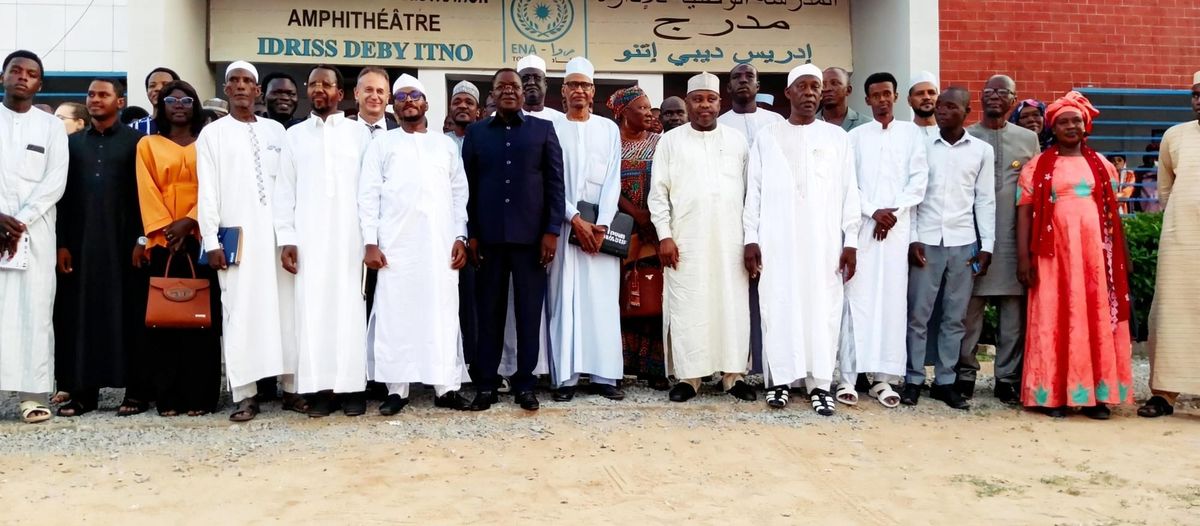
Chad’s political landscape has been marked by a long-standing debate over decentralization, and former Prime Minister Albert Pahimi Padacké has once again brought this issue to the forefront. Speaking at a high-profile conference in N’Djamena, he delivered a sharp critique of the country’s centralized governance model, calling for urgent reforms to empower provincial councils.
Held at the Idriss Déby Itno Amphitheater of the National School of Administration (ENA), the event drew a packed audience of civil servants, university students, and political figures. The topic—« Decentralization in the Dynamics of Development: The Case of Provincial Councils »—was chosen deliberately, reflecting the growing urgency of addressing Chad’s institutional challenges.
Why decentralization matters for Chad’s future
Albert Pahimi Padacké, a prominent political leader and current Senator, argued that decentralization is not just a theoretical concept but a practical necessity for sustainable development. He emphasized that empowering local councils would shorten decision-making processes, improve service delivery, and ensure that resources reach the communities that need them most. Education, healthcare, and infrastructure—key pillars of national progress—could all benefit from a governance model that prioritizes regional autonomy.
« A centralized system, no matter how well-intentioned, cannot address the diverse needs of a vast country like Chad, » he stated. « Local leaders understand their people’s challenges better than distant bureaucrats in the capital. »
The invisible wall blocking real change
Despite official commitments to decentralization, Pahimi Padacké highlighted a stark reality: the central government’s reluctance to relinquish control. He described what he termed the « vertical rigidity » of the state—a system where legal frameworks exist on paper but are systematically undermined by financial and administrative constraints.
Provincial councils, he noted, are often left without the financial muscle to implement policies, forced to rely on handouts from N’Djamena. « Decentralization without financial independence is merely an administrative illusion, » he declared, stressing that true progress requires more than good intentions—it demands concrete power transfers.
A call for bold reforms
The conference quickly evolved into a rallying cry for systemic change. Pahimi Padacké urged political leaders to move beyond rhetoric and take decisive steps to break the central government’s stranglehold. His message was clear: Chad’s future depends on trusting local leaders with real authority, transforming provincial councils into engines of economic growth rather than mere extensions of the capital’s bureaucracy.
The lively discussions that followed, particularly among future civil servants, underscored the depth of feeling on this issue. For many, the question of local governance isn’t just political—it’s the key to unlocking Chad’s potential.