Saturday, November 21

Politics

DR Congo’s constitution at 20: public reactions and future prospects
Politics

DR Congo’s constitution at 20: public reactions and future prospects

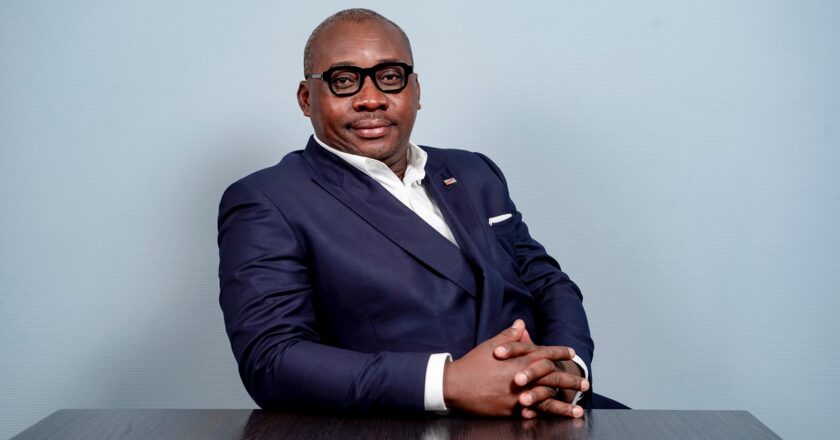
As DR Congo marks two decades since the adoption of its constitution, the national conversation has shifted from celebration to critical reflection. Guy Loando Mboyo, minister of State for Relations with Parliament, argues that the milestone demands more than acknowledgment—it requires a thorough reassessment of its impact and shortcomings. Debating the constitution’s legacy The 20th anniversary of DR Congo’s constitution has sparked widespread debate. Citizens, legal experts, and political figures are increasingly vocal about its limitations, with many questioning whether it has fulfilled its original promise of stability, justice, and governance. Guy Loando Mboyo underscores that the constitution, while a cornerstone of the country’s post-conflict framework, has faced persistent c...
Senegal’s political rift: how shifting power dynamics threaten citizens’ livelihoods
Politics

Senegal’s political rift: how shifting power dynamics threaten citizens’ livelihoods

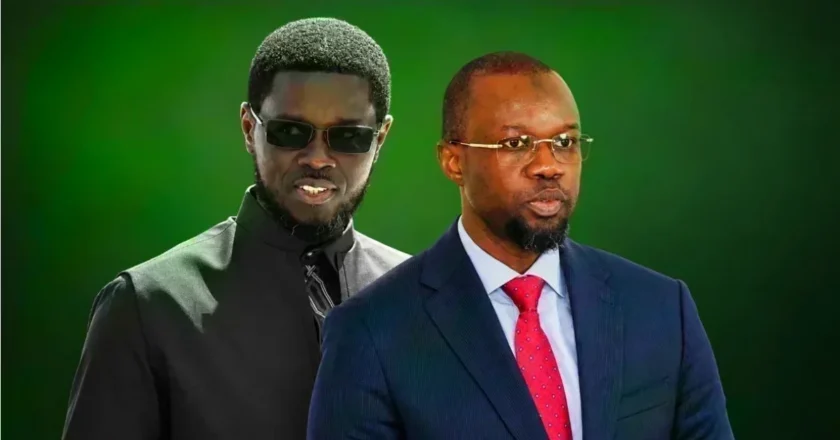
Senegal stands at a critical juncture as the shifting positions between President Bassirou Diomaye Faye and opposition leader Ousmane Sonko expose deepening cracks in the nation’s governance, with ordinary citizens bearing the brunt of the consequences. From campaign promises to political contradictions The once-harmonious alliance between Faye and Sonko, which once rallied millions behind a vision of renewal, now faces severe scrutiny. Political analyst Ndiaga Sylla highlights a widening gap between their proclaimed principles and their current actions, leaving Senegalese citizens questioning the integrity of their leaders. Sylla’s analysis, titled "Between republican ideals and the contradictions of power", reveals a troubling pattern: Sonko now opposes positions he once championed ...
Côte d’Ivoire faces new legal battle as evangelical leaders take on influencer Maa Bio
Politics

Côte d’Ivoire faces new legal battle as evangelical leaders take on influencer Maa Bio

Influencer Maa Bio in Côte d'Ivoire now faces legal repercussions as evangelical leaders escalate their response to a social media feud. The Association of Pastors in Côte d'Ivoire has publicly announced its intention to pursue legal action against the popular figure, marking a significant escalation in a dispute that has captivated public attention. Religious leaders push back against social media criticism The controversy centers on statements Maa Bio made in support of Apoutchou National, another influencer. The Association of Pastors argues that her remarks targeted religious leaders, including Pastor Wilfried Zahui, and may constitute defamation or insults. In a released statement, the group emphasized that while freedom of expression is protected, it must be exercised within legal b...
Burkina Faso’s public investment dilemma: missing billions spark public outcry and policy rethink
Economy, Politics

Burkina Faso’s public investment dilemma: missing billions spark public outcry and policy rethink

In Burkina Faso, the gap between budget announcements and on-the-ground reality is widening. Despite repeated financial injections and policy commitments, only 37% of planned public infrastructure projects reach completion. The fate of the remaining 63%—billions of CFA francs earmarked for schools, roads, and clean water access—has become a national talking point. As debate intensifies, citizens and policymakers alike are asking: where exactly is the money going, and how can a broken system be fixed? Public investment in Burkina Faso: a paradox of progress and paralysis The International Monetary Fund (IMF) recently highlighted a troubling paradox. Since 2021, Burkina Faso has made strides in modernizing administrative rules and increasing budget allocations. Yet, physical infrastructure...
Burkina Faso’s death penalty revival stirs debate over political executions
News, Politics

Burkina Faso’s death penalty revival stirs debate over political executions

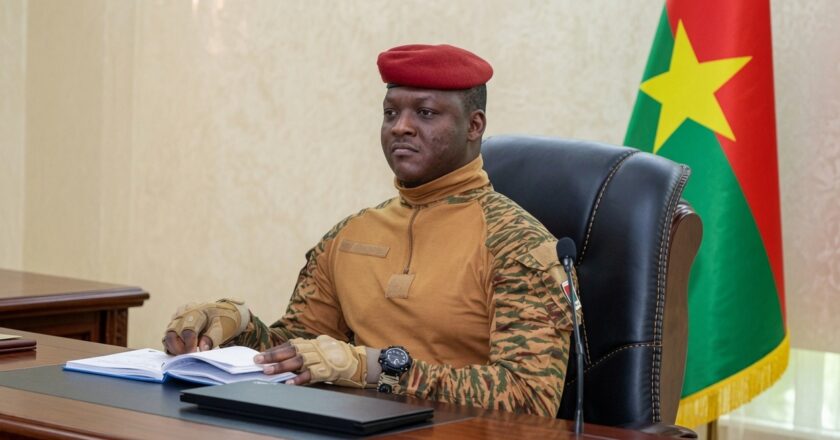
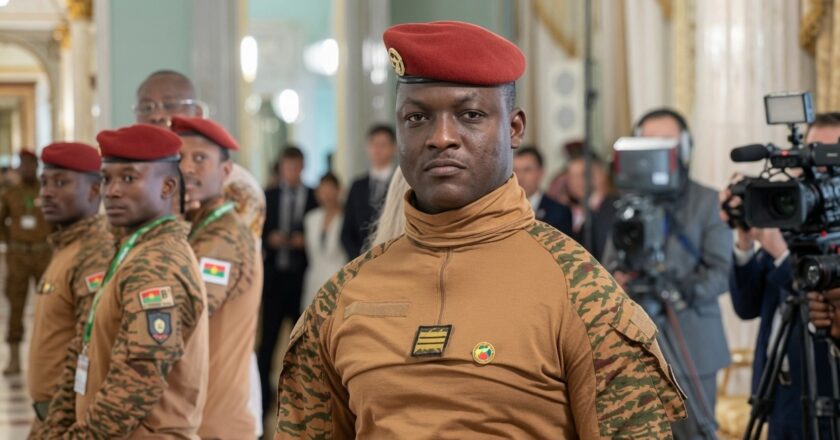
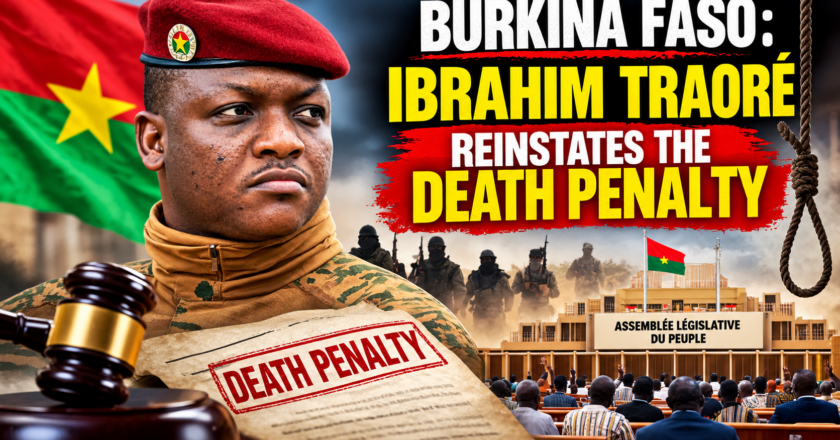
The restoration of capital punishment in Burkina Faso has ignited fierce public debate, with critics warning that the move is not merely about justice but a calculated political maneuver. The military-led government of Captain Ibrahim Traoré has framed the decision as a necessary step toward national security, but many see it as a thinly veiled attempt to silence dissent and eliminate rivals — most notably former transitional leader Lieutenant Colonel Paul-Henri Sandaogo Damiba. From Abolition to Retribution: A Sudden Shift in Criminal Justice Burkina Faso had abolished the death penalty in 2018, aligning itself with broader regional trends toward human rights. However, the recent parliamentary vote reinstating it by unanimous consent marks a stark reversal. The government’s slogan, "Sent...
Senegal’s debt turmoil deepens as parliamentary leader refuses IMF-backed budget cuts
Politics

Senegal’s debt turmoil deepens as parliamentary leader refuses IMF-backed budget cuts

The announcement from Senegal’s National Assembly on Monday sent shockwaves through dollar-denominated sovereign bonds. Ousmane Sonko, Speaker of the Parliament and leader of the ruling Pastef party, delivered a blunt warning: he may block both the 2026 supplementary budget and the 2027 draft budget. Since the declaration, secondary market yields have surged, marking the steepest decline since early September. From Majority to Rebellion: The Unprecedented Political Divide on Debt Policy The current crisis stems not from opposition politicians but from within the government’s own ranks. Sonko, a former prime minister and head of the party that secured a strong majority in the November 2024 legislative elections, now stands firmly against the budget proposals supported by President Bassirou...
Burkina Faso reinstates death penalty amid growing security concerns
News, Politics, Society

Burkina Faso reinstates death penalty amid growing security concerns

The military-led government in Burkina Faso has taken a significant step in tightening its penal policies, but the reinstatement of the death penalty raises critical questions about whether extreme measures truly enhance public safety or simply deepen societal fear in an already fragile democratic landscape.On October 20, 2026, the Legislative Assembly of the People (ALP) unanimously approved the new Penal Code, effectively bringing back capital punishment a sanction abolished back in 2018. While authorities frame this move as a necessary tool to restore order and protect citizens, the reform signals a troubling shift in the justice system under Captain Ibrahim Traoré's leadership. The question now looms: could the increasing reliance on severe penalties turn fear into a central tool of go...
Togo faces political reckoning as opposition denounces dialogue and demands systemic change
Politics

Togo faces political reckoning as opposition denounces dialogue and demands systemic change

The Togolese government’s latest push for political dialogue has collided head-on with a united front of opposition groups, sparking a national debate over the country’s democratic future. The standoff centers on whether incremental discussions within existing institutions can resolve Togo’s deep-rooted political fractures—or whether a full political transition is the only viable path forward. Opposition forces refuse government-led talks with unified demands Four major opposition coalitions, bound by the Generation Togo Manifesto, have publicly rejected the government’s invitation to participate in structured dialogue. Their position, articulated in a joint statement released in Lomé on 15 October 2026, dismisses the ongoing Cadre Permanent de Concertation (CPC) as a “charade” designed ...
Politics

Senegal’s 2026 budget clashes: Sonko warns of rising costs and social strain

What’s at stake for Senegalese families and businesses in the 2026 budget The proposed changes to Senegal’s 2026 budget are sparking heated debate, with opposition leader Ousmane Sonko warning of real consequences for everyday citizens and economic growth. During a press conference, Sonko—head of the PASTEF party—criticized the government’s financial overhaul, arguing that its focus on austerity and external agreements risks destabilizing households and stifling investment. PASTEF’s opposition: A ‘no’ to the draft budget in its current form Sonko made it clear that PASTEF lawmakers would not endorse the revised 2026 budget bill without substantial changes. His primary concerns center on reductions to social spending, cuts to fuel subsidies, and an overreliance on fiscal adjustments that c...
Senegal’s debt strategy under scrutiny as Sonko denies restructuring push
Politics

Senegal’s debt strategy under scrutiny as Sonko denies restructuring push

Former Senegalese Prime Minister Ousmane Sonko has doubled down on his debt management strategy, rejecting claims of inaction while addressing mounting criticism over the country’s public finances during his tenure from 2024 to 2026. In a press conference held on October 19, 2026, Sonko defended his administration’s decision to avoid debt restructuring, instead opting for alternative financing solutions with international partners, including the United Arab Emirates. Sonko rejects restructuring amid public backlash Sonko categorically denied ever supporting a debt restructuring plan, despite widespread speculation. He emphasized that his position was shared by key financial officials, including former Finance Minister Abdourahmane Sarr and current Finance Minister Cheikh Diba, along with ...
Senegal 2027 budget sparks debate amid debt talks and infrastructure push
Politics

Senegal 2027 budget sparks debate amid debt talks and infrastructure push

The Senegal 2027 budget proposal unveiled by President Bassirou Diomaye Faye’s administration marks a bold shift toward human capital and infrastructure development, despite mounting pressure from multilateral lenders. At its core, the budget prioritizes three high-profile initiatives: a twelve-school digital education program known as LYNAQE, a second bridge in Ziguinchor, and the digitalization of 15,000 classrooms. These measures reflect the Senegal 2050 strategic framework, a long-term vision unveiled in October 2024 to redefine the country’s economic trajectory. Public debt constraints shape Senegal’s 2027 budget priorities The macroeconomic backdrop casts a long shadow over the budget’s ambitions. Following the revelation in late 2024 that the country’s public debt was significantly...
Senegal’s 2027 local elections: early candidacies ignite political fallout and public debate
Politics

Senegal’s 2027 local elections: early candidacies ignite political fallout and public debate

As Senegal gears up for its landmark 2027 local elections, early candidacies have triggered a wave of reactions across the country. Political parties and independent figures are racing to secure key municipal seats, setting the stage for a contentious campaign season. The unfolding announcements are sparking intense public discussions about governance, urban development, and the future of local leadership. Dakar’s Mayoral Race Takes Center Stage In the capital, former presidential adviser Dr. Arona Coumba Ndoffène Diouf has thrown his hat into the ring for the Dakar mayoralty. A member of the Kiiraay party, Diouf outlined his vision to modernize the city, drawing comparisons to urban models like Singapore. His candidacy has intensified local discussions about Dakar’s infrastructure, servi...