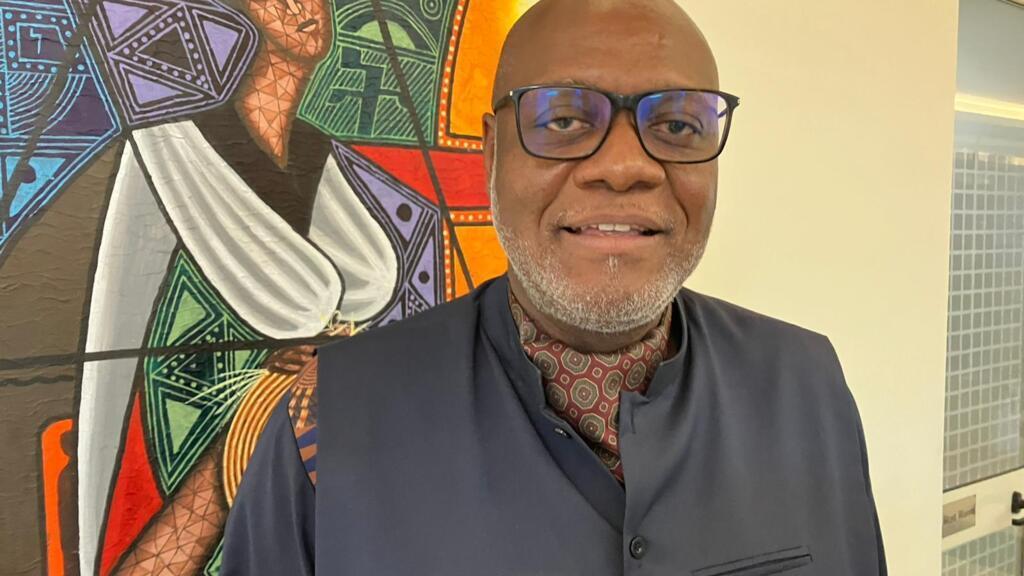
The 39th African Union summit concluded with a bold declaration: to silence the guns and firmly reject unconstitutional power changes across the continent. But is this commitment realistic? Paul-Simon Handy, a Cameroonian researcher and Regional Director of the Institute for Security Studies (ISS) for East Africa, shared his insights from Addis Ababa during Africa Midi.
Can the African Union enforce its zero-tolerance stance on coups?
During the summit, African leaders pledged to take a hard line against unconstitutional power transfers, a recurring issue on the continent. Yet, the elephant in the room remains: how can these declarations translate into action when some former coup leaders are now running for—and even winning—elections?
Paul-Simon Handy, who attended the summit in Addis Ababa, expressed his skepticism. “It is unacceptable that individuals who have orchestrated coups are later permitted to participate in democratic elections,” he stated. “This undermines the very principles of governance and accountability that the AU claims to uphold.”
Challenges in holding leaders accountable
The AU’s stance faces significant hurdles. First, the organization lacks enforcement mechanisms to penalize member states that allow coup leaders to re-enter politics. Second, political expediency often trumps principle, as some governments prioritize stability over democratic integrity.
Handy pointed out that while the AU’s declarations are commendable, they must be backed by concrete measures. “Words alone will not silence the guns or prevent future unconstitutional power grabs,” he emphasized. “The AU needs to implement binding policies that hold leaders accountable, regardless of their political influence.”
Public sentiment and regional stability
The issue extends beyond governance—it impacts regional stability and public trust. Citizens across Africa are increasingly frustrated by the cycle of coups and counter-coups, which disrupt economies and fuel insecurity. Handy argued that the AU must address the root causes of instability, including corruption and weak institutions, to break this pattern.
“The summit’s declaration is a step in the right direction,” Handy noted, “but without decisive action, it risks becoming little more than empty rhetoric.”