African nations embrace drone tech amid sovereignty and dependency debates
Drones reshape Africa’s security landscape with strategic trade-offs
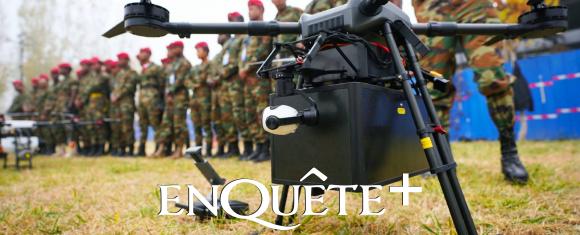
Drones have rapidly transitioned from niche military assets to cornerstone tools in Africa’s evolving security strategies. According to insights from a leading geopolitical analysis, this technological shift is reshaping conflict dynamics across the continent, offering African nations enhanced operational capabilities while simultaneously introducing new vulnerabilities in technology dependence and civilian protection.
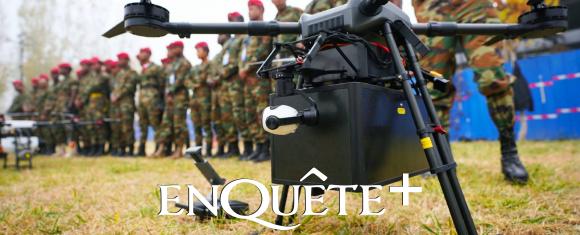
The proliferation of drone technology has accelerated dramatically over the past two decades. Where only one drone acquisition agreement was recorded on the continent in 2001, this number surged to 21 by 2021. Between 1980 and 2024, African nations procured over 1,500 military drones, with the most significant surge occurring between 2020 and 2023. North Africa accounts for more than half of these acquisitions, while Nigeria stands out as one of the continent’s top buyers.
Security crises drive demand for unmanned systems
The rapid adoption stems primarily from worsening security environments. Facing threats from armed groups and internal conflicts, African governments increasingly turn to drones for surveillance, intelligence gathering, and remote strikes—capabilities that reduce risks to deployed troops while expanding operational reach.
Conflict zones in Sudan, Mali, Burkina Faso, Niger, Somalia, and Ethiopia exemplify this transformation. Drones have become central to military operations, serving both state forces and non-state armed groups as tools for communication, propaganda, and tactical execution.
Non-state actors weaponize commercial drones
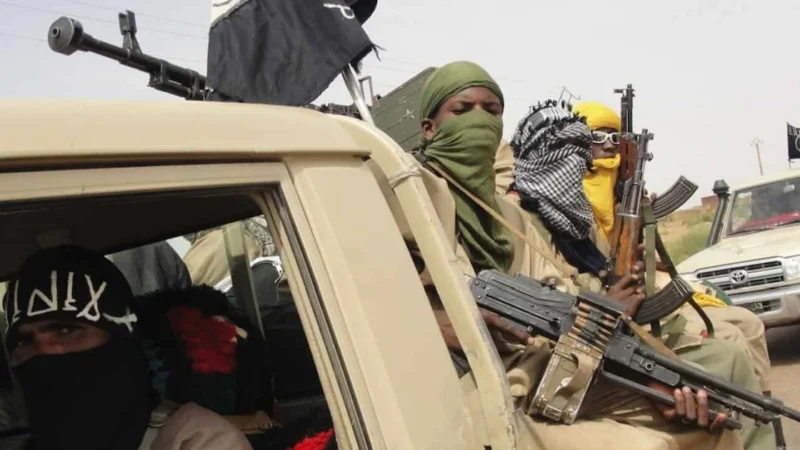
A critical development lies in the democratization of drone technology. Commercially available civilian drones are now being repurposed as weapons by groups such as Boko Haram, Al-Shabaab, and the Group for the Support of Islam and Muslims (JNIM). This adaptation shifts power dynamics, enabling targeted strikes, coordinated ground operations, and psychological warfare through distributed imagery.
While drones enhance surveillance and strike precision, their proliferation has also intensified violence. In 2024 alone, drone strikes resulted in 1,176 civilian deaths across 13 African countries. In Sudan, reports indicate nearly 700 civilian fatalities from drone strikes in the first three months of 2026.
Foreign dominance in Africa’s drone market persists
Despite growing local production efforts, African nations remain heavily reliant on foreign suppliers. China, Israel, the United States, and more recently Turkey dominate the market, providing not only aircraft but also maintenance, software updates, training, and spare parts—creating enduring strategic dependencies that extend beyond hardware acquisition.
These dependencies raise concerns over digital sovereignty and data protection, particularly as drone systems collect sensitive intelligence across conflict zones.
Africa’s emerging drone production hubs
To reduce reliance on foreign technology, several African nations are investing in domestic drone manufacturing. South Africa leads the continent in industrial capacity, while Morocco combines local production with international partnerships. Nigeria, Egypt, Ethiopia, Tunisia, and Algeria are also advancing initiatives to bolster their industrial bases.
Senegal has gained recognition for its domestic innovation through Ndobine, a company developing drones tailored for maritime surveillance, precision agriculture, and mapping. However, local production currently represents only about 12% of Africa’s drone market.
Drones as tactical tools, not conflict solutions
Despite their operational advantages, drones do not address the root causes of Africa’s conflicts. While they enhance military capabilities and alter combat tactics, they neither resolve underlying crises nor prevent violence escalation. In fact, their widespread use has sometimes contributed to increased civilian harm.
Experts emphasize that the continent’s security future depends not merely on acquiring drones but on establishing robust regulatory frameworks. Recommended measures include developing employment doctrines aligned with international humanitarian law, improving operator training, enhancing transparency in procurement processes, fostering local industries, and advancing continental regulatory harmonization under the African Union’s leadership.
The core challenge for African states lies in balancing technological advancement with strategic autonomy. Without deliberate governance, the continent risks deepening technological dependence and exacerbating violence—undermining long-term security objectives rather than securing them.