AES leadership under scrutiny amid persistent Sahel insecurity
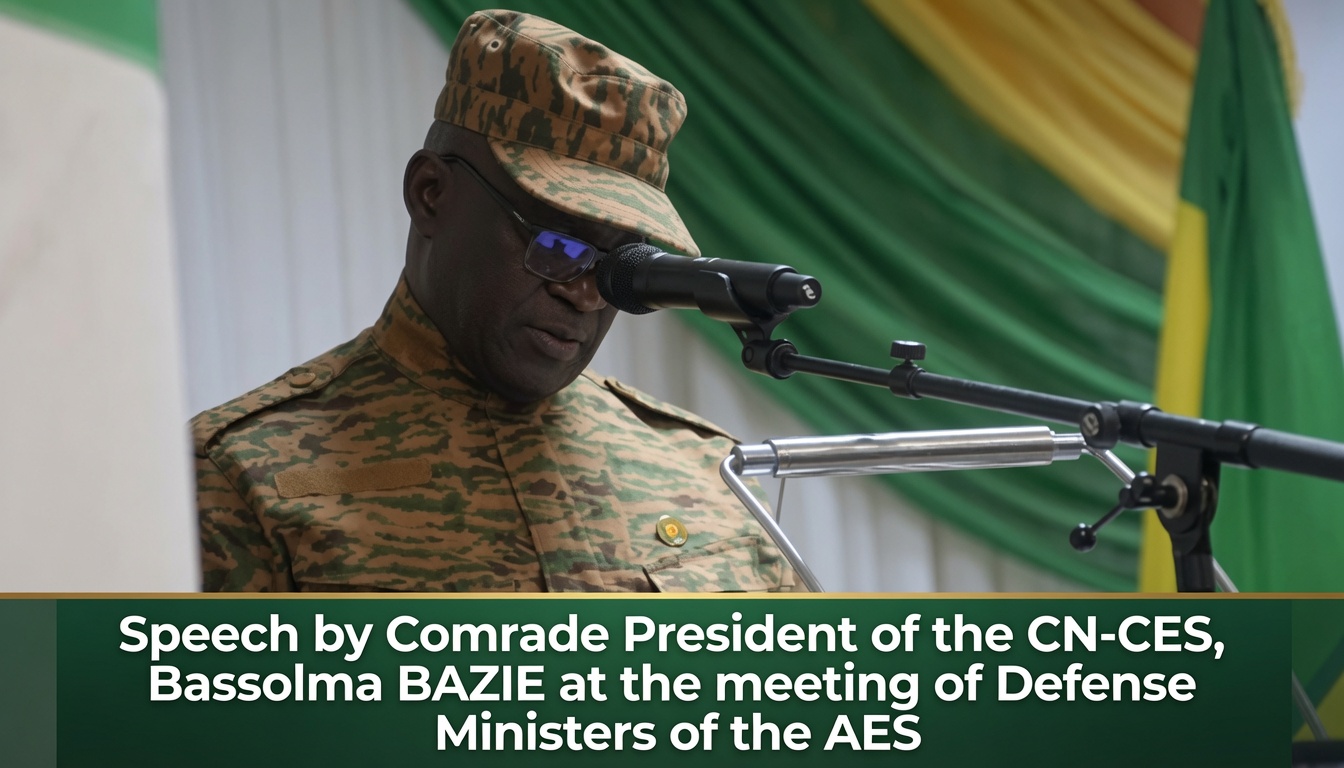
The recent gathering of Defense Ministers from the Alliance of Sahel States (AES) concluded with a formal tribute led by Bassolma Bazié, President of the National Council for the Salvation of the Sahel (CN-CES). The ceremony honored the bravery and sacrifices of the defense and security forces across Mali, Burkina Faso, and Niger, emphasizing territorial integrity, civilian protection, and a proclaimed historic sovereignty.
From rhetoric to reality: the unmet security challenge
While official statements continue to celebrate advances in strategic autonomy, communities on the ground face a starkly different reality. Repeated attacks, forced displacements, and ongoing insecurity remain pressing concerns, casting doubt on the effectiveness of current security policies. Citizens are increasingly questioning whether the declarations of progress align with the persistent threats they endure daily.
Human cost overshadows political declarations
The sacrifices of military personnel are undeniable, with many laying down their lives in defense of their nations. Yet, the civilian population bears the brunt of this crisis, often fleeing their homes in desperate search of safety. Thousands have crossed borders into neighboring countries, a stark reminder that the sovereignty celebrated in ministerial halls remains elusive for those most affected. The sight of displaced families struggling to rebuild their lives underscores a harsh truth: security is not merely a matter of political rhetoric but a tangible necessity.
Does symbolic support suffice in the fight against insecurity?
The gap between official discourse and ground-level realities raises critical questions. Tributes and posthumous honors, while appropriate for fallen soldiers, do little to address systemic flaws in defense strategies. Statements alone cannot fortify frontlines, protect vulnerable villages, or reverse the loss of life. Without addressing the root causes of insecurity, political gestures risk becoming hollow, leaving communities to grapple with the consequences of unmet promises.
At its core, national defense policy must prioritize the safety and well-being of citizens. When civilians live under constant threat, essential services remain inaccessible, and humanitarian crises persist, declarations of success ring hollow. A “real sovereignty” cannot be measured solely by political or diplomatic independence; it must be reflected in tangible security, freedom of movement, and stability for all.
Beyond tributes: the need for strategic accountability
Military personnel serve with distinction, and their contributions deserve recognition. However, honoring their sacrifices should not absolve leaders of their responsibility to evaluate the effectiveness of current strategies. A transparent assessment of military and political decisions is essential to determine whether stated objectives are being met—or if adjustments are needed to bridge the gap between policy and practice.
The ultimate tribute to defense forces lies not in ceremonial praise but in creating lasting security and stability for the people they serve. Until communities see meaningful improvements in their daily lives, the skepticism surrounding claims of full sovereignty will persist. The time for action—beyond words—is long overdue.