US surveillance flights over Mali: a deal that reshapes Bamako’s alliances
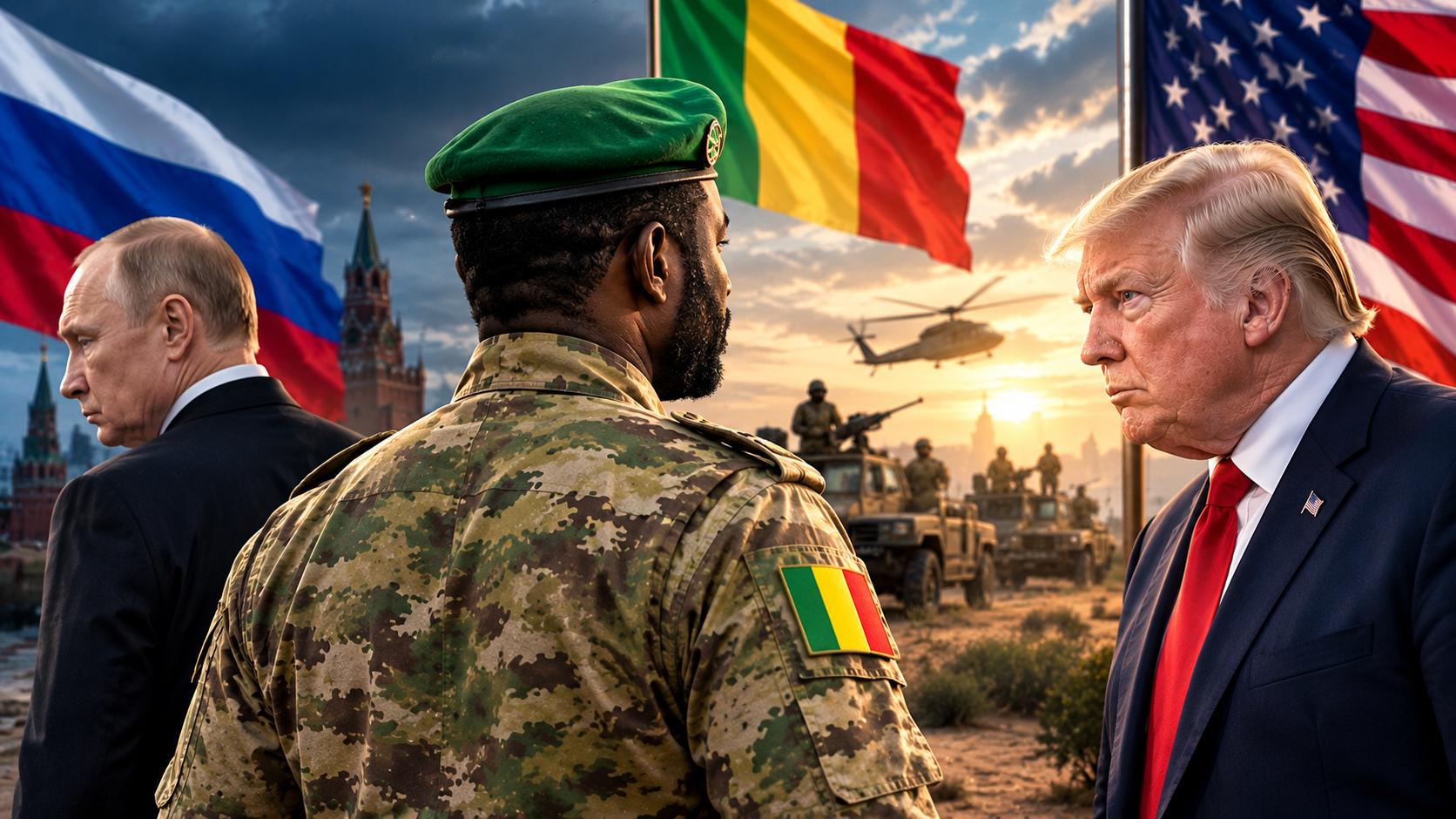
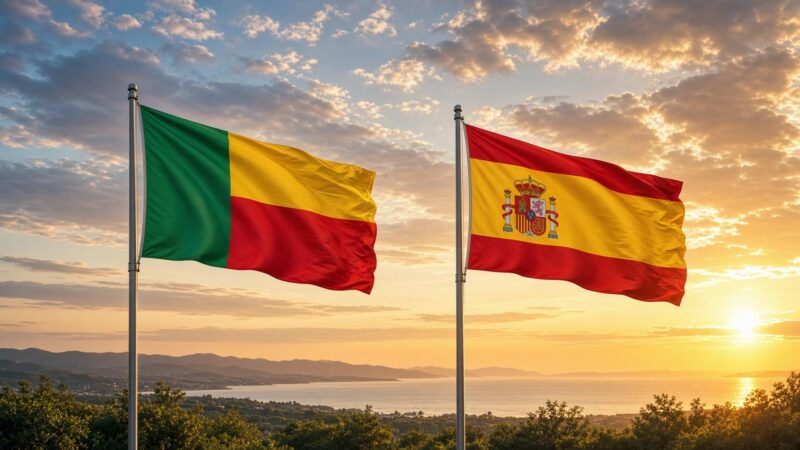
Mali and the United States are moving back toward a security arrangement that would put American aircraft and drones over Malian territory again. The talks center on surveillance of jihadist groups and come after a February 2026 US decision to lift sanctions on Mali’s defense minister and several senior officials. Bamako, for its part, has not broken with Moscow.
That combination — tighter intelligence ties with Washington and an intact Russian military presence — defines Mali’s 2026 posture under General Assimi Goïta: keep Russia, and add options.
What is actually changing in 2026
For years the story was linear. After pushing out French and European forces, Mali turned to Russia, welcomed Wagner fighters and then the Africa Corps, and severed ties with Western partners one after another. In 2026, that line is bending rather than breaking.
Nothing has been formally renounced. Yet the signals point the same way:
- Intelligence sharing between Bamako and Washington is being revived
- Negotiations are under way over US surveillance and drone flights over Mali
- US sanctions on Mali’s defense minister and other senior officials have been lifted
- Wagner has been folded into the Africa Corps, but Russia has not left
Washington is once again a working interlocutor — and Bamako is treating it as one.
Washington’s discreet return to the intelligence file
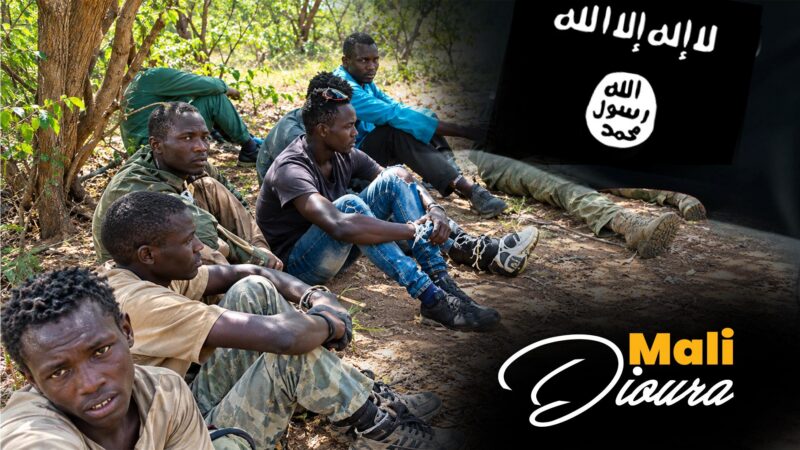
The most concrete signal concerns military intelligence. Talks between the two sides would allow the United States to resume aircraft and drone flights over Mali to track jihadist movements, above all the JNIM, Al-Qaida’s Sahel branch. The discussions followed Washington’s February 2026 decision to drop sanctions targeting Mali’s defense minister and other senior figures.
American intelligence has already been passed to Malian authorities in the past, and some of it is said to have supported an operation against JNIM commanders. What is being negotiated now is a more structured, institutional version of that cooperation.
The irony is hard to miss. A government that sold Russia as the sovereign alternative to Western power is once again discussing precisely the capabilities it lacks: intelligence, surveillance and reconnaissance.
The Russian security record that Bamako cannot defend
Part of the answer to why this is happening now lies in the security balance sheet. It would be inaccurate to blame Russia for every deterioration: Mali already faced a jihadist insurgency before French troops left, and armed groups draw on deep local roots and on political, social, economic and geographic factors that no foreign power created.
Still, the trend lines are difficult to argue with: swapping Western partners for Russian forces did not stop the violence.
US counterterrorism assessments recorded a rise in both the number and the lethality of terrorist activity in 2022 — the year France completed its withdrawal, with the last soldier leaving on 15 August, while Malian forces moved into former French positions alongside Wagner. The same assessment called 2022 the deadliest year in Mali’s history when terrorist attacks and counterterrorism operations are counted together.
The following year brought no reversal. Terrorist activity increased again in volume and intensity, and 2023 was described in identical terms: the deadliest year on record in Mali.
From Wagner to the Africa Corps: presence without a breakthrough
None of this means Moscow is packing up. Wagner was gradually replaced by the Africa Corps, tied directly to Russia’s defense ministry, and Russia retains a substantial military and political footprint in the country.
That footprint has taken hits of its own.
Kidal, Sadio Camara and the April 2026 reversal
In April 2026, an offensive by the JNIM and Tuareg fighters inflicted serious losses on Malian forces and their Russian allies. Mali’s defense minister, Sadio Camara, who was trained in Russia, was killed in an attack. The Africa Corps also had to withdraw from Kidal, the strategic northern town it had helped retake in 2023.
Those setbacks dented Russia’s standing as the guarantor of Malian security. One conflict analyst, Héni Nsaibia, argued that the JNIM’s successive campaigns, the fuel blockade and the recent events amounted to a failure of the Russian intervention. That is an assessment rather than a universal verdict — but it captures a problem that is becoming hard to ignore: Moscow has not ended the insurgency.
Civilian deaths, jihadist pressure and a fuel truce
Data compiled by conflict monitors for 2025 sharpens the question. Malian forces and the Russian paramilitary groups Wagner and the Africa Corps were linked to 918 civilian deaths in Mali that year, against 232 attributed to the JNIM and the Islamic State in the Sahel. These are documented deaths and should be read with caution, but they indicate the scale of the violence and the accusations leveled at government forces and their Russian allies.
Jihadist groups, meanwhile, kept advancing. The JNIM disrupted supply routes and put heavy pressure on Bamako.
In March 2026, Malian authorities released around 200 people held over suspected jihadist links as part of an arrangement aimed at securing a truce on attacks against fuel convoys. For a junta that came to power promising sovereignty and security restored, the symbolism is heavy.
Moscow’s economic stakes remain untouched
Talk of a rupture with Russia is premature. Russian interests in Mali run well beyond security, notably in gold, lithium and energy. Moscow has backed mining and power projects and continues to present itself as a committed partner of Bamako.
Not a break with Russia — a bet on several partners
The more plausible reading is a turn toward pragmatism: no longer depending on a single partner.
After making Moscow its main security lifeline once French forces left, Bamako appears to accept that Russia alone cannot cover all of its military and intelligence needs. That is the gap Washington is stepping into.
What the United States offers is what Moscow does not always supply on the same terms: aerial and satellite intelligence, advanced technology and deep knowledge of jihadist networks.
The opening to Washington may therefore be less an ideological conversion than a practical conclusion — Mali needs several partners to confront a threat that its alliance with Russia has not eliminated.
From a Western rupture to hard pragmatism
Mali’s recent history is turning again. Yesterday, Bamako denounced French and European presence and promoted Russia as the sovereign alternative. Today, talks with Washington have resumed at a level that would have seemed implausible a few years ago.
Russia is still in Mali. But its security record is contested, its forces have suffered reversals, and jihadist groups continue to threaten the country.
In that context, the American-Malian rapprochement is more than a diplomatic episode. It could mark the start of a different foreign policy for Bamako: instead of replacing one partner with another, using great-power rivalry to obtain from each what Mali needs most.
Mali has not abandoned Russia. What has shifted is the assumption behind the relationship — that Moscow could hold a monopoly on Malian security. That monopoly no longer looks secure.