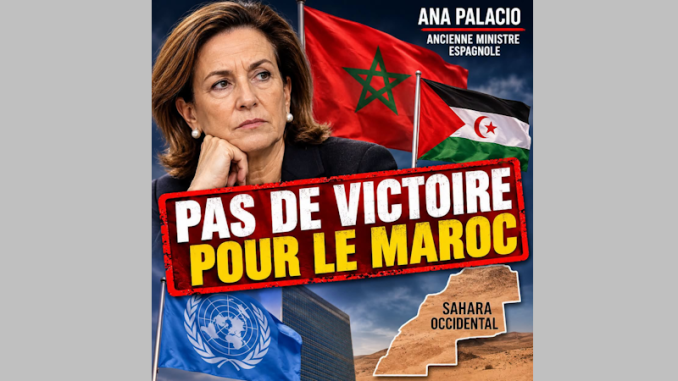
After MINURSO’s departure, the geopolitical fallout reshapes North Africa
The United Nations Security Council has just witnessed one of its most contentious episodes in years, exposing deep divisions among permanent members and casting uncertainty over international conflict resolution mechanisms. With the collapse of the UN Mission for the Referendum in Western Sahara (MINURSO) on October 30, the stage is set for a new era of regional power struggles—one where legal victories remain elusive despite political declarations.
Breakdown of UN diplomacy: why the Russian veto derailed Western Sahara talks
After 35 years since its deployment in 1991, MINURSO entered liquidation when a critical diplomatic moment collapsed. The showdown began when the United States pushed a resolution that would have effectively rewritten the mission’s mandate—removing the “R” for referendum from its acronym and framing autonomy under Moroccan sovereignty as the sole negotiation framework. The resolution gained 11 favorable votes, but Russia’s veto on October 30 froze the process.
A Russian counterproposal to extend the mission technically for one year also failed, blocked this time by U.S. opposition. The deadlock illustrates a broader erosion of multilateral consensus, where permanent members increasingly prioritize national interests over institutional unity.
From negotiation to withdrawal: what the vote breakdown reveals
- U.S. resolution: 11 votes in favor, 1 Russia veto — failure
- Russian proposal: 3 votes in favor, U.S. opposition — failure
- Outcome: Mandate expiration, MINURSO withdrawal
The diplomatic showdown revealed more than just procedural disagreements. It exposed how global powers are increasingly willing to abandon international institutions when outcomes do not align with strategic objectives—leaving longstanding conflicts unresolved and regional stability at risk.
Morocco’s gamble: celebrating withdrawal and facing new realities
Rabat quickly hailed the end of MINURSO as a diplomatic milestone. The Moroccan government has called for the rapid removal of all UN symbols and personnel, signaling its intent to normalize relations with the international community outside the constraints of the Western Sahara file.
Behind this strategic move lie multiple calculations:
- Sovereignty through fait accompli: Morocco believes it has maximized its diplomatic leverage through bilateral recognition and shifting global perceptions, no longer needing the UN platform to validate its autonomy proposal.
- Backing from Washington: U.S. support, particularly from the current administration, has bolstered Morocco’s position, encouraging a break from UN oversight mechanisms.
- Domestic legitimacy: For decades, the Western Sahara issue has served as a cornerstone of monarchical legitimacy in Morocco, especially during transitions of power—such as the ongoing dynastic shift toward Crown Prince Moulay Hassan.
Yet beneath the triumphalism lies a crucial question: Can Rabat sustain its gains without the stabilizing framework of international law?
No legal resolution: the Sahara’s status remains in limbo
Despite Morocco’s claims of victory, the legal reality remains unchanged: Western Sahara is still officially listed as a non-self-governing territory by the UN. The end of MINURSO does not transfer sovereignty nor erase the jurisdiction of the UN General Assembly.
| Outcome | Impact on Western Sahara |
|---|---|
| Territorial status | No change — remains a non-self-governing territory per UN records. |
| Sovereignty transfer | None — international law remains intact; no unilateral change recognized. |
| Conflict with Polisario | Unresolved — the loss of MINURSO removes a vital monitoring and de-escalation mechanism. |
| Global governance | Weakened — UN Security Council deadlocks reveal the fragility of collective security when major powers pursue divergent agendas. |
What’s next? The risks of a post-MINURSO world
The withdrawal of MINURSO signals more than the end of a peacekeeping mission. It marks a turning point in international conflict resolution: when diplomacy fails to produce binding outcomes, weak states and aspiring powers may increasingly act unilaterally—undermining the very institutions designed to prevent escalation.
Observers warn that a world without enforceable norms risks descending into instability. Without structured dialogue, the risk of renewed conflict in Western Sahara looms large. The absence of MINURSO removes a critical buffer, potentially emboldening hardliners on both sides and reducing space for dialogue.
As the dust settles on the Security Council floor, one truth emerges: the international community’s ability to shape outcomes in protracted conflicts is eroding. And in its place, a new era of power-driven realpolitik may be taking hold—one where declarations of victory ring hollow amid the silence of legal vacuums.