Senegal’s political shift: Pastef and APR unite against electoral nomadism


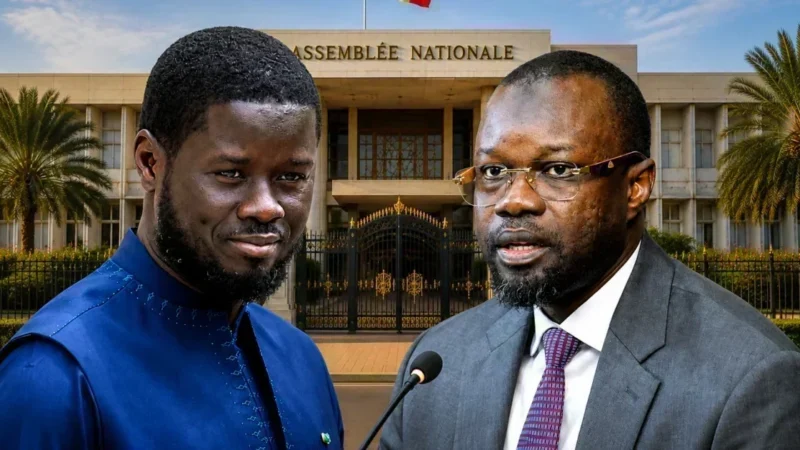
In Senegal, a rare political alliance has emerged as opposition leader Ousmane Sonko’s Pastef and the ruling Alliance pour la République (APR) find themselves aligned against the growing trend of electoral nomadism—where politicians frequently switch allegiances for personal gain.
An unexpected convergence of interests
The partnership between Pastef and the APR stems from a shared frustration with the practice of politicians abandoning their original parties to join others mid-term, often driven by opportunism rather than ideological alignment. This phenomenon, locally dubbed “transhumance politique,” has increasingly destabilized Senegal’s political landscape, prompting both parties to take a firm stance against it.
Ousmane Sonko, Pastef’s charismatic leader, has long criticized this trend, arguing that it undermines democratic integrity. His stance resonates with a significant portion of the electorate, particularly younger voters who demand greater accountability from their leaders. Meanwhile, the APR, led by former President Macky Sall, has also expressed concerns, though its motivations may differ.
The rise of electoral nomadism in Senegal
Electoral nomadism has become a defining feature of Senegalese politics in recent years. Politicians frequently migrate between parties, especially during election cycles, often lured by financial incentives or promises of power. This fluidity has eroded public trust in political institutions and fueled cynicism among citizens.
Critics argue that this behavior reflects deeper issues within Senegal’s political culture, including weak party loyalty and a lack of clear ideological divisions. The phenomenon has also contributed to political fragmentation, making it harder to form stable coalitions or pass meaningful legislation.
A call for reform
Both Pastef and the APR are now pushing for stricter regulations to curb electoral nomadism. Proposals include longer party membership requirements before candidates can run under a new banner and penalties for lawmakers who switch parties mid-term. These measures aim to restore discipline within political ranks and reinforce voter confidence.
Their united front sends a strong signal to other political actors, signaling that the days of unchecked party-hopping may be numbered. However, the road to reform is fraught with challenges, as entrenched interests resist change.
Public reaction and future implications
The announcement of this alliance has sparked mixed reactions among Senegalese citizens. Supporters of Pastef and the APR see it as a step toward greater political integrity, while skeptics question whether these parties can sustain their cooperation beyond short-term interests. Meanwhile, smaller opposition groups remain wary, fearing that this partnership could marginalize them further.
As Senegal prepares for upcoming elections, the debate over electoral nomadism will likely intensify. The actions of Pastef and the APR could set a precedent for how political accountability is enforced in the country, influencing both domestic and international perceptions of Senegal’s democratic resilience.