Migrant surge at Ceuta sparks political pressure concerns from Spain
migrant surge at Ceuta sparks political pressure concerns from Spain
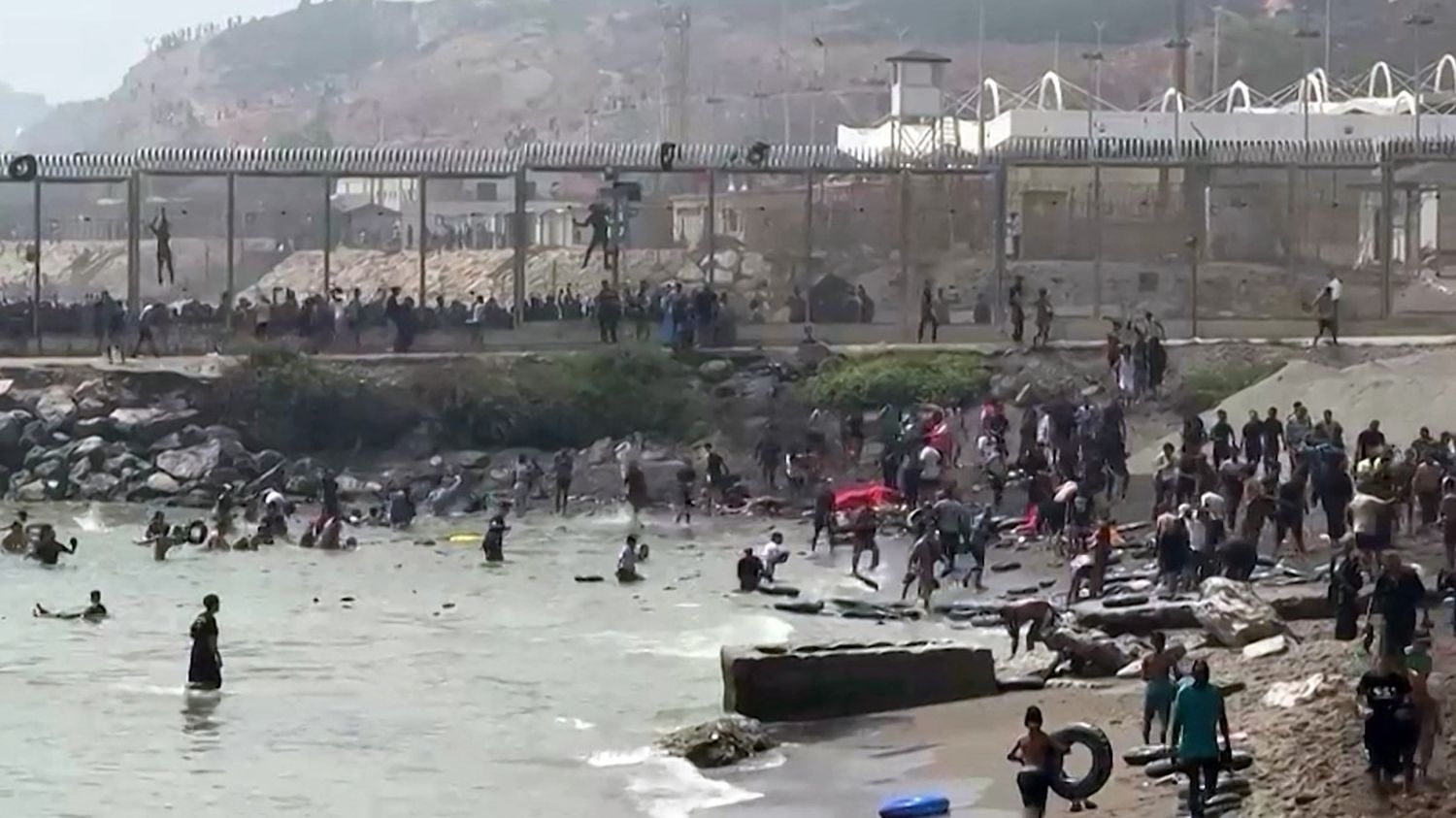
In just 24 hours, nearly 60,000 individuals crossed illegally into the Spanish enclave of Ceuta, a 20 km² territory bordering Morocco with a population of 85,000. Spanish authorities suspect Rabat may be using migration as a tool to pressure Madrid over its growing ties with Algeria.

Thousands of Moroccan nationals reached Ceuta by swimming across the border just one week after Spanish Prime Minister Pedro Sánchez visited Algeria. This follows a similar incident in 2021 when nearly 9,000 people entered the territory after Spain hosted the leader of the Polisario Front, an independence movement opposing Morocco’s claims over Western Sahara.
Unprecedented migration crisis unfolds at Ceuta border
Chaos erupted at the Ceuta-Castillejos border after thousands of Moroccans—including families and individuals with limited mobility—swam or climbed hills to enter the Spanish territory. Despite Moroccan police restricting road access, the sheer volume overwhelmed security forces, marking one of the worst migration crises in five years.
Spanish officials insist bilateral relations remain strong, citing an “excellent” cooperation agreement with Morocco and describing their joint efforts to manage the crisis as “intense.” After initial silence, Moroccan authorities confirmed the situation and agreed to repatriate those who entered illegally.
Legal ruling misinterpreted, says expert
The Spanish Interior Ministry attributes the surge to human trafficking networks allegedly exploiting a recent Supreme Court ruling. The decision guarantees all individuals entering Spain the right to legal assistance and individual case reviews. Ruth Ferrero, a political science professor at the Complutense Institute of International Studies, clarifies that the ruling is “misinterpreted”:
“It simply applies international asylum law. It does not mean an ‘open door’ policy or prevent returns to Morocco. Human traffickers are exploiting this misunderstanding to facilitate illegal entries.”
A repeat of 2021’s diplomatic standoff
In May 2021, nearly 9,000 people entered Ceuta in retaliation after Spain allowed Brahim Ghali, leader of the Polisario Front, to receive medical treatment in a Spanish hospital. Morocco condemned the move as “deplorable.” Reports later surfaced of rumors spreading among sub-Saharan migrants claiming Moroccan security forces would lift coastal controls that day.
Haizam Amirah Fernández, executive director of the Center for Contemporary Arab Studies, notes a “pattern” in Morocco’s use of mass migration as leverage: “Authorities weaponize human movements to send messages, often tied to unmet expectations from Moroccan leadership.”
Ferrero cautions against assuming all migration pressure is politically motivated, stating that current trends “do not appear to align with a Moroccan political strategy” based on available intelligence. She emphasizes the role of misinformation networks and criminal gangs in amplifying the crisis.
According to police sources, Moroccan authorities attempted to curb departures by tightening public transport and road inspections, but the sheer scale of the response overwhelmed their efforts.
Timing raises questions about Spain-Algeria relations
The influx occurred just one week after Sánchez’s visit to Algeria, which marked a “new phase” in bilateral relations, particularly regarding gas supply amid Middle Eastern conflicts. Amirah Fernández suggests a possible link: “While causality is unclear, the timing is striking. The rivalry between Morocco and Algeria runs deep, with Spain’s growing ties to Algeria likely viewed unfavorably in Rabat.”
He describes the situation as a “zero-sum game” for Morocco: “If Spain strengthens ties with Algeria, Morocco sees it as detrimental to its interests—and vice versa.”
Western Sahara conflict deepens tensions
Morocco’s coercive migration tactics have historically coincided with diplomatic tensions over Western Sahara. In December 2020, Rabat suspended high-level talks with Spain days after the U.S. recognized Moroccan sovereignty over Western Sahara in exchange for Israel normalization. Months later, Spain’s decision to admit Ghali for medical treatment triggered border clashes that left two dead.
Amirah Fernández describes the Morocco-Spain relationship as “complex,” with Rabat adopting an “assertive” stance: “Decision-making is centralized, and force is often used to achieve objectives.”
The Western Sahara conflict dates back to 1975 when Morocco invaded the former Spanish colony. Madrid relinquished control, and today, 80% of the territory is under Moroccan occupation, while the remaining 20% is held by the Polisario Front, a national liberation movement founded in 1973.
Ferrero highlights how Morocco has strategically leveraged migration in a broader security-focused EU policy: “Morocco did not deliberately seek this role, but it has masterfully played its hand in a context where European governments, including Spain, have outsourced migration control to third countries.”
Social media fuels misinformation and calls to migrate
A recent study by the Moroccan Human Rights Observatory found that 81% of youth in northern regions like Tangier, Tetouan, and Al Hoceima view social media content portraying irregular migration as a viable path to improved living conditions. The survey revealed that 78.4% of respondents easily find posts promoting illegal migration, while 74.2% follow pages providing logistical support for such journeys.