Gabon’s manganese gamble: hydroelectric power ignites industrial debate
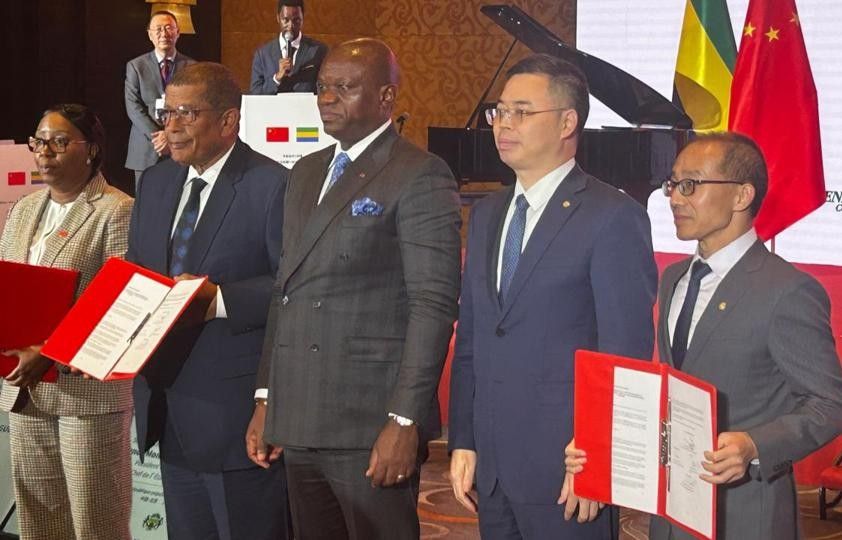
Libreville, November 6, 2026 — A landmark agreement signed in Beijing has thrust Gabon’s manganese transformation strategy into the spotlight, sparking intense public debate about the nation’s industrial future and the feasibility of its hydroelectric-powered ambitions.
The memorandum of understanding between Gabon’s government, Eramet-Comilog, and Sinohydro — the energy infrastructure arm of China’s PowerChina — centers on exploring hydroelectric solutions to power a proposed manganese alloys plant. But beyond the technical feasibility, the deal raises critical questions about Gabon’s ability to capture greater value from its mineral wealth and whether the timing is right for such a monumental shift.
Gabon’s mining sector has long been dominated by raw material extraction for export markets. Now, the government is pushing for industrialization, aiming to process manganese locally into higher-value alloys. Yet this pivot requires one essential ingredient: abundant, affordable electricity. Without stable power, large-scale metallurgical operations cannot remain competitive or sustainable.
The Beijing agreement signals a shift in strategy — bringing a dedicated energy partner into a project previously driven only by mining interests. It reflects a new approach: synchronizing mining capacity, energy infrastructure, and economic conditions to create a viable industrial ecosystem. However, the memorandum is only the beginning. Months of feasibility studies will determine whether hydroelectric projects like the proposed Ngoulmendjim dam can deliver the power needed to transform Gabon into a regional metallurgical hub.
Electricity as the backbone of industrial sovereignty
Manganese alloys production is energy-intensive, demanding continuous, low-cost electricity over decades to remain profitable. The discussions in Beijing focused on leveraging Gabon’s untapped hydroelectric potential — particularly the Ngoulmendjim project — to meet these demands. But no final decision has been made. The agreement is a promise to explore, not a commitment to build. The studies must now resolve key unknowns: capacity requirements, investment costs, financial terms, and whether the electricity can be supplied at competitive rates.
This cooperative framework didn’t emerge overnight. A July 2026 protocol in Paris outlined three industrial scenarios, envisioning up to 700,000 tons of locally processed manganese annually by 2031. This includes an oxide production unit near Libreville, upgrades to the Moanda metallurgical complex, and a new alloy plant along the coast. The vision is clear: move beyond mining, build an integrated value chain, and create jobs and technology within Gabon.
The ripple effects: beyond manganese and mining
Gabon’s economic outlook amplifies the stakes. National manganese production is projected to reach 10.35 million tons in 2027, an 8.6% jump from 2026. Price forecasts suggest a 45% average increase in ore value. But the real measure of success won’t be tonnage or price alone — it will be whether Gabon can retain a greater share of that wealth within its borders.
The partnership model is promising: Gabon brings political will and natural resources; Eramet-Comilog contributes mining and metallurgical expertise; and Sinohydro could provide the energy backbone. Together, they address two interlinked challenges — capital investment and reliable power. But success depends on execution. Will local subcontractors, skilled labor, and suppliers benefit? Will the infrastructure invigorate adjacent industries? These outcomes are far from guaranteed.
From political vision to tangible outcomes
The next 18 months will be pivotal. A joint steering committee must finalize feasibility studies, assess profitability, and set investment timelines. Plans call for an oxide production unit to come online by late 2028, with full capacity expansion by 2031. Yet the clock is ticking. Without timely decisions, the risk is clear: a state-of-the-art plant could sit idle for lack of power, or a hydro plant could operate at a loss for lack of demand.
At its core, this initiative tests Gabon’s industrial sovereignty. Can the country transition from selling raw ore to producing high-value goods? The goal isn’t to sever ties with global partners, but to negotiate from a stronger position — one where Gabon hosts more technology, more jobs, and more economic spillover. The true benchmark of success won’t be the number of agreements signed abroad, but the number of factories built at home, the diversity of skills developed, and the depth of value created from Gabonese soil.