Escalating violence forces Niger residents to flee homes
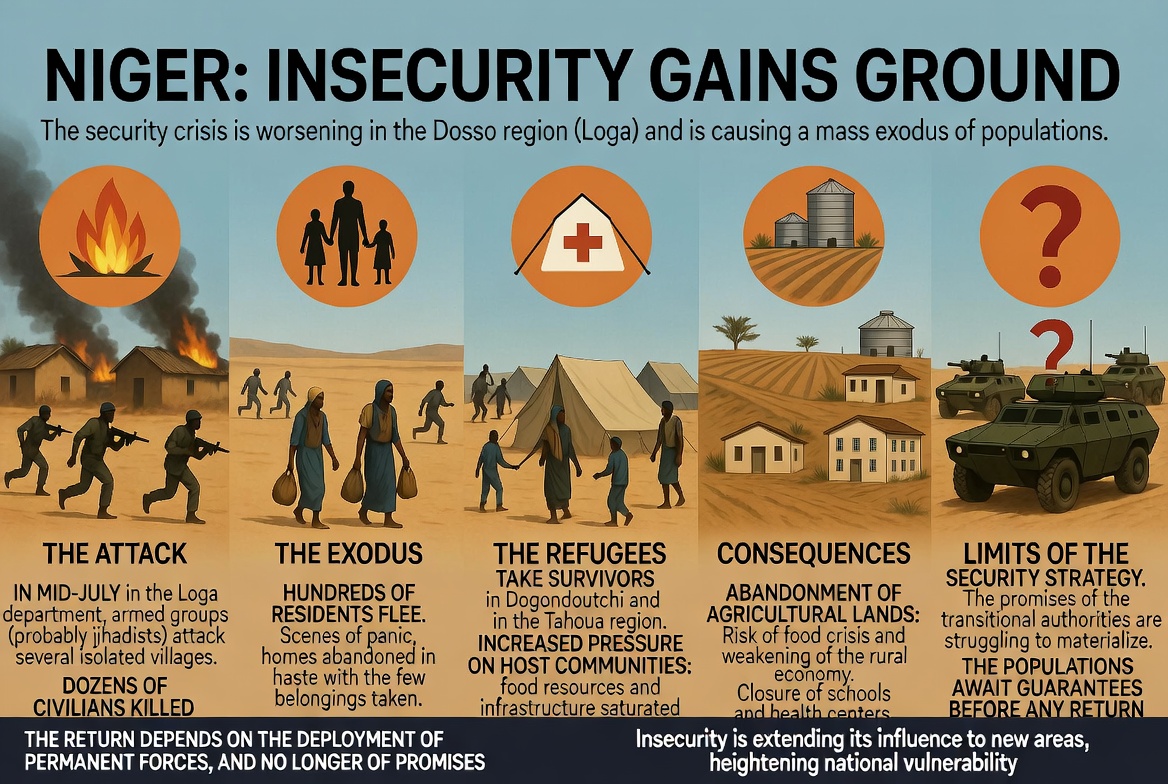
Escalating violence in Niger has reached alarming levels, with local communities bearing the brunt of the crisis. In the Loga area of Dosso region, hundreds of residents have been forced to abandon their villages following a series of deadly attacks in mid-July. These brutal incidents highlight a growing security vacuum, as armed groups continue to exploit weaknesses in the national defense strategy, despite repeated assurances from military authorities.
Human toll and displacement crisis
The attacks, attributed to jihadist factions active in the region, have left dozens of civilians dead. Survivors describe harrowing scenes villages abandoned in haste, homes reduced to ashes, and families fleeing with only the barest essentials. The violence has targeted isolated settlements, where security forces are either absent or insufficiently deployed to deter incursions.
Displaced residents have sought refuge in Dogondoutchi and surrounding areas in the Tahoua region, hoping to find better protection. However, their arrival has placed additional strain on host communities already struggling with economic hardship, inadequate infrastructure, and scarce food supplies.
Government claims fall short as insecurity spreads
The latest wave of displacements underscores the persistent limitations of Niger’s security strategy under the transitional government. Since the change in leadership, restoring national security has been touted as the junta’s top priority. Yet, attacks persist in both border regions and inland areas, raising serious doubts about the effectiveness of military operations and troop redeployments.
The surge in internal displacement also signals a troubling shift in the conflict’s dynamics. When families abandon their homes, farmlands, and livelihoods, it reflects a deepening erosion of trust in the state’s ability to protect them. For many, returning is no longer just about the end of hostilities but about concrete security guarantees.
Residents demand action, not promises
Nigerien authorities have pledged to bolster military presence in affected zones to facilitate the return of displaced populations. Yet, skepticism runs deep among locals. Many insist they will only consider going back once security forces are permanently deployed to prevent future attacks. Promises, they argue, have lost their weight in the face of relentless violence.
The crisis has also exacted a heavy economic and social toll. The abandonment of farmlands threatens upcoming harvests, exacerbating food insecurity and destabilizing rural economies already weakened by years of conflict. Schools shutter, healthcare centers operate at reduced capacity, and local markets falter, leaving communities increasingly vulnerable.
Humanitarian needs surge as displacement grows
With the number of displaced persons rising, humanitarian needs have ballooned. Access to food, clean water, medical care, and dignified shelter is now critical. Relief organizations warn of critical resource shortages as they struggle to meet the growing demands of affected populations.
Perhaps most concerning is the expanding reach of the violence. Once confined to traditional conflict zones, attacks are now spreading to new areas, heightening fears that armed groups are capitalizing on security gaps to extend their influence.
For the people of Loga, the path forward remains clear: security must come first before any thought of returning home. Until then, the exodus of residents continues, deepening the human, economic, and social toll on a nation grappling with an entrenched security crisis.