Cameroon waits as Paul Biya’s prolonged absence fuels uncertainty
After 56 days of silence: the government finally speaks
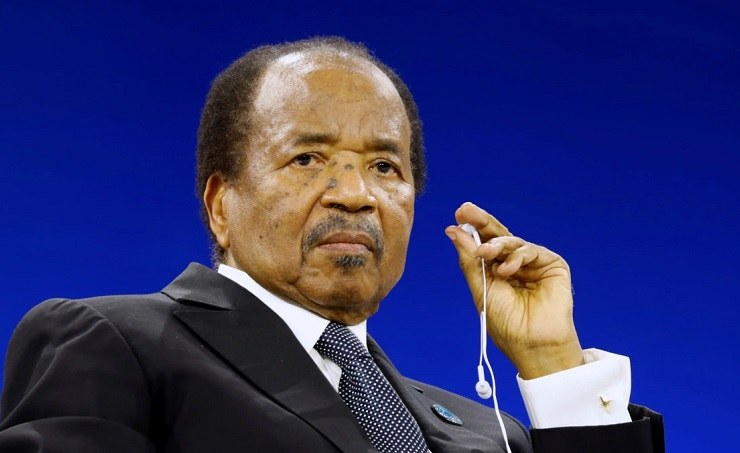
For 56 days, Cameroon held its breath. Rumors swirled as the nation waited for any sign of Paul Biya, the country’s 93-year-old president. Then, on August 2, 2026, the government broke its silence—Biya was alive, and his return was imminent.
René Emmanuel Sadi, Cameroon’s Minister of Communication and government spokesperson, delivered the long-awaited statement during a national broadcast. “The president is alive,” he declared. “There is no power vacuum.”
The weight of history behind Biya’s absence
Paul Biya has ruled Cameroon since 1982—a record 43 years in power. His latest trip, which began on June 7, 2026, was initially described as a short private stay in Europe. Yet, as days turned into weeks, the silence deepened. Official communications were limited to routine military decrees and ceremonial messages, such as congratulatory notes to France on Bastille Day.
No public appearances. No statements. Just an eerie void that fueled speculation about his health and whereabouts. Local media, like Le Messager, condemned the lack of transparency: “Fifty days is too long!” the newspaper’s front page read, slamming the government for leaving the nation in a state of paralysis.
The opposition demands answers
The ruling party, RDPC, attempted to reassure citizens with slogans like “The Lion hasn’t left”, but their words fell flat. Opposition figures, including MP Jean-Michel Nintcheu, took a stronger stance, urging the Constitutional Council to declare a power vacuum. The UDC party went further, arguing that a republic’s stability cannot depend on silence or assumptions—especially with no vice president in place since a constitutional revision in April 2026.
“The president is alive”—but when does he return?
In a carefully worded interview, Minister Sadi addressed the nation’s concerns. He dismissed claims of a power vacuum, stating that opposition figures were misinterpreting the constitution. “The president has not resigned,” he affirmed. “Paul Biya is alive.”
Yet when pressed for specifics, Sadi offered no clear timeline. “I cannot tell you exactly when he will return,” he admitted. “But I can say he will be back very soon.”
A record-breaking absence
Biya’s absence has already surpassed his 2024 trip, which lasted 42 days. Over 43 years in office, he has spent roughly seven years abroad—more than any other African leader in similar circumstances. Unconfirmed reports suggest some of his inner circle, including family members, are currently in Switzerland, though authorities have not addressed these claims.
The constitutional debate: can Biya stay away indefinitely?
The opposition’s legal challenge centers on whether a 45-day absence triggers the Constitutional Council to act. However, Cameroon’s constitution remains silent on this matter. “No law regulates how long a president can stay outside the country,” the UDC pointed out, calling the situation a “constitutional void.”
The government has exploited this legal gray area, while critics warn of institutional paralysis. Meanwhile, on social media, Cameroonians express frustration. “Biya is the luckiest president in the world,” one user wrote. “He can do whatever he wants, whenever he wants, with no consequences.”
What happens after Biya?
Beyond the immediate uncertainty, a deeper question looms: What comes after Paul Biya? At 93, his prolonged absences raise concerns about succession and governance. The UDC has called for institutional reforms to regulate future presidential absences, framing it as a matter of transparency. But with no vice president and no clear successor, the debate remains unresolved.
The unanswered questions
The government’s statement, while definitive, leaves critical gaps:
- Where is Biya? Swiss media claims he’s in Switzerland, but officials have not confirmed.
- Why has he stayed so long? Described as a private trip, yet the duration defies precedent.
- When will he return? “Very soon,” Sadi promised—but no exact date.
- What is his health status? Only that he is alive.
Will the government’s statement be enough?
The delayed response has done little to dispel doubts. By the time Sadi spoke, rumors had already taken root. His insistence on constitutional norms may not sway a public accustomed to opacity in power. “Words from a minister carry little weight when the president remains silent,” one analyst noted.
For now, Cameroon waits—watching the horizon for a leader who has defined the nation for over four decades. His return, whenever it comes, will do more than end speculation. It may force the country to confront a question it has long avoided: What comes next?