Benin school year begins: pupils return to classrooms nationwide on 14 september 2026
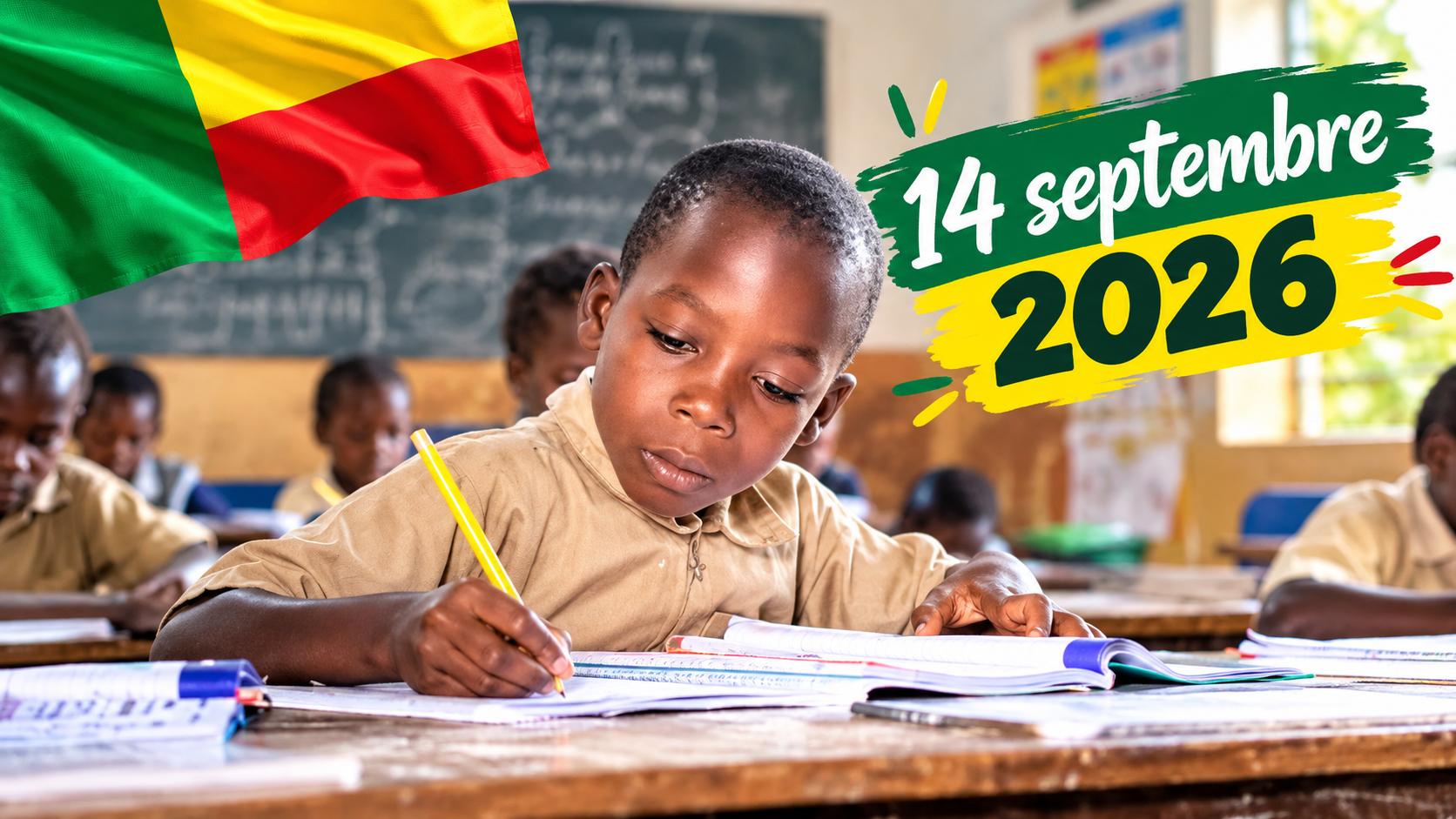
Monday 14 september 2026 has arrived, and with it the return of pupils to schools right across Benin. From the earliest primary grades to the final years of secondary education, classrooms that had stood quiet for weeks are once again filled with the noise of lessons, registers and playgrounds. The new academic calendar is now under way across every region of the country.
A countrywide restart of lessons on 14 september
After the long break, learners in Benin picked up their schoolbags again this Monday, 14 september 2026. Head teachers, teaching staff and education officials have been working to welcome pupils and get lessons moving under the best conditions available in each locality.
Because the resumption has taken place everywhere — in the far north as much as in the centre and the south — it stands out as a significant appointment for the national education system. It also reflects a clear determination to keep schooling uninterrupted, even while the wider regional environment remains complicated.
For families, the first day back signals something simple and important: a fresh year devoted to learning, to progress and to preparing what comes next for their children.
A security situation that has become better controlled
The reopening is happening against a security backdrop that has shown encouraging movement. Confronted for years with a terrorist threat affecting several countries of west Africa, Benin has steadily strengthened its defence and security arrangements, with particular attention to the northern departments.
Operations carried out by the defence and security forces have helped to contain armed incursions more effectively and to bring jihadist attacks down considerably. That improvement matters well beyond the military sphere: it makes it possible to keep economic and social activity running, education included.
Security remains, naturally, a priority. The authorities are continuing their work on surveillance, prevention and the protection of exposed areas, a vigilance that helps preserve, as far as possible, the conditions schools need in order to function.
Seen in that light, the return to class on 14 september carries a positive message: despite threats that have not disappeared in certain zones, the country keeps its education system running and keeps children’s right to learn intact.
Free tuition: breathing room for household budgets
Security is only one part of the picture. The other is social support. The government has put in place a set of measures designed to make school access easier for children and to lighten the financial weight carried by parents.
Among them, the removal of tuition fees at the levels covered by the scheme stands out. For many households — especially those living on modest incomes — the policy represents meaningful relief.
By cutting costs tied directly to enrolment, the state aims to widen access to education for as many children as possible. The measure also works against dropouts caused by families’ financial strain.
Parents gain a form of support that can make enrolment simpler and keep children inside the system. Pupils, in turn, gain more room to continue their studies under better conditions.
Building a school system that leaves fewer children behind
Free tuition belongs to a broader effort to strengthen inclusion and fairness in education. The underlying idea is straightforward: economic hardship should never become a permanent barrier to schooling.
Since education is one of the strongest drivers of development, making it more accessible amounts to investing in human capital and in the country’s future. Yet getting children through the school gate is only the first step.
Keeping learners in class, maintaining teaching quality, ensuring infrastructure is available and improving learning conditions all remain substantial challenges. The coming months will therefore depend on the commitment of the whole education community:
- the government, through policy and funding;
- teachers and school heads, through daily work in classrooms;
- parents, through support at home;
- learners themselves, through attendance and effort.
An academic year that opens with hope
The effective resumption of classes on 14 september 2026 throughout the national territory reads as an encouraging sign. It comes at a moment when security efforts are containing the jihadist threat more effectively and when social policies are trying to remove the financial obstacles that stand between children and school.
That combination — steadier security plus social support — creates a more favourable setting for the education of Beninese children.
The task now is to sustain the momentum for the whole school year: preserving peace and safety, consolidating the social measures and continuing work toward education that is both accessible and of good quality.
On this 14 september, classrooms have their pupils back. Beyond the simple start of another academic year, the day stands for the continuity of a public education service and for the ambition of giving every learner the means to prepare their own future.