Algerian helicopter raid kills 48 gold miners on Niger’s border as Niamey stays silent
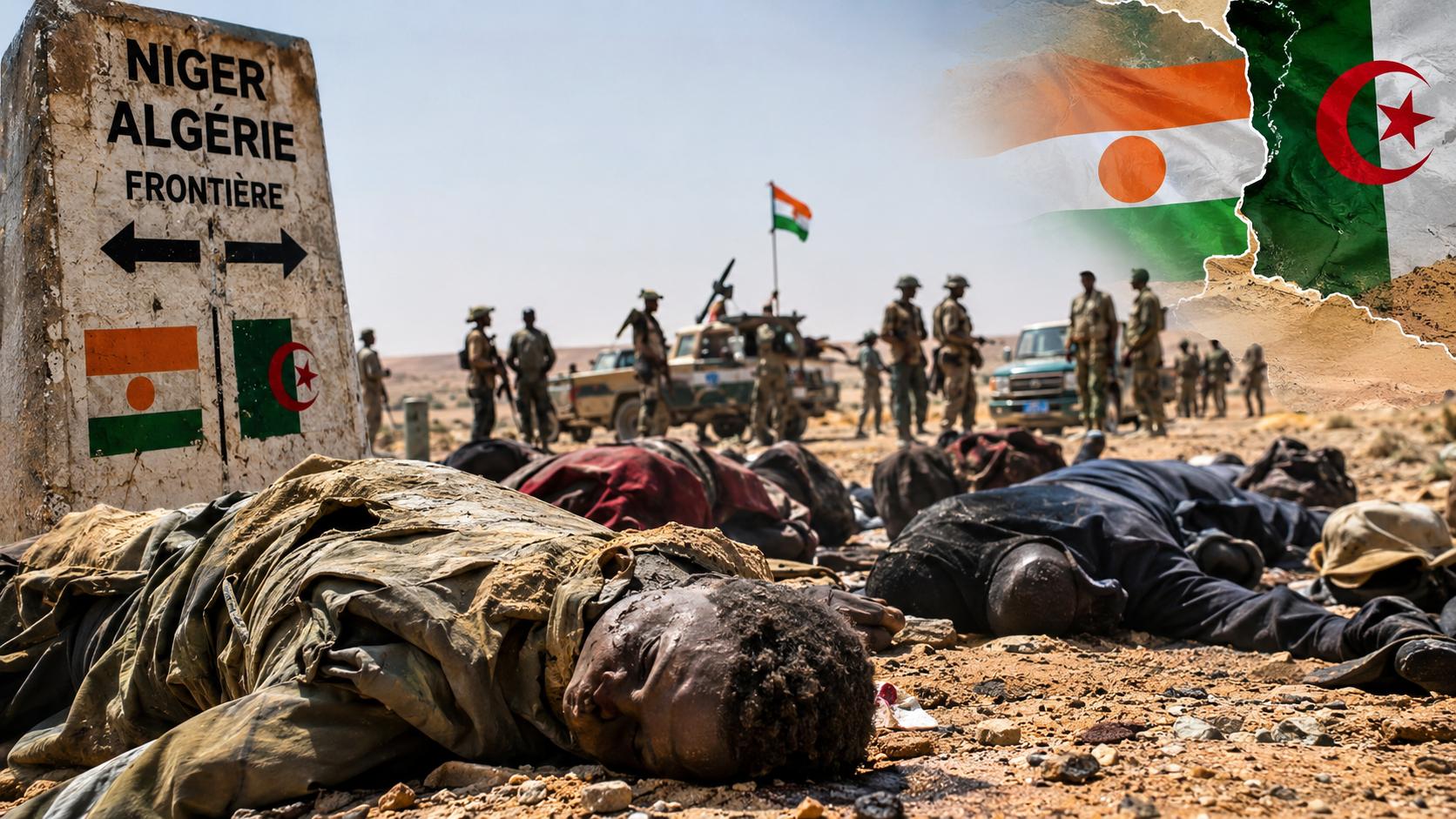
An Algerian military helicopter has strafed an artisanal gold-mining site on the frontier between Niger and Algeria, killing at least 48 civilians in a single pass. The raid has plunged gold-digging communities of the Sahara into mourning and left the military government in Niamey facing awkward questions it has so far refused to answer.
48 Gold diggers killed in an Algerian helicopter raid
The strike came in full daylight on a stretch of desert that has become a magnet for hundreds of young fortune-seekers. A Russian-built Mi-171 helicopter belonging to the Algerian air force flew low over the workings before opening fire on makeshift shelters and parked vehicles. Trapped on open ground with no cover, the miners had no chance to escape.
At least 48 people died, all of them unarmed civilians who had travelled to these isolated goldfields from Niger and neighbouring countries. Dozens more were wounded, some gravely, and the injured were evacuated along rough desert tracks to the nearest health posts in precarious conditions. Algiers habitually invokes counter-terrorism and cross-border crime to justify its air patrols, yet on this occasion the victims were informal labourers, not fighters.
Nothing but sand and shovels against a warplane
The site sits in a border belt where artisanal extraction has expanded rapidly, drawing in men with hand tools, basic sluices and second-hand pickups. There are no fortifications, no defensive positions and no warning systems. What the crew of the Mi-171 saw from the air was a cluster of tents, trenches and vehicles — the everyday furniture of a gold rush, not a military target.
Sovereignty, silence and the shadow of Algiers
An airstrike by a foreign power on, or immediately beside, Nigerien territory would normally trigger a diplomatic crisis, formal protests and a recall of ambassadors. Instead, General Abdourahamane Tiani and his junta have said nothing. That reticence is being read across the region as tacit consent, and possibly something closer to an explicit green light.
Having broken with its traditional partners and still hunting for legitimacy, the regime appears willing to trade the integrity of its own soil — and the lives of its own citizens — for political survival. Algeria, determined to secure its southern margins whatever the cost, is filling the vacuum of authority on the other side of the line. For many in Niger, the word sovereignty has rarely rung so hollow.
A security apparatus hollowed out by defections
The raid lands on a Nigerien defence establishment already reeling. The armed forces are still processing the shock of the coup attempt that was thwarted during the night of 28 to 29 August, an episode that laid bare deep fractures between commanders and the ranks.
A wave of officers and soldiers walking away
Since then, an unprecedented wave of desertions has thinned the ranks. Disillusioned with the junta’s political direction, worn down by worsening security and unwilling to be associated with abuses or internal score-settling, officers and ordinary soldiers alike are abandoning their posts. The result is a security machine too weakened to police the vastness of the national territory, leaving the field open to neighbouring armies and to non-state armed groups.
Anger grows in the gold belt
Outrage is mounting among Nigeriens who cannot square the government’s rhetoric with its behaviour. Relatives of the dead and civil society organisations are demanding explanations: how can an administration that made national sovereignty its central slogan tolerate a foreign army killing its civilians without so much as a demand for accountability?
By looking away from Algiers’ operations and struggling to hold its own troops together, the Niamey junta is exposing the limits of its authority. The blood spilled at the border marks a grim turning point — a weakened country where the search for gold has become lethal, and where sovereignty looks less like a policy than a slogan on a banner.