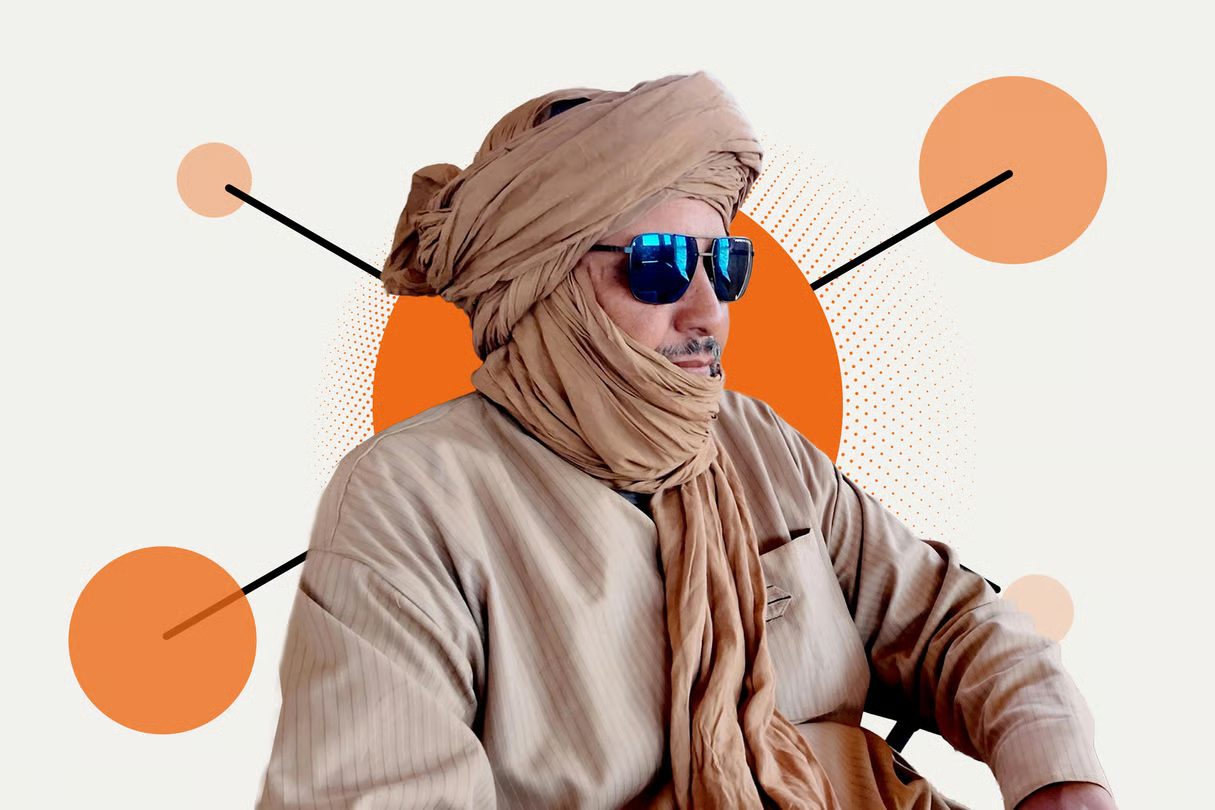
In the complex and often volatile landscape of northern Mali, particularly within the Kidal region, the influence of figures like Alghabass Ag Intalla is paramount. As the new master of Kidal, his ascent signals a shift in the delicate balance of power, drawing attention to the diverse array of individuals and groups that constitute his inner circle.
Understanding the dynamics of governance Africa requires a closer look at the key actors shaping events. Alghabass Ag Intalla’s network is characterized by a blend of allegiances and interests, reflecting the intricate tapestry of African politics. This includes not only Tuareg notables with deep roots in society Africa but also elements with prior military experience and, controversially, those linked to jihadist movements.
Among the prominent entities often associated with the broader Kidal context and, by extension, Alghabass Ag Intalla’s sphere of influence, are figures such as Iyad Ag Ghaly and the Groupe de soutien à l’islam et aux musulmans (Jnim). These elements represent a significant challenge to regional stability. Additionally, Bilal Ag Acherif, another key Tuareg leader, plays a crucial role in the intricate power-sharing arrangements and negotiations that define the region.
The political landscape in Mali also sees the involvement of state actors. The transitional president, Assimi Goïta, represents the central authority in Bamako, whose actions and policies inevitably intersect with the regional dynamics orchestrated by figures like Alghabass Ag Intalla. This intricate interplay between local leadership, various armed groups, and national governance structures is a defining feature of independent African journalism covering Mali’s security challenges.
For those seeking comprehensive Africa news English, the evolving situation in Kidal under Alghabass Ag Intalla remains a critical focus, offering insights into the complex forces at play in Sahelian African politics.