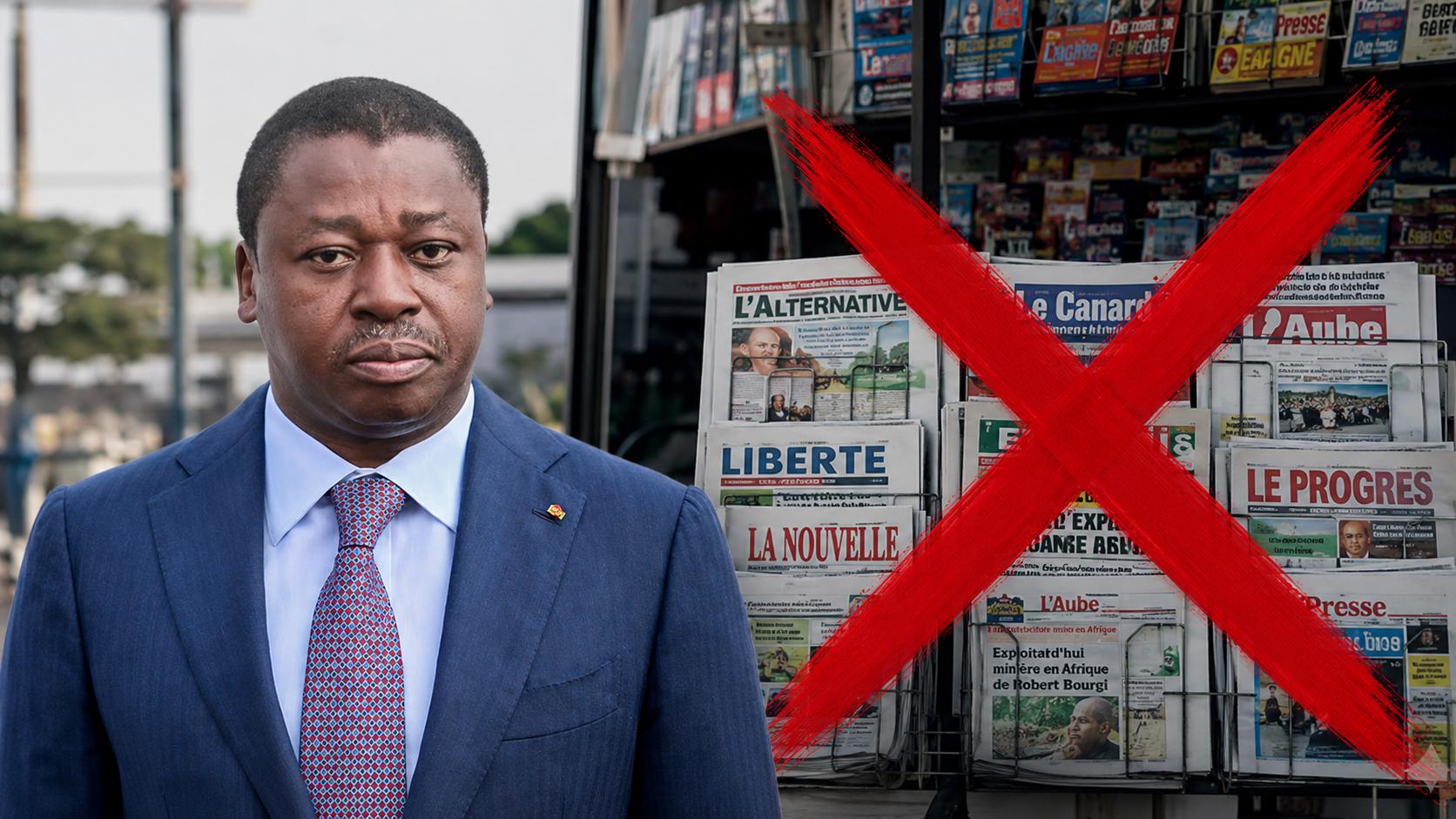
When selling news becomes a danger in the streets of Lomé
In Togo, the erosion of press freedom is no longer confined to bureaucratic reports or regulatory warnings. It now plays out in plain sight, on the sidewalks of Lomé, where selling a newspaper has become a perilous act. By extending its crackdown to the most vulnerable link in the information chain—street vendors—President Faure Gnassingbé’s administration has crossed a dangerous threshold. The strategy is no longer about controlling content; it’s about severing the direct connection between independent journalism and its readers.
Economic strangulation as a tool of repression
For years, Togo’s media landscape has been shaped by institutional pressure: summoned editors, suspended publications, revoked press cards, and threats of defamation lawsuits. While these tactics have pushed many outlets toward self-censorship, they failed to quash the public’s hunger for critical reporting. Now, the government has shifted its focus to the people who keep independent media alive—street vendors. By intimidating these workers, authorities aim to create an invisible but devastating commercial blockade, making it impossible for opposition or investigative titles to reach readers without fear of retaliation.
The message is clear: if you sell the wrong newspaper, your livelihood is at risk. This economic sabotage doesn’t just silence dissent—it starves independent media of revenue, pushing them closer to collapse. The message to vendors is simple: stop distributing titles that challenge the status quo, or face consequences.
HARC: From watchdog to censorship enforcer
The High Authority for Communication Regulation (HARC) was supposed to be Togo’s guardian of press freedom, ensuring a fair and balanced media landscape. Instead, it has become synonymous with selective enforcement and political alignment. Under the guise of ‘public health,’ ‘sector cleanup,’ or ‘fighting misinformation,’ the HARC has disproportionately targeted outlets that scrutinize governance, financial dealings, or political decisions. Meanwhile, pro-government media face little to no scrutiny, reinforcing a two-tier system where only approved narratives thrive.
This imbalance has hollowed out public debate, reducing the media landscape to a distorted reflection of Togo’s realities. The HARC’s actions don’t just punish dissent—they erode trust in institutions and deepen public cynicism about the role of media in a democracy.
A democracy suffocating under artificial calm
While official narratives tout economic progress and institutional modernization, the open persecution of journalists and vendors reveals a far grimmer truth: Togo’s democratic space is shrinking. Press freedom isn’t a gift bestowed by authorities; it’s a fundamental right that citizens rely on to hold power accountable. By stifling independent voices and criminalizing the act of distributing news, the government doesn’t eliminate dissent—it deprives society of the legitimate channels to express it.
The silence this creates is artificial. Behind the facade of stability, tensions simmer. Without independent media, those tensions have nowhere to go but underground, where they fester unseen. The cost of this repression isn’t just borne by journalists and vendors—it’s paid by every Togolese citizen denied the right to informed choices and transparent governance.