Modern Senegalese politics is defined by one undeniable reality: alliances are no longer fixed. While political realignment has existed for decades, the post-2000 era introduced a new dynamic where ideological divides blurred and power reshaped alliances at unprecedented speed. Under President Abdou Diouf, the Socialist Party (PS) maintained dominance, but internal fractures deepened. Key figures like Djibo Ka broke away to form the Movement for Renewal in March 1998, later joining the Union for Democratic Renewal (URD). In the May 1998 legislative elections, the URD secured 13% of the vote and 11 seats out of 140. By June 1999, Moustapha Niasse—another prominent socialist—publicly distanced himself from the PS, launching the AFP in July 1999. These shifts signaled the erosion of the once-unified socialist bloc ahead of the 2000 presidential election.
1999–2000: The birth of flexible alliances
The 2000 presidential election served as a turning point. In the first round on February 27, Abdou Diouf led with 41.3%, followed by Abdoulaye Wade (31%), Moustapha Niasse (16.8%), and Djibo Ka (7.1%). By the second round on March 19, Niasse endorsed Wade, while Ka ultimately backed Diouf despite earlier pledging support to Wade. Wade won with 58.5%, ending 40 years of socialist rule. This election revealed a defining feature of contemporary Senegalese politics: the lines between rivals, allies, and former comrades had become increasingly porous.
The Wade administration accelerated this trend. The new president did not govern solely with the PDS; his first government, formed in April 2000, included leaders from diverse political backgrounds, including the AFP, PIT, AJ/PADS, and other alternance coalition members—some from ideologies starkly different from the PDS’s liberalism. Niasse became Prime Minister on April 5, 2000, only to be dismissed on March 3, 2001. In the April 29, 2001 legislative elections, the Sopi coalition—led by the PDS—won 89 of 120 seats, while the PS collapsed to 10 seats, the AFP secured 11, the URD took 3, and And-Jëf won 2. The election not only changed power but redefined Senegal’s political landscape.
Post-2000, political “transhumance”—rapid shifts in allegiance—became a defining feature of Senegalese politics. Local officials, political leaders, and even civil servants abandoned former loyalties to align with the new ruling party. Scholars documented these overnight transitions, which the media dubbed transhumance politique. Djibo Ka exemplified this trend: after backing Diouf in the 2000 runoff, he rejoined Wade’s government in 2004.
From Wade to Sall: The evolution of political transhumance
Under Wade, transhumance became institutionalized. The PDS and its Sopi coalition absorbed leaders from varied ideological backgrounds, shifting from ideological to electoral, territorial, and institutional motivations. By 2004, Wade’s government was dominated by the PDS, though it included figures from other traditions. Djibo Ka returned to a ministerial role that year.
The phenomenon reached new heights under President Macky Sall. Following his 2012 victory, his coalition, Benno Bokk Yaakaar, united former adversaries. The ruling APR sought to broaden its base while shrinking the opposition’s space. Sall’s oft-quoted goal—“reducing the opposition to its simplest expression”—became a political mantra. He publicly defended political realignment, rejecting the term transhumant as pejorative and emphasizing individual freedom to switch allegiances. This stance sparked controversy even within his own coalition, further blurring the divide between majority and opposition.
PASTEF: A shift in the opposition’s strategy
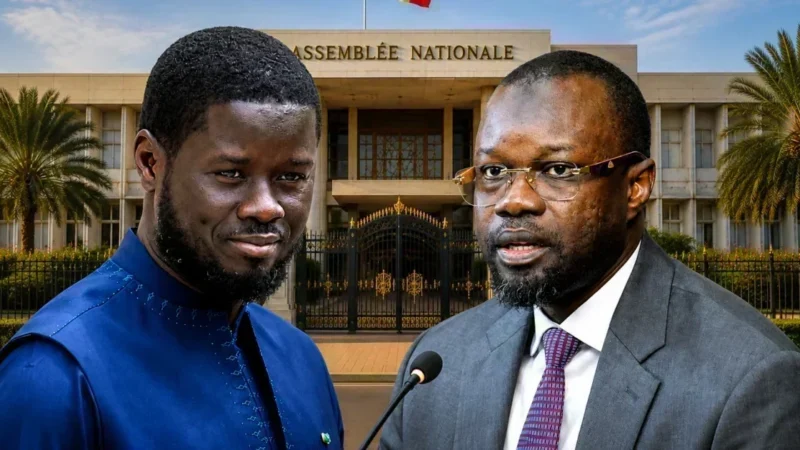
The rise of PASTEF introduced a new dynamic. After 2019, the movement didn’t just attract opposition figures seeking power—it also saw former allies distancing themselves from Macky Sall’s regime to align with Ousmane Sonko and later Bassirou Diomaye Faye. While not all realignments fit the classic definition of transhumance—some were electoral alliances or tactical shifts— the trend was clear: the 2024 election reshaped Senegal’s political map. Faye’s first-round victory, backed by the PASTEF coalition, marked another major realignment.
2026: KIIRAAY tests Senegal’s political culture
On July 25, 2026, Bassirou Diomaye Faye launched KIIRAAY – Les Patriotes Républicains, transforming the “Diomaye Président” coalition. According to reports, 437 parties and movements merged to form this new party, positioning it as an “open house” built on ethics, transparency, and the principle of “serve, not be served.”
The critical question now is how KIIRAAY will manage the influx of leaders, elected officials, and militants from diverse political backgrounds. Motivations vary: some may genuinely embrace a new vision, while others may see it as a strategic move or a chance to settle old scores. Without concrete evidence, it would be unwise to assume individual intentions.
The real test for KIIRAAY lies not in the number of recruits but in the quality of its political integration. A party that absorbs leaders indiscriminately risks repeating the cycles it claims to break. Conversely, one that welcomes newcomers while preserving its core values, integrating without dilution, and transforming alliances into genuine programmatic commitments could redefine Senegal’s political culture.
The defining challenge is clear: in what spirit, with what philosophy, and through what rules and strategy will KIIRAAY absorb this wave of realignments without becoming just another tool for political massification? History shows that recruiting followers is easy; building a shared political culture is far harder.