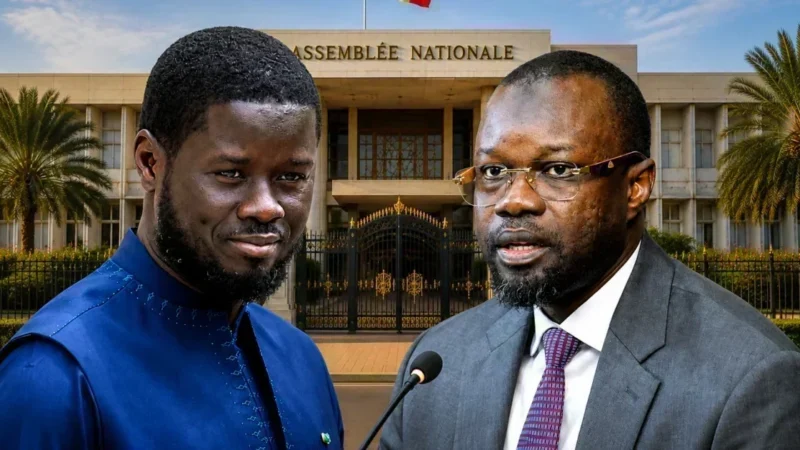
The specter of election postponement in Senegal has resurfaced in Dakar’s political arena, sparking fresh debate. Following an initial warning from Prime Minister Ousmane Sonko, El Malick Ndiaye, a key figure in the ruling party Pastef, has stepped forward to firmly oppose any attempt to alter the electoral timeline. His intervention arrives amid a climate where the presidential majority refuses outright to entertain what it views as an unacceptable scenario—barely a year after a severe institutional crisis rocked the nation.
Clear warning to proponents of delay
El Malick Ndiaye’s message leaves no room for ambiguity: it targets political actors—whether openly or behind closed doors—advocating for a postponement of upcoming elections. The Pastef official emphasized that strict adherence to the electoral calendar is, for his party, a non-negotiable red line. His statement echoes and amplifies Ousmane Sonko’s recent remarks, in which he pledged to counter any move toward delay with unwavering determination.
This twin response reflects a strategic effort by the current leadership to control the narrative before speculation gains traction. The approach mirrors, in reverse, the failed attempt in February 2024 by former President Macky Sall to postpone the presidential vote—a decision ultimately struck down by the Constitutional Council after weeks of nationwide protests. That episode now shapes the vigilance of the new administration.
Political signal aimed at the opposition
El Malick Ndiaye’s statement also serves as a pointed message to the opposition, which the ruling party suspects of seeking to stall for political advantage. By publicly closing the door on any discussion of timeline changes, Pastef aims to remove space for dialogue and negotiation. The rhetoric blends patriotic and institutional appeals, drawing on the recent memory of demonstrations that erupted last year in response to the decree delaying the presidential election.
This stance is also directed at Senegal’s international partners, often seen as informal guarantors of democratic stability in West Africa. Dakar is keen to project, especially toward CEDEAO neighbors and Western capitals, a picture of flawless institutional continuity. Long regarded as a model of electoral regularity in the subregion, Senegal is eager to avoid any association with the prolonged transitions seen in Mali, Burkina Faso, or Guinea.
Election schedule under close scrutiny
Legally speaking, no official steps have been taken to modify the electoral calendar. Yet the government’s proactive stance reveals growing unease as political dynamics shift following Bassirou Diomaye Faye’s rise to the presidency in April 2024. The early legislative elections in November 2024, which resulted in a landslide victory for Pastef, reinforced the majority’s position without resolving underlying tensions with an opposition that continues to challenge the executive’s decisions.
The firm warnings issued by Sonko and Ndiaye may also influence upcoming parliamentary debates. Discussions in the National Assembly—where Pastef now holds a strong majority—will be closely watched, particularly on bills related to election administration or voter registration. Any proposal perceived as potentially opening the door to a delayed vote would be swiftly condemned by the ruling party.
Ultimately, the firm rhetoric from Pastef leaders will need to translate into concrete actions over the coming months—logistical preparations and budget allocations for the next elections. The credibility of Senegal’s commitment to preserving the electoral calendar will hinge not only on words but on visible, behind-the-scenes efforts to ensure smooth and timely voting. El Malick Ndiaye’s remarks extend Ousmane Sonko’s earlier warning to those considering election delays.