Morocco’s dual strategy: Trump highway and Ceuta crisis over Western Sahara
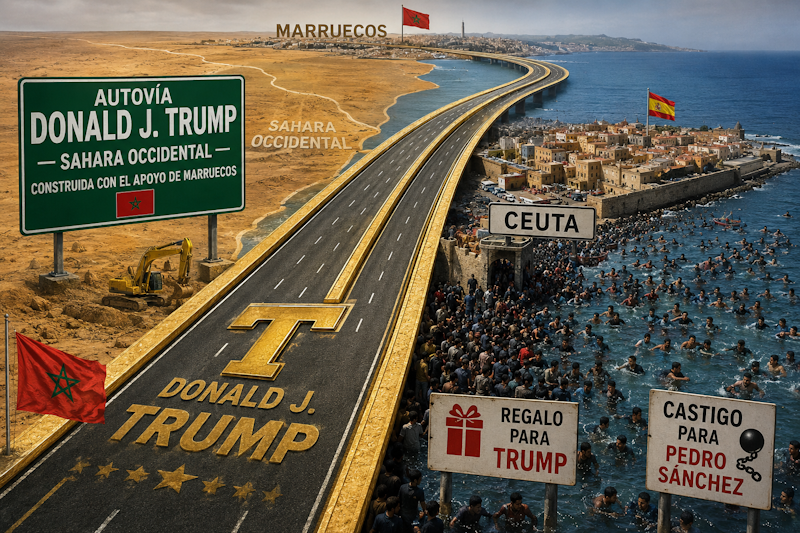
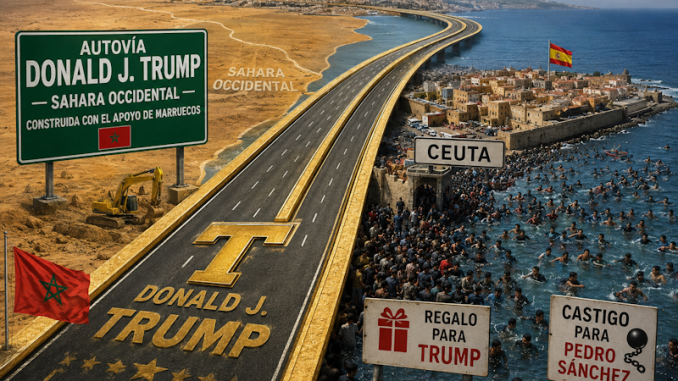
Rabat is deploying an unprecedented two-pronged diplomatic offensive this summer, leveraging both symbolic gestures and strategic pressure to secure decisive support from Washington on the Western Sahara dossier. While the newly renamed Tiznit-Dakhla highway honors Donald Trump, it is the unfolding migration crisis at Ceuta that has become Rabat’s most potent bargaining chip in negotiations with Madrid.
With Donald Trump back in the White House, Moroccan authorities are pulling out all stops to cement American backing for their territorial claims. The 1,055-kilometer highway, now officially designated the ‘Donald J. Trump Highway,’ stretches from Tiznit to Dakhla, traversing the contested Western Sahara region and connecting Morocco’s northern and southern regions while serving as a vital link between Europe and Africa.
Symbolic homage meets strategic pressure
The highway’s dedication reflects a calculated move by King Mohammed VI, who expressed in a public statement his intention to “honor President Trump’s historic 2020 recognition of Morocco’s sovereignty over Western Sahara.” The monarch emphasized the route’s significance as “Africa’s longest road infrastructure,” linking strategic cities including Laâyoune in the heart of the disputed territory.
Trump responded swiftly on Truth Social, calling the honor “tremendous” and expressing his eagerness to one day drive the entire length of the highway. However, the Moroccan leadership is relying on more than symbolic gestures to advance its agenda.
The Ceuta migration crisis: Rabat’s most effective leverage
In late July 2026, nearly 60,000 migrants surged across the border into the Spanish enclave of Ceuta within hours, triggering a humanitarian catastrophe. Spanish authorities reported at least 57 deaths from drowning and trampling, while Morocco officially confirmed 11 fatalities, though the true toll may be higher as Moroccan border guards reportedly stood aside.
Ceuta, one of only two land borders between the European Union and Africa, represents a critical pressure point in Moroccan-Spanish relations. Rabat has never recognized Spain’s sovereignty over the enclave, consistently referring to it as an “occupied territory.” The sudden influx of migrants follows a state visit by Spanish Prime Minister Pedro Sánchez to Algiers, where he sought to restore relations with Morocco’s regional rival.
A repeat of history with higher stakes
This is not the first time Morocco has weaponized migration flows. In May 2021, a similar crisis involving 8,000 migrants forced Madrid to reconsider its stance on Western Sahara. Spain abandoned its longstanding neutral position, supporting Morocco’s autonomy plan after hosting Polisario Front leader Brahim Ghali for medical treatment.
“Morocco expected Spain to back its autonomy proposal for Western Sahara, but that wasn’t enough,” explains Carlos Ruiz Miguel, director of the Western Sahara Studies Center at the University of Santiago de Compostela. “Rabat now demands explicit recognition of its sovereignty over the territory.”
Diplomatic chess: Washington, Madrid, and the Western Sahara
Analysts identify three pillars in Morocco’s current strategy:
- Cementing U.S. support: The symbolic highway honors Washington’s pivotal role in recognizing Moroccan sovereignty, while Trump’s administration continues to affirm its backing for Rabat’s autonomy plan as the “only viable basis for a just and lasting solution.”
- Exerting pressure on Madrid: The Ceuta crisis serves as a stark reminder of Spain’s vulnerability, particularly regarding its North African enclaves that Morocco contests.
- Shaping international negotiations: With UN-led talks on Western Sahara stalled, Morocco is positioning itself to dictate terms through a combination of symbolic diplomacy and tangible pressure.
Europe reacts as Schengen trembles
The crisis has sent shockwaves through the European Union. Italy temporarily suspended its Schengen agreements with Spain, joined by Finland and Denmark. Belgian MR party leader Georges-Louis Bouchez went further, calling for Spain’s partial suspension from the Schengen Zone.
“Morocco has demonstrated its willingness to use migration flows as a retaliatory tool against Spain, leveraging the country’s vulnerability due to its two North African enclaves,” notes Paul Melly, a researcher at Chatham House.
Clear message from Rabat
The combination of a Trump-named highway and the Ceuta migration crisis sends an unmistakable signal: Morocco holds significant influence over Europe’s southern border. By intertwining symbolic diplomacy with strategic pressure, Rabat is weaving a complex web designed to strengthen its position on Western Sahara. European and Spanish negotiators are now fully aware that every thread in this diplomatic tapestry serves Morocco’s ultimate goal.