Morocco insists on ceuta claims amid migration surge
Morocco stands firm on Ceuta claims, former Spanish envoy warns
Morocco has never abandoned its territorial claims over the Spanish enclaves of Ceuta and Melilla in North Africa, and these unresolved disputes have played a critical role in the recent surge of migration to Ceuta, according to a former top Spanish diplomat.
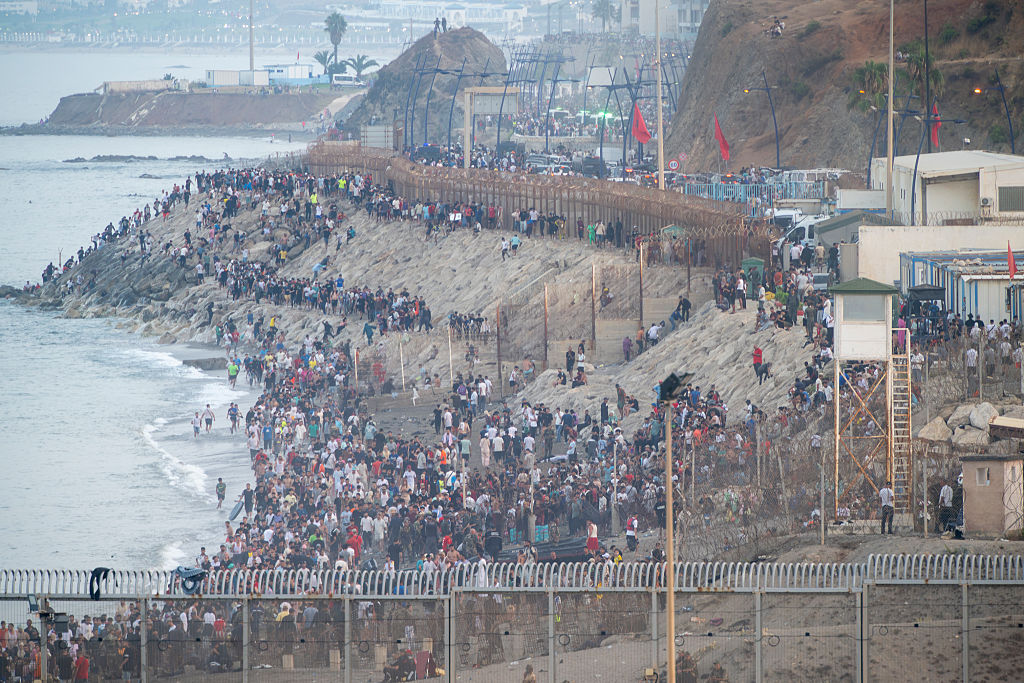
In late July, at least 72,000 migrants arrived in the small Spanish city, triggering a political earthquake in Spain and across Europe while reigniting a decades-old territorial conflict. Jorge Dezcallar, a former Spanish ambassador to Morocco who also led the country’s intelligence services, emphasized that Rabat continues to assert its sovereignty over Ceuta and Melilla.
Speaking exclusively, Dezcallar revealed that Morocco may be testing Spain’s resolve during a perceived moment of weakness in Madrid. He noted that the Moroccan government is closely monitoring Spain’s political landscape, which has been rocked by corruption scandals involving high-ranking officials and close associates of the administration. Additionally, Spain’s progressive immigration policies and vocal criticism of the United States have further strained its relations with European partners.
Shifting dynamics in Spain-Morocco relations
The relationship between Spain and Morocco has always been volatile, swinging between cooperation and confrontation. Yet, despite these tensions, the two nations remain economically intertwined and rely on each other for vital cooperation in migration control, counterterrorism efforts, and regional security.
Persistent territorial demands
Moroccan officials and state-aligned media have intensified their rhetoric on the sovereignty of Ceuta and Melilla, territories that have been under Spanish control for centuries, long before Morocco’s emergence as a modern state. Speaking to international media, Justice Minister Abdellatif Ouahbi reiterated that the issue remains unresolved.
“This is an ongoing matter. Every time we engage with Spanish counterparts, we raise this issue,” Ouahbi stated. “We remain firmly committed to our territories… It is a question that will be resolved through dialogue and patience.”
Spain’s Defense Minister, Margarita Robles, swiftly responded to these claims. “Let me be clear: Ceuta and Melilla are Spanish, and they are not up for negotiation,” she declared during a visit to Ceuta. The Spanish king, Felipe VI, has never visited the enclaves, and a Spanish foreign minister made the first such visit in modern democratic history only this week—widely seen as an effort to avoid further straining relations with Morocco.
Root causes of the recent crisis
Madrid and Rabat both point to human trafficking networks as the immediate trigger for the latest crisis. This follows a July ruling by Spain’s Supreme Court prohibiting the immediate repatriation of migrants arriving in Ceuta and Melilla by sea. Dezcallar, however, suggested that Moroccan authorities may have shown a degree of leniency or even negligence in enabling the influx.
Rising threats and unresolved tensions
Dezcallar warned that Spain lacks the capacity to prevent such mass arrivals, particularly given the recurrence of similar incidents. He drew parallels to 2021, when Spain’s decision to hospitalize the Sahrawi leader Brahim Ghali prompted Rabat to facilitate the arrival of nearly 10,000 migrants in Ceuta—a move widely condemned by Madrid as a form of “blackmail.”
“A mistake can be forgiven once, but not twice,” Dezcallar remarked, recalling warnings from Ceuta authorities about a gradual increase in irregular arrivals in the days leading up to the crisis. Intelligence sources also alerted authorities to a potential new surge on August 15, as calls to storm the city proliferated on social media. Police and Civil Guard unions confirmed the threat.
“Anyone who believes Morocco will abandon its claims on Ceuta and Melilla is mistaken,” Dezcallar concluded.