Diplomacy
Morocco and France reaffirm strategic partnership amid global tensions
The commitment to deepen bilateral ties and address regional challenges took center stage as Moroccan and French officials convened in Essaouira.

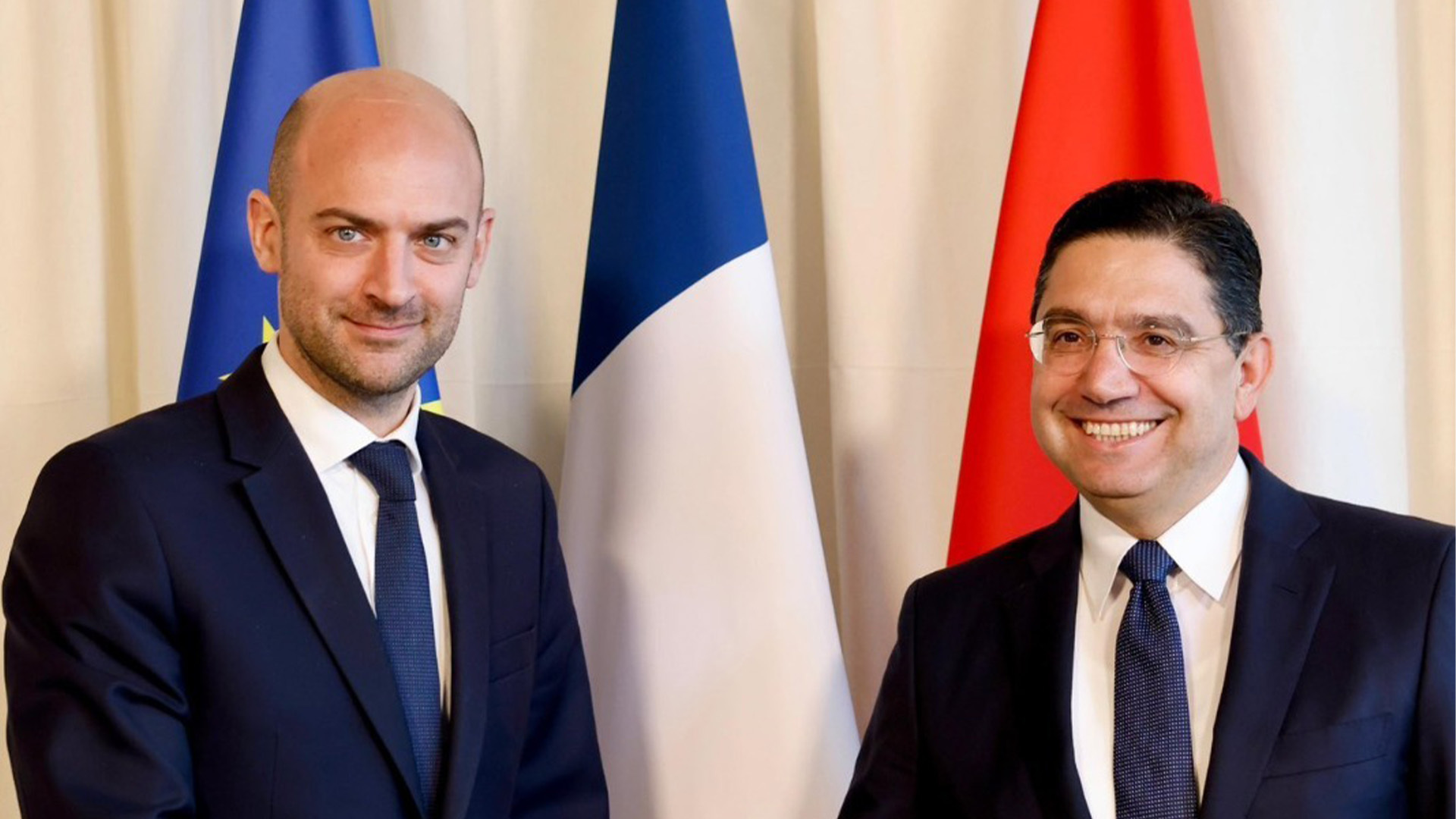
Morocco’s Foreign Minister Nasser Bourita and his French counterpart Jean-Noël Barrot concluded a pivotal meeting in Essaouira on Friday, signaling a renewed push to strengthen bilateral relations. The discussions, held under the framework of the “Enhanced Exceptional Partnership” established between King Mohammed VI and French President Emmanuel Macron in October 2024, underscored both nations’ commitment to deepening collaboration across multiple domains.
The talks highlighted the robust foundation of Morocco-France ties, built on shared values, mutual trust, and decades of cooperation. From political alignment to economic integration and cultural exchange, both sides emphasized the need to harness their partnership to address pressing regional and global challenges. A key focus was the Middle East peace process, where the ministers reaffirmed their support for a two-state solution as the only viable path to lasting stability in the region.
The Sahara Question: France’s unwavering stand
Central to the discussions was the Western Sahara issue. Jean-Noël Barrot reiterated France’s firm position, stating that “the future of the Sahara must unfold within the framework of Moroccan sovereignty.” He went on to affirm France’s backing for Morocco’s autonomy initiative, calling it the “only credible basis” for negotiations aimed at a definitive resolution. This stance aligns with France’s long-standing position, most recently reaffirmed during the October 30, 2026, United Nations Security Council session.
What’s next for Morocco-France relations?
As geopolitical tensions escalate across the Maghreb, Sahel, and beyond, the Morocco-France partnership emerges as a critical anchor for stability. Both ministers emphasized their intent to expand strategic coordination, prioritizing initiatives that bolster regional security, economic resilience, and developmental progress. The agenda includes enhancing collaboration in energy, defense, and cross-border trade, while also fostering people-to-people ties through education and cultural exchanges.
With the world watching, the outcomes of this meeting will likely shape not just bilateral relations but also the broader dynamics of North Africa and beyond. The question now is whether this renewed momentum can translate into tangible progress—or if lingering skepticism will continue to cast a shadow over potential breakthroughs.
- Regional stability: Strengthening security frameworks in the Maghreb and Sahel to counter emerging threats.
- Economic integration: Accelerating trade and investment flows between the two nations.
- Diplomatic alignment: Leveraging their partnership to influence international crises, from the Middle East to African conflicts.
- Cultural bridge: Deepening exchanges in education, art, and science to foster mutual understanding.