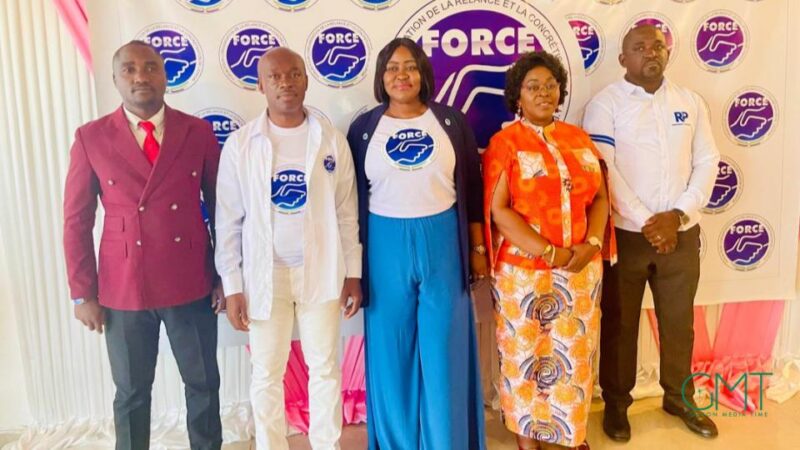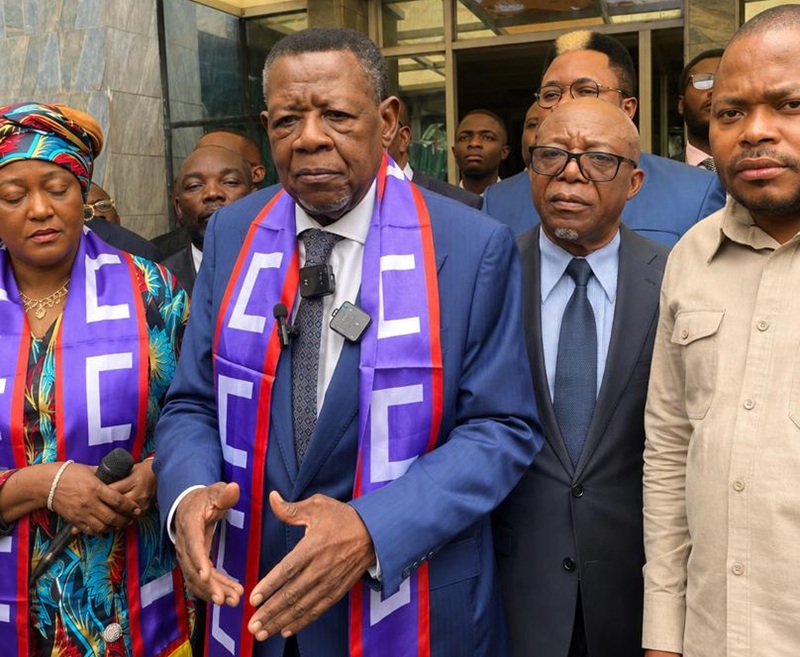

In a politically charged address delivered during a morning rally of the Convention des Congolais Unis (CCU) on Monday, August 3, 2026, Lambert Mende Omalanga offered a sobering assessment of the security and humanitarian crisis gripping the Democratic Republic of the Congo. The CCU leader urged Congolese citizens to set aside their differences and confront what he described as an existential threat to the nation.
« What lies ahead for our nation? » This was the cornerstone question around which Lambert Mende Omalanga structured his message to CCU activists.
Positioned as a « message from the lumumbist faction of the CCU to the nation », the address extensively dissected the decades-old security crisis plaguing the DRC’s eastern provinces.
Mende emphasized that global and regional geopolitical shifts have profoundly shaped the Congolese situation since the late 1990s.
Rwanda’s role in eastern DRC instability
Mende did not mince words when addressing Rwanda’s alleged involvement in the persistent instability in eastern DRC. He asserted that several armed groups operating in the region are effectively proxies for Kigali.
He also revisited the recurring justifications provided by Rwandan President Paul Kagame over the years for his country’s interventions in the DRC, primarily citing the presence of the FDLR and the protection of the Tutsi community in North Kivu. For Mende, these arguments have gradually morphed into territorial claims that he views as incompatible with the DRC’s territorial integrity.
« All is not lost »
Despite the gravity of the situation, the CCU leader struck an optimistic tone. He highlighted the positive impact of international pressure on Rwanda, particularly through sanctions imposed by the United States, which he argued are intensifying pressure on the Rwandan regime.
Mende also praised the voluntary disarmament process of the FDLR, framing it as a critical step that could weaken one of the key arguments Kigali uses to justify its military presence in eastern Congo.
National dialogue: CCU sets its terms
On the prospect of an inclusive national dialogue, Mende acknowledged a growing consensus among the government, opposition, and civil society on the necessity of such a forum.
However, the CCU insists that addressing Rwanda’s aggression and strengthening national cohesion must remain top priorities. In Mende’s view, the dialogue should focus on developing and implementing mechanisms to prevent and counter terrorism « regardless of its origin. »
The CCU leader expressed reservations about the participation of individuals convicted by Congolese courts or sanctioned by the international community for collaborating with Rwanda. He also suggested that members of armed groups aligned with Kigali who fail to formally disassociate themselves from Rwanda should be excluded from the dialogue.
Constitutional reform: Mende calls for nuance
The constitutional reform process also featured prominently in Mende’s address. The former government spokesperson under Joseph Kabila urged a clear distinction between the adoption of a referendum law and the actual organization of a constitutional referendum. He stressed that a referendum is a democratic consultation enshrined in the constitutional framework.
Mende argued that states facing exceptional circumstances have the right to adjust their political-institutional timelines. He cited the United States during major 20th-century crises and Ukraine amid its ongoing war as examples.
Félix Tshisekedi must remain in power during Rwanda’s aggression
The CCU’s stance on President Félix-Antoine Tshisekedi’s future was unequivocal: as long as Rwanda’s aggression against the DRC persists, the head of state should remain in office. Mende portrayed Tshisekedi as the only leader among the four Congolese presidents since 1996 to have taken significant political, military, and diplomatic measures against this aggression.
This position comes at a time when debates surrounding constitutional reform and the country’s institutional future are sparking intense reactions within Congo’s political class.
« The house is on fire »
Reiterating his call for national unity, Mende urged Congolese citizens to postpone their political disagreements, which he believes can be addressed later. He argued that security and the survival of the Congolese state must take precedence in the current context, which he also described as humanitarian.
The CCU leader highlighted the resurgence of the Ebola virus epidemic in areas along the frontlines separating Rwandan and Congolese forces in the eastern DRC.
A strategic alliance with the United States
In closing, Mende endorsed President Tshisekedi’s initiative to forge a strategic alliance with the United States. He contended that such a partnership could bolster the resilience of the Congolese people and enable the country to build a robust power strategy in the face of the threats it faces.
« The house is on fire, » Mende emphasized, urging Congolese citizens to rise above political squabbles and unite in defense of the country’s territorial integrity and national sovereignty.
The CCU’s message serves as a plea for national unity, cohesion, and a collective focus on the security crisis gripping the Democratic Republic of the Congo.
« Long live the Democratic Republic of the Congo, one and indivisible! » concluded Lambert Mende Omalanga.