Gabon’s political leaders urge respectful discourse amid presidential criticism
Gabon’s political figures condemn personal attacks on president
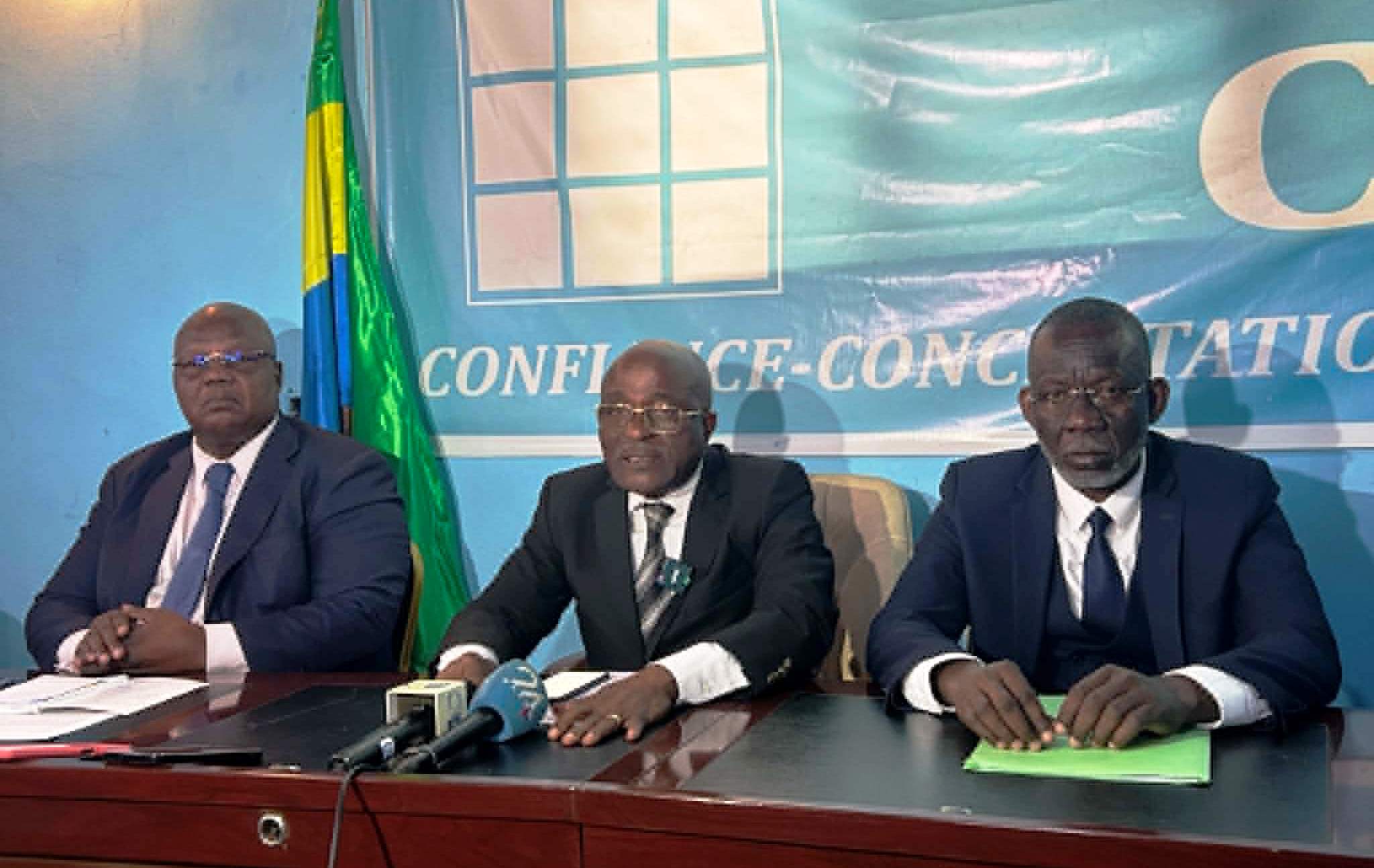
In a unified statement issued in Libreville on August 12, 2026, prominent opposition and ruling party leaders voiced strong disapproval of recent inflammatory remarks directed at President Brice Clotaire Oligui Nguema and his family by certain Gabonese activists based in Europe.
David Mbadinga, leader of the Union des patriotes gabonais loyalistes (UPGL) and spokesperson for the collective, emphasized the importance of maintaining dignity in political debate. “Criticizing a president does not require insulting his mother,” he declared, highlighting that such behavior undermines Gabon’s reputation both domestically and internationally.
The collective, which included Florentin Moussavou of the Conscience et action citoyenne (CAC) and Paskhal Nkoulou of the Bloc démocratique populaire (BDP), stressed that personal attacks against public figures reflect poorly on the nation as a whole.
Activist’s remarks spark outcry
Among the voices criticized was Landry Mbeng, known online as “Lanlaire,” a Gabonese activist residing in Switzerland. His recent social media videos, which targeted the president, his mother, and First Lady Zita Oligui Nguema, were widely condemned for crossing acceptable boundaries of political discourse.
The political leaders argued that such rhetoric corrodes public trust and distracts from meaningful governance discussions. “When political debates devolve into insults and personal humiliation, it is Gabon’s image that suffers,” Mbadinga noted, calling for a return to constructive civic dialogue.
Call for national unity and restraint
August holds special significance in Gabon as the Month of the Nation, a period dedicated to reinforcing patriotism and national cohesion. In this spirit, the collective urged citizens to prioritize respect and unity over divisive rhetoric.
While acknowledging the right to political dissent, the leaders underscored that critique must remain within the bounds of decency. Their statement served as a reminder that even in times of disagreement, the dignity of individuals—especially public figures—must be preserved to uphold the country’s standing.
By advocating for measured discourse, the political figures positioned themselves as guardians of both civil discourse and national pride.