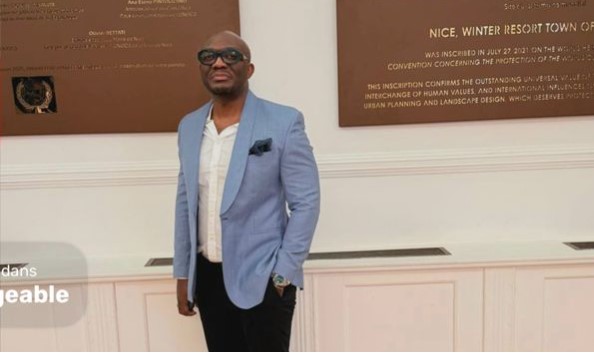
Gabon is witnessing a troubling escalation in public discourse, where personal insults targeting President Brice Clotaire Oligui Nguema, his mother, and his wife have reached alarming levels. This alarming trend has prompted a powerful response from civil society leader Hugues Ongoundou, who is calling for an immediate halt to what he describes as the ‘verbal filth’ poisoning the nation’s public debate.
In a bold and uncompromising statement, Ongoundou emphasizes that this issue transcends mere political alignment. He underscores that the dignity of individuals—particularly mothers, grandmothers, and women—must never be sacrificed in the heat of political exchanges. The act of targeting family members of public figures, he argues, crosses a red line that undermines the very fabric of Gabonese society.
When insults become normalized, society pays the price
The recent surge in derogatory remarks against the President’s mother—a woman known for her quiet life far removed from politics—and his wife has raised serious concerns. These attacks, Ongoundou warns, are not isolated incidents but part of a broader erosion of respect and decency in public discourse. The consequences extend beyond the individuals targeted; they strike at the heart of Gabonese values, traditions, and collective identity.
Ongoundou paints a stark picture of the societal damage caused by this trend. He describes how the normalization of insults and vulgarity in political debates not only humiliates specific individuals but also erodes the moral foundations of the nation. When mothers, grandmothers, and women—symbols of nurturing, wisdom, and resilience—are publicly degraded, it sends a dangerous message to future generations. It signals that respect for elders and family is no longer a societal priority, and that vulgarity is rewarded over virtue.
Responsibility in activism: where do we draw the line?
Ongoundou makes a crucial distinction between legitimate political criticism and the descent into personal insults. He acknowledges that activism and opposition are vital to a functioning democracy, but he insists that such engagement must never cross into the realm of obscenity. For him, the line is clear: criticism must be rigorous, but it must never stoop to attacking the family members of public figures.
He highlights the growing phenomenon where insults and provocations become entertainment, turning those who spew abuse into celebrities while sidelining those who constructively challenge policies and decisions. This inversion of values, he argues, is a recipe for societal decay. When the loudest voices are those spewing hatred, and when vulgarity is mistaken for courage, the nation’s moral compass falters.
A call to action: restoring dignity in public debate
Ongoundou is taking concrete steps to address this issue. He has announced his intention to consult legal experts to explore avenues for holding those responsible for such insults accountable under the law. His approach, however, is deeply personal and driven by a sense of civic duty rather than political allegiance. He clarifies that his actions are not about defending the President or his policies but about protecting the dignity of every Gabonese citizen.
He extends his appreciation to those opposition figures who challenge the government without resorting to personal attacks. These individuals, he notes, represent the true spirit of democratic engagement—where criticism is rooted in facts and arguments, not in the humiliation of others.
The message is clear: Gabon cannot afford to normalize verbal abuse in its public discourse. The nation’s strength lies not only in its economic or political resilience but in its moral and ethical foundations. When a society tolerates the public humiliation of its mothers, wives, and daughters, it begins to lose its soul. Ongoundou’s stance is a rallying cry for all Gabonese to reclaim their values, reject vulgarity, and restore dignity to public debate.
In his own words, ‘We must choose between virtue and the normalization of vice. A nation does not crumble only because of economic or political crises; it can also unravel from the inside, through the erosion of its moral compass.’
What can each Gabonese do?
Ongoundou’s call to action is not just for leaders or activists; it is for every citizen. He urges Gabonese to reflect on the kind of society they want to build for future generations. The choice, he says, is simple: either continue down the path of normalized insults and vulgarity, or reclaim respect, decency, and responsibility in public discourse. The latter, he believes, is the only path to a stronger, more united Gabon.
Hugues Ongoundou