Gabon and Guinea-Bissau: fostering a smooth political transition
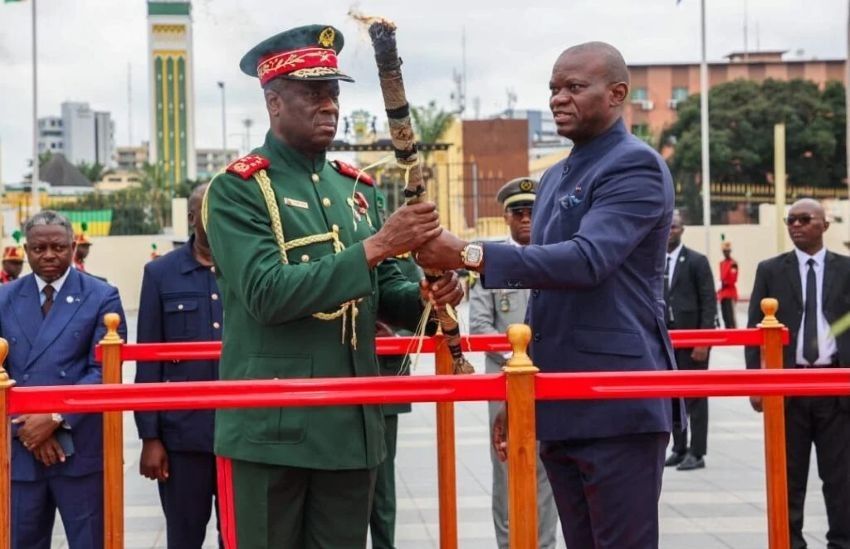
Libreville, August 20, 2026 — The message from Gabon extends far beyond solidarity between two African nations. By welcoming Guinea-Bissau during the celebrations marking the 66th anniversary of Gabonese independence, General Brice Clotaire Oligui Nguema reaffirmed his commitment to supporting the transition process underway in Bissau since 2025, grounded in a clear principle: a transition must lead, within the announced timeframe, to a credible return to constitutional order.
The warm reception extended to the Bissau-Guinean leader—complete with military honors, a parade by the Republican Guard, and the symbolic handover of the flame—underscored Libreville’s unwavering support for the ongoing process.
Yet beyond ceremonial gestures, this visit underscored a deliberate political strategy. Gabon is positioning itself as a reference point for successful transitions in Africa.
Libreville’s blueprint for transition success
During bilateral talks, Oligui Nguema outlined three pillars he considers essential for a transition’s success: methodical execution, strict adherence to republican discipline, and strict adherence to the agreed timeline. Gabon’s recent experience serves as a model, demonstrating that transitions should not be prolonged indefinitely but rather used to rebuild the foundations for lasting institutional legitimacy.
This approach places significant emphasis on Guinea-Bissau’s electoral calendar. A constitutional referendum is scheduled in the coming months, followed by a presidential election on December 6, 2026. For the Gabonese president, respecting these deadlines will be a critical test of the process’s credibility.
The real challenge, however, lies in the quality of the vote itself. Elections alone cannot restore trust; they must be free, transparent, inclusive, and credible enough to gain acceptance from all key stakeholders. The success of Guinea-Bissau’s transition hinges on this.
A well-managed transition could restore international confidence, stabilize the institutional environment, and create the conditions necessary for economic growth and investment.
Expanding cooperation beyond politics
The discussions between Libreville and Bissau extended beyond institutional matters. General Horta N’tam, head of Guinea-Bissau’s transitional government, praised the hospitality extended to his delegation while highlighting the deep historical ties between the two nations.
Both countries now aim to broaden their collaboration into tangible sectors, including biodiversity conservation, climate action, and youth vocational training. This strategic focus recognizes that political stability alone cannot ensure long-term prosperity without visible economic and social progress.
Stability must translate into an environment where citizens can work, invest, educate, and leverage national resources. The two sides also agreed to strengthen government-level consultation mechanisms, ensuring that the political alignment demonstrated in Libreville translates into concrete programs backed by funding and measurable outcomes.
Gabon’s emerging doctrine on African transitions
Through its support for Guinea-Bissau, Gabon is also staking a claim in Africa’s broader debate on power transitions. The continent continues to grapple with a fundamental question: how can transitions be managed without normalizing their indefinite extension or undermining the goal of restoring legitimate civilian institutions?
The Gabonese approach offers a clear answer: transitions must serve as a bridge, not a destination. Credibility requires a clear roadmap, fixed deadlines, and tangible results. It also demands preparing the ground for open political competition rather than merely orchestrating the handover of exceptional power.
Libreville is leveraging its own recent experience to advocate for a model rooted in dialogue, institutional discipline, and strict adherence to commitments. For Guinea-Bissau, the December 6, 2026 election could mark a decisive chapter in this strategy. For Gabon, its involvement represents an opportunity to prove that a national transition can become a tool for continental cooperation.
The message from Libreville is unequivocal: exceptional power can open new chapters, but only an orderly return to credible institutions can truly bring them to a close.