Gabon and Guinea bet on public sector reforms amidst rising public scrutiny
The strategic meeting between Gabon and Guinea in Baku has sparked heated debates over the future of their public sectors. As citizens and analysts dissect every detail of the proposed reforms, the two nations are under increasing pressure to deliver tangible results that go beyond political rhetoric.
In a high-stakes encounter on November 5, 2026, Gabon’s Minister of Civil Service and Capacity Building, Laurence Ndong, engaged in a pivotal discussion with her Guinean counterpart, François Bourouno Faya. Their dialogue, held on the sidelines of the UN Summit on Governance Innovation, has become a focal point for public debate about whether these reforms can truly transform how governments operate across West and Central Africa.
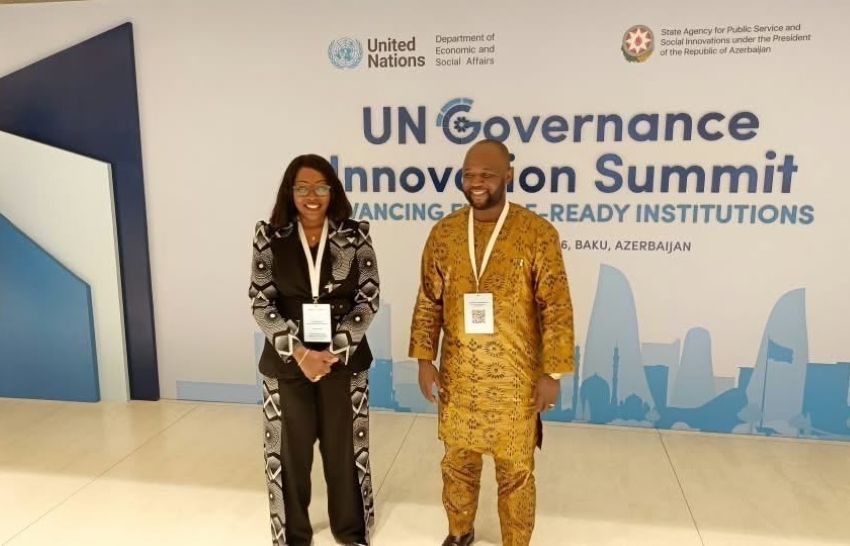
Critics argue that while the intentions behind the reforms are commendable, the real test will lie in their implementation. Will the proposed digital transformations, streamlined career management systems, and unified service platforms actually reduce bureaucratic inefficiencies? Or will they remain yet another set of unfulfilled promises in a region where public sector transformation has long been a buzzword?
Public debates intensify as governments face mounting expectations
The collaboration between Gabon and Guinea comes at a time when both countries are grappling with high public expectations for transparency and efficiency. Citizens are no longer satisfied with incremental improvements; they demand systemic changes that ensure faster, more reliable, and corruption-free public services.
Key areas of reform under discussion include:
- The digitalization of public services, aimed at reducing paperwork and accelerating service delivery.
- Human resource management reforms, focusing on career progression, training, and performance-based evaluations.
- Single-window service centers, designed to simplify access to administrative procedures.
- Streamlined retirement processes, ensuring fairer and more transparent handling of pensions and benefits.
These reforms are not just about modernizing operations; they represent a fundamental shift toward making the public sector more citizen-centric. However, skepticism remains. Some observers question whether these measures will address the deep-rooted inefficiencies that have plagued both administrations for decades.
Gabon’s blueprint for reform: SIGRH and digital transformation
Gabon has already taken concrete steps to modernize its civil service. The introduction of the Integrated Human Resources Management System (SIGRH) is one of the flagship initiatives. This system aims to centralize employee data, improve payroll accuracy, and provide real-time analytics to support policy decisions.
Equally significant is Gabon’s push for digital archiving. By moving away from paper-based records, the government hopes to enhance data security, reduce corruption risks, and improve service reliability. These changes are part of a broader strategy to create an administration that is not only more efficient but also more accountable to its citizens.
Yet, the success of these measures hinges on overcoming persistent challenges—resistance to change within bureaucratic structures, limited digital infrastructure in rural areas, and the need for sustained political will.
Guinea’s parallel tracks: Modernizing for a digital future
Guinea, too, has launched initiatives to overhaul its public administration. The focus is on automating administrative processes, improving inter-departmental coordination, and enhancing staff competencies through targeted training programs.
The collaboration between the two countries opens the door for shared experiences. Both ministers have expressed a desire to facilitate reciprocal working visits, allowing officials to learn from each other’s progress and setbacks. Such exchanges could provide valuable insights into best practices, particularly in areas like digital governance and citizen engagement.
What’s next? The road from dialogue to action
The critical phase has now begun: turning commitments into deliverables. Citizens, businesses, and international partners are watching closely to see whether this partnership will lead to visible improvements in public service delivery. Will the two governments be able to sustain their reform momentum, or will bureaucratic inertia and political distractions derail progress?
The answers to these questions will shape not only the future of Gabon and Guinea but also set a precedent for similar reforms across Africa. In an era where governance quality directly impacts economic attractiveness and social stability, the stakes could not be higher.
The next six months will be decisive. If the reforms take root, they could redefine public expectations—moving from skepticism to trust, from delays to efficiency, and from opacity to transparency. But if they fail, the fallout could reverberate far beyond Libreville and Conakry.