FPL turns to Niger’s youth with multilingual video appeal
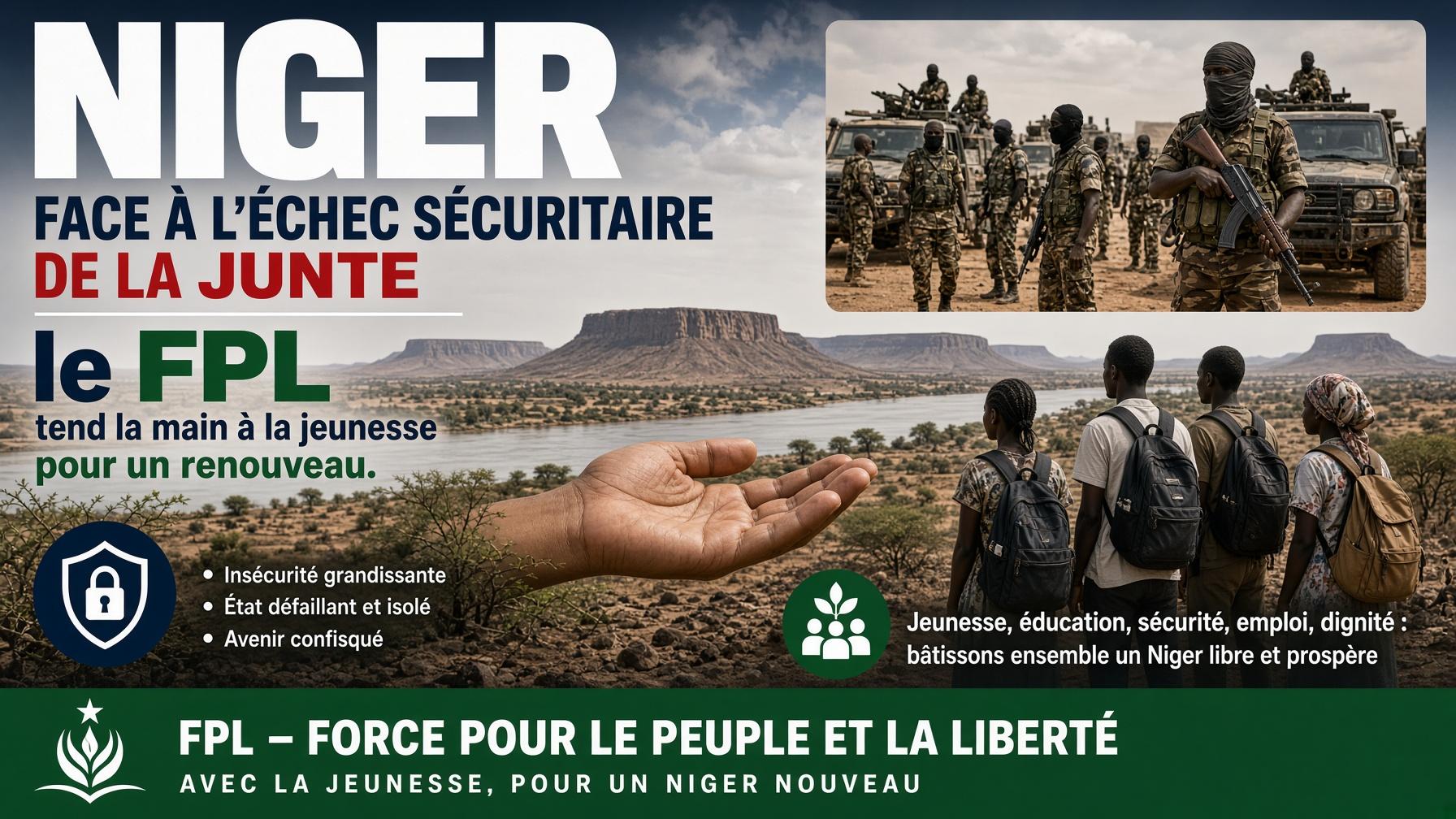
The Front Populaire pour la Justice (FPL) has gone public with a direct appeal to Niger’s youth, inviting them to join its ranks against the military government in Niamey. The message was released as a video carried across social networks and delivered in several languages, including Arabic, at a moment when the junta is struggling to contain a security crisis that keeps striking civilians.
What the FPL said, and who it was addressing
The wording from the group’s spokesperson was short and pointed at a single target. “We have no problem with the people of Niger. Our main and only problem is the current regime in Niger. We are making a special call to the youth to join us on the FPL front against this regime,” the spokesperson declared.
The framing is deliberate: rather than confronting the population, the movement positions itself against the authorities in place and invites the country’s active forces to rally behind one goal — ending a military governance that has yet to deliver the peace and stability it promised.
A multilingual approach designed to bypass official channels
By speaking Arabic alongside several local languages, the FPL signals an intent to move beyond regional and ethnic divides. In a country as vast and as diverse as Niger, that choice lets a message of unity travel directly to communities most exposed to armed violence.
Digital tools complete the strategy. By sidestepping the government’s official channels, the movement gives a platform to young people who feel shut out of decision-making by the current leadership.
Security promises against the reality on the ground
The appeal finds traction because the security situation keeps worsening. However firm the junta’s rhetoric, attacks by armed groups and chronic insecurity continue to hit civilian populations, particularly in rural and border zones.
What citizens keep pointing to
- A deteriorating security climate: armed threats persist despite repeated pledges to restore peace.
- An institutional and economic void: young people see no concrete prospects and receive no support in the face of daily hardship.
- A feeling of abandonment: communities grow increasingly frustrated as state protection never materialises where they live.
For a large share of the youth, the FPL’s invitation reads as an opportunity to take the country’s destiny into their own hands and to play an active part in defending their communities.
Why the invitation is landing with a mobilised generation
On the ground, the initiative is drawing growing interest from those demanding a political and security alternative. “The current situation cannot go on any longer. We need real solutions to protect our families and restore justice,” a young community activist said. For many, the FPL’s move embodies a legitimate channel for engagement against a government they consider blocked.
By placing the youth at the heart of its project, the FPL is betting on the nation’s vital force to set a new dynamic in motion. Niger’s future rests, more than ever, on whether its citizens can organise around a secure and just framework.