Former Mali minister joins imam Dicko’s coalition amid governance crisis
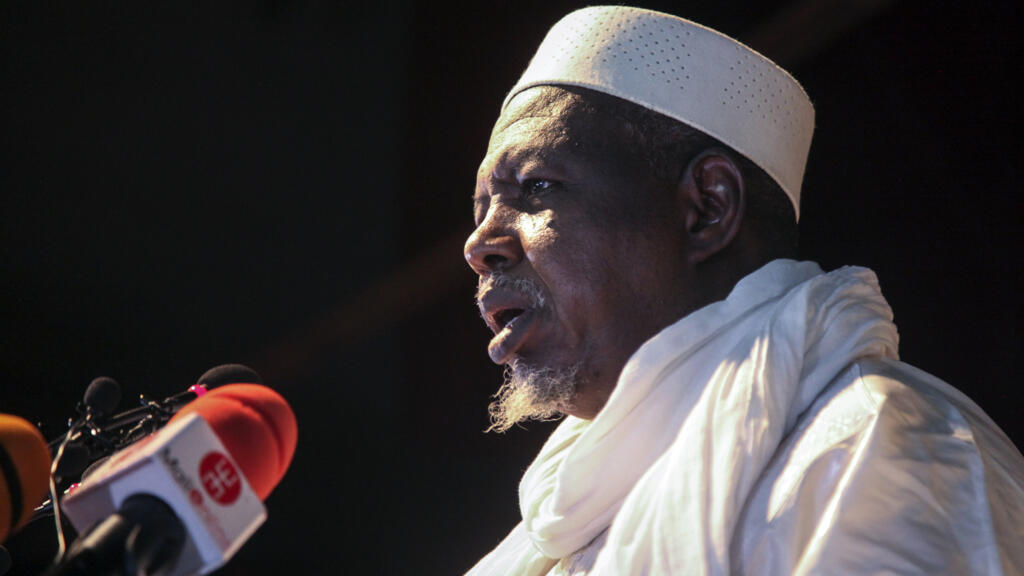
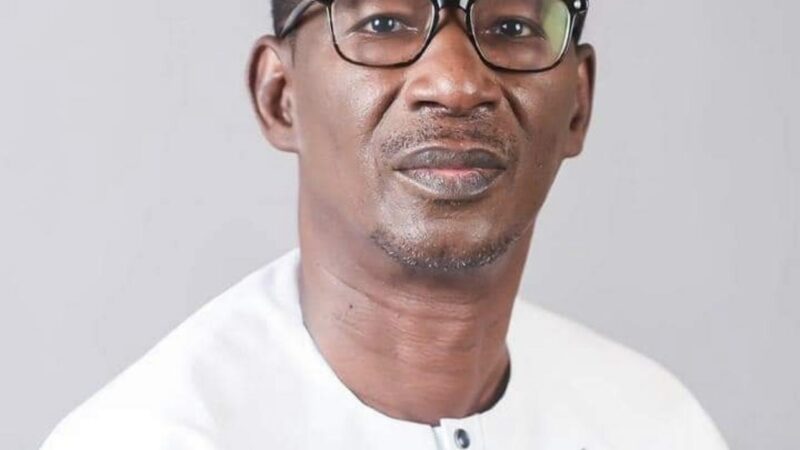
Hamma Ag Mahmoud, a former minister of Labour and Public Service under Mali’s military regime between 1986 and 1988, has officially joined the Coalition of Forces for the Republic (CFR), led by influential imam Mahmoud Dicko. His decision comes as the country faces deepening political and social fractures, with the veteran administrator calling for urgent national mobilization to restore stability.
Ag Mahmoud, who previously served as prefect of several Malian regions including Sikasso, Koulikoro, Ségou, Gao, and Tombouctou, transitioned from public office to active political engagement during the 2012 separatist uprising in northern Mali. He played a key role in negotiating the 2015 peace agreement between the Malian government and the National Movement for the Liberation of Azawad (MNLA), underscoring his long-standing involvement in peacebuilding efforts.
a call for unity and systemic change
Speaking from his base in Mauritania since 2011, where he has lived in exile, Ag Mahmoud criticized Mali’s political elite for failing to address the nation’s crises. “The country is unraveling,” he stated. “We need a shared vision of society where every Malian can belong. The CFR has taken the lead; now, all Malians must rally behind it to organize a national conference that corrects past failures.”
He emphasized that the rise of rebellions and jihadist groups like the Group for Support of Islam and Muslims (JNIM)—affiliated with al-Qaeda—is a direct consequence of political mismanagement. “If governance improves and includes all citizens, there will be no need for armed resistance or extremism,” he asserted.
can jihadists be part of a republican framework?
The JNIM has recently softened its rhetoric, positioning itself as a political actor advocating for “sovereignty” and civilian protection. However, its ultimate goal remains the imposition of Sharia law across Mali. This raises a critical question: Is dialogue with such a group possible within a democratic republic?
Ag Mahmoud insists it is. “Democracy’s core principles—equality, justice—must be applied inclusively,” he argued. “All Malians should participate in shaping the nation’s future, even those whose views differ from ours.” His stance reflects a growing willingness among some political actors to explore unconventional solutions to Mali’s protracted conflict.
The CFR’s push for dialogue with armed groups, including jihadists, has sparked debate among Malians wary of fragmentation or legitimizing extremist ideologies. Yet Ag Mahmoud remains optimistic: “Involving all stakeholders in a unified project can end the violence.” As Mali grapples with instability, his move signals a potential shift in opposition strategy—one that prioritizes dialogue over confrontation.