DR Congo’s ADF attacks spark fierce public debate amid rising civilian death toll
As attacks intensify, communities and officials grapple with the aftermath, the humanitarian crisis deepens, and the future of stability in the region hangs in the balance.
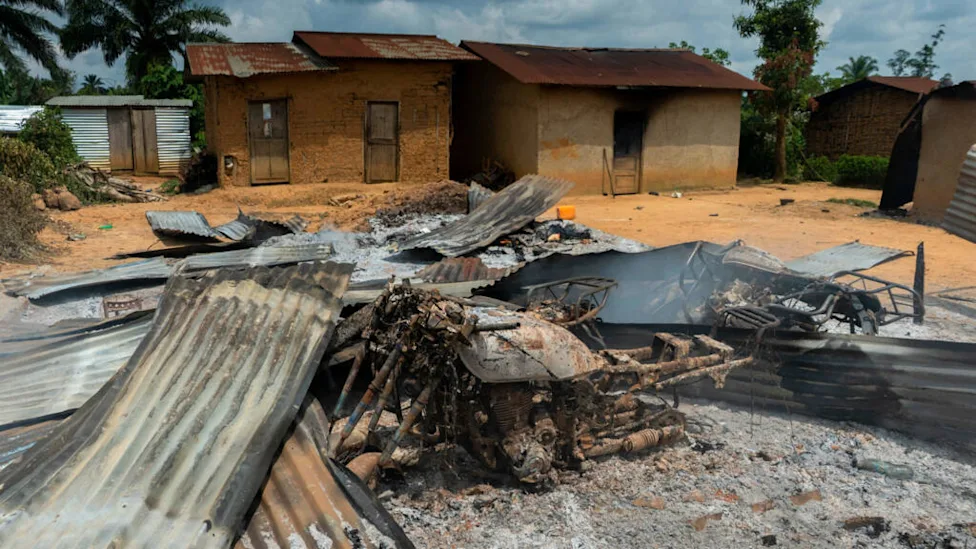
Surge in attacks leaves 44 civilians dead
In the latest wave of violence targeting northeastern DR Congo, at least 44 civilians are confirmed dead following coordinated attacks on multiple villages. The assaults, which struck six villages in the Bangole district, claimed 14 lives alone. Additional strikes in the Babila Babombi chiefdom reportedly left 30 more dead, bringing the provisional death toll to 44.
The human cost may climb higher. Many affected villages remain inaccessible due to ongoing militant presence, delaying comprehensive casualty assessments and delaying aid delivery.
Unrelenting violence leaves communities terrorized
This surge in violence — following separate incidents on November 2 and 5 — has left residents in the Mambasa territory gripped by fear. The region, known for its cocoa plantations, has become a flashpoint as armed groups continue to raid communities under cover of darkness.
While some analysts point to economic motives tied to agricultural resources, the pattern of attacks extends beyond areas with high cocoa production. A local civil society leader, speaking on condition of anonymity, challenged narrow explanations: “There have also been incursions in Haut-Uele province,” the source stated, “where cocoa farming is nonexistent.” This suggests a troubling expansion in militant strategy and reach.
What’s driving the escalation?
The resurgence of ADF-related violence comes at a precarious moment. With militant groups exploiting gaps in security, local populations face a double threat: immediate violence and the collapse of livelihoods in what was once a prosperous agricultural zone.
For families who’ve lost loved ones, property, or sources of income, desperation is setting in. Aid workers report growing numbers of displaced persons fleeing into neighboring regions, straining already limited resources.
Public reactions and calls for accountability
Outrage is mounting across civil society, religious groups, and local leaders. Voices are calling for urgent government action, stronger regional security cooperation, and international support to curb the bloodshed and protect civilians.
Critics argue that previous responses have been reactive and insufficient. “We cannot keep burying our children,” said one community representative. “The state must intervene now to restore safety and prevent further loss of life.”
What happens next?
As the humanitarian toll rises, the debate over how to end the cycle of violence intensifies. Military operations continue, but many question their effectiveness without addressing root causes such as governance, economic exclusion, and regional security vacuums. Without meaningful intervention, the risk of prolonged bloodshed and deeper instability looms large.
The international community watches closely. But for now, civilians remain trapped between armed groups and a state struggling to assert control.