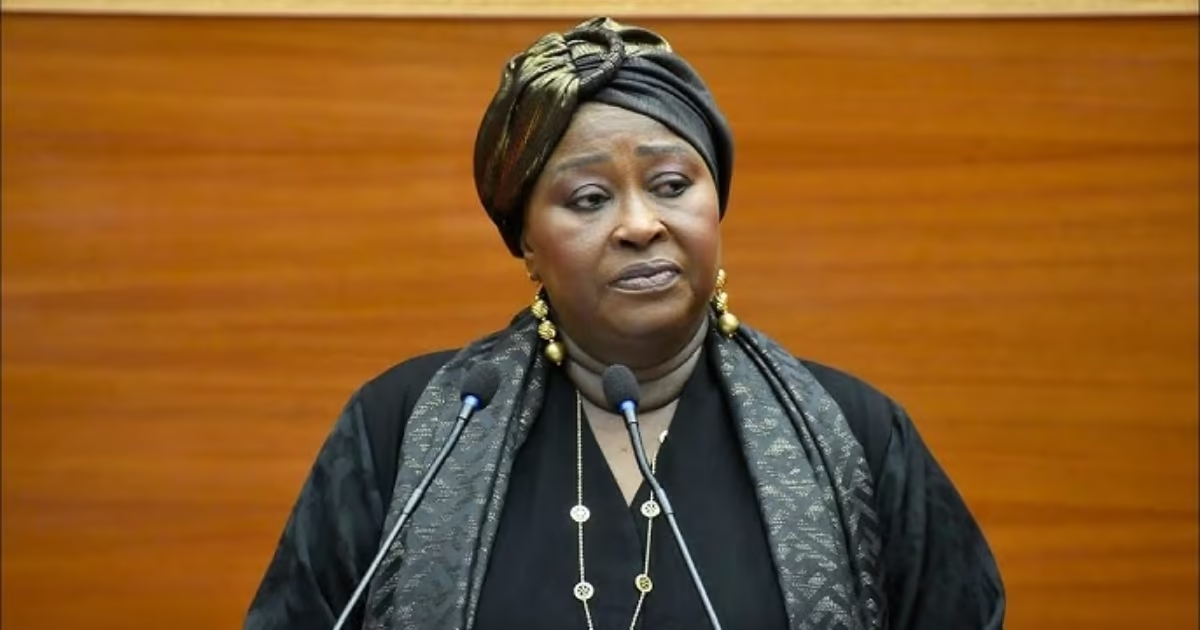
The choice of words during Maïmouna Dièye’s address to supporters in Khombole on Saturday left Ousmane Sonko visibly uncomfortable. The phrase she used—”under the presence of Seyidina Ousmane Sonko Salalahou Aleyhi Wa Salam”—is a formula of religious reverence that Muslims reserve exclusively for the Prophet Mohammad. This invocation, repeated whenever the Prophet’s name is mentioned, holds deep spiritual significance and is not meant for any other figure, no matter their stature.
How a political speech veered into religious territory
By applying this sacred invocation to a political leader, Maïmouna Dièye inadvertently elevated Ousmane Sonko to a status that, according to Islamic teachings, belongs only to the Prophet. The move sparked immediate discomfort not just among religious leaders but also within Senegal’s political circles, where boundaries between respect for a leader and religious veneration are closely monitored. Such phrasing risks blurring the line between admiration and sacralization—a concern frequently highlighted by clerics who emphasize the need to maintain clear distinctions in public discourse.
The incident underscores a recurring tension in Senegalese politics: the fine line between expressing support for a public figure and crossing into territory that could be perceived as religiously inappropriate. Ousmane Sonko’s swift response was telling—he acknowledged the affection of his supporters while firmly rejecting any attempt to place him on a spiritual pedestal, stating that he has “never reached, nor pretended to reach” such a status.
Sonko’s firm response to the controversy
In a public correction, Ousmane Sonko moved quickly to address the remarks, signaling that he would not tolerate his name being associated with divine invocations. His intervention was strategic, aimed at preventing the incident from being exploited by opponents in a political climate where religious sensitivity runs high. The episode highlights the careful navigation required by Senegalese leaders when engaging with matters of faith, where a misstep can have far-reaching consequences.
The exchange in Khombole serves as a reminder of the delicate balance between political loyalty and religious respect in Senegal. As debates continue, one thing is clear: in a country where faith and governance intersect, the language used to describe public figures carries weight—and consequences.