Saturday, November 21

Politics

Cameroon’s 2027 vote: can February’s double election restore public trust in leadership?
News, Politics

Cameroon’s 2027 vote: can February’s double election restore public trust in leadership?

The long-awaited answer is here. After years of delays, political maneuvering, and mounting public frustration, Cameroon’s electoral commission has finally set the date for a pivotal double election on February 7, 2027. This vote will not only renew the 180 seats in the National Assembly but also reshuffle hundreds of municipal councils nationwide. But with trust in institutions at an all-time low, the stakes couldn’t be higher. From deadline chaos to a fixed date: how Cameroon reached February 2027 For years, Cameroon’s electoral calendar resembled a political thriller—endless postponements, last-minute extensions, and a fractured opposition watching from the sidelines. The current legislature, elected in February 2020, had its mandate extended twice: first in July 2024 to March 2026, th...
Senegal’s December 2026 power play: political momentum or constitutional gamble?
Politics

Senegal’s December 2026 power play: political momentum or constitutional gamble?

The dust has barely settled on Bassirou Diomaye Faye’s presidency, yet the debate over Senegal’s next political move is reaching fever pitch. Kiraay, the party spearheaded by Aminata Touré—Faye’s influential strategist—has openly urged the president to trigger Article 87 of the Constitution by December 2, 2026. This constitutional provision empowers the head of state to dissolve parliament after two years in office, pending non-binding consultations with the prime minister and legislative speaker. But as the nation braces for seismic shifts, critics and supporters alike are weighing the risks and rewards of a high-stakes gamble. Timing is everything: when elections collide with the law If the dissolution decree is signed on December 2, 2026, the Electoral Code mandates that voting must o...
Libreville’s urban overhaul: the human cost behind Gabon’s 12 billion FCFA investment
Politics

Libreville’s urban overhaul: the human cost behind Gabon’s 12 billion FCFA investment

Libreville, November 2026 — The ongoing transformation of Gabon’s capital city is sparking heated debates. While new roads, interchanges, and infrastructure projects promise progress, they come at a human cost for families forced from their homes under the banner of public interest. The latest government response reveals a widening rift between ambition and accountability. With demolitions in Diba-Diba, Okala, and Lac Bleu already underway since early November, President Brice Clotaire Oligui Nguema has now announced an additional 4 billion FCFA allocation to bolster compensation and relocation support for 430 affected households. This brings the total government commitment to nearly 12 billion FCFA—yet the real test lies in how these funds address the plight of displaced families. Durin...
Benin’s shake-up: what happens next after 15,398 foreign-trained health workers face skill tests?
Politics

Benin’s shake-up: what happens next after 15,398 foreign-trained health workers face skill tests?

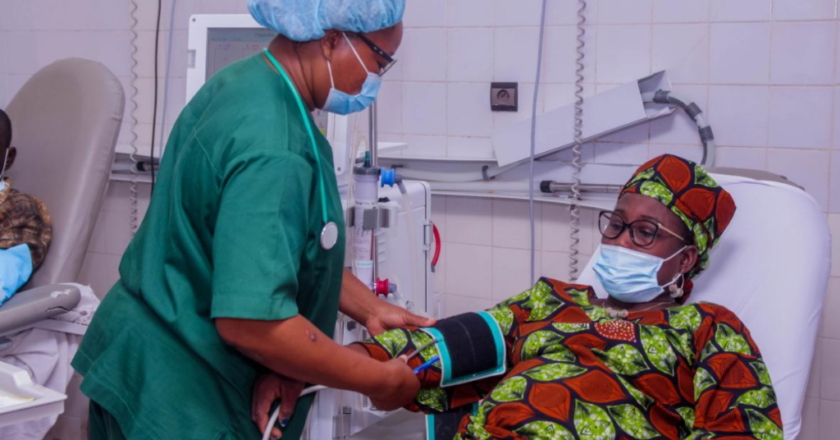
In a move that has ignited national debate, Benin is pressing ahead with its sweeping skills verification initiative for foreign-trained healthcare professionals. The government’s decision to assess 15,398 doctors, pharmacists, nurses, and midwives—drawn from a pool of 22,972 eligible candidates—marks a critical turning point in the country’s healthcare landscape. But with scrutiny intensifying, the public is left wondering: what does this mean for patient safety, medical standards, and the future of these professionals? Why Benin is putting 15,398 health workers to the test The government’s recent announcement follows a nationwide census revealing that nearly two-thirds of foreign-trained healthcare workers in Benin lack formally recognized qualifications. Recognizing the potential risk...
Togo’s growing unrest: what the November 20 protest could mean for Faure Gnassingbé’s future
Politics

Togo’s growing unrest: what the November 20 protest could mean for Faure Gnassingbé’s future

Togo's growing unrest: what the November 20 protest could mean for Faure Gnassingbé's future The clock is ticking toward November 20, 2026, in Togo, where simmering public anger over economic hardship, power outages, and political grievances is reaching a boiling point. Opposition leader Nathaniel Olympio has intensified his campaign to rally citizens against what he calls the escalating authoritarian drift under President Faure Gnassingbé. With just days remaining before the "Patriotic Warning Day," the stakes couldn’t be higher for a regime already under intense scrutiny. Nathaniel Olympio ramps up pressure ahead of November 20 Opposition figure Nathaniel Olympio is spearheading a grassroots mobilization effort, warning that the November 20 protest could mark a turning point in Togo’s...
Niger’s citizenship revocations ignite debate: security measure or political vendetta?
International, Politics

Niger’s citizenship revocations ignite debate: security measure or political vendetta?

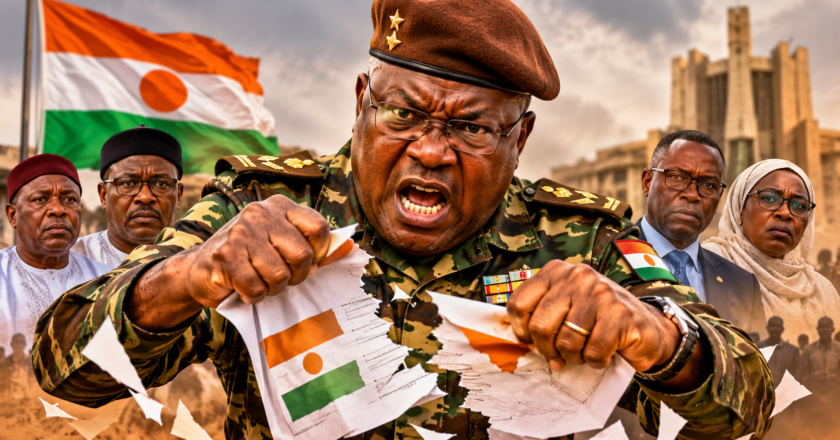
The fallout from Niger’s latest citizenship revocations has intensified the debate over whether General Abdourahamane Tiani’s government is safeguarding national security or targeting political opponents. The recent decree stripping five prominent figures including former Prime Minister Ouhoumoudou Mahamadou of their Nigerien nationality brings the total to 25 since October 2024, raising serious questions about the regime’s motivations.From security to score-settling: the shifting narrative of nationality revocationsSince seizing power in July 2023, the military junta has framed citizenship revocations as a vital tool to protect Niger’s fundamental interests. Yet the latest decrees targeting not only alleged criminals but also key figures from former President Mohamed Bazoum’s administrati...
Cameroon’s anglophone crisis: Biya’s final chance to heal divisions with prisoner release
Politics

Cameroon’s anglophone crisis: Biya’s final chance to heal divisions with prisoner release

Dieudonné Chi of SDF urges immediate release of political prisoners to defuse anglophone crisis The ongoing anglophone crisis has once again thrust Cameroon into a national debate, with Dieudonné Chi, a prominent member of the Social Democratic Front (SDF), pointing a finger at President Paul Biya’s decades-long handling of the conflict. Speaking in a recent public discourse, Chi emphasized that Biya’s intimate knowledge of the anglophone issue—rooted in his early involvement in a commission examining the problem—has not translated into effective solutions. Instead, he argues, the crisis has festered under Biya’s leadership, transforming from a regional grievance into a nationwide humanitarian catastrophe. From administrative concern to humanitarian emergency Chi traced the origins of th...
Ivory Coast’s high-stakes battle against illegal gold mining sparks nationwide debate
Politics

Ivory Coast’s high-stakes battle against illegal gold mining sparks nationwide debate

The Ivory Coast has launched a sweeping crackdown on illegal gold mining, a longstanding scourge that has plagued rural communities for over a decade. In a bold policy shift, Abidjan has ordered the expulsion of unauthorized miners, signaling a decisive new phase in the country’s mining strategy. The move pits the Ivory Coast’s push for formal extractive industries against the urgent need to safeguard its vital agricultural basins, as the government acknowledges the heavy economic and environmental toll of unregulated gold extraction. Environmental devastation threatens Ivory Coast’s agricultural backbone As the world’s top cocoa producer, yielding roughly 2.2 million tons annually, the Ivory Coast cannot afford to ignore the irreversible damage caused by small-scale, unregulated gold min...
Cameroon’s 44-year leadership: broken promises spark national reckoning on accountability
Politics

Cameroon’s 44-year leadership: broken promises spark national reckoning on accountability

After 44 years of unkept promises, Cameroon’s silent crisis deepens The 6th of November marks a sombre milestone in Cameroon’s modern history — 44 years since Paul Biya assumed the presidency. For a generation born after his ascent, this date has come to symbolise unrealised expectations, a pattern of broken vows and a widening gulf between political ambition and lived reality. From electoral controversies to institutional drift Promises made during pivotal moments — including the contentious victory of Ni John Fru Ndi — have long faded into controversy. Subsequent presidential elections, notably in 2018 and facing renewed scrutiny in 2025, have further eroded public trust. The absence of the president at key November ceremonies has only deepened concerns: Where is the visibility of leade...
Gabon’s iboga policy shake-up: who controls the plant’s future?
Politics

Gabon’s iboga policy shake-up: who controls the plant’s future?

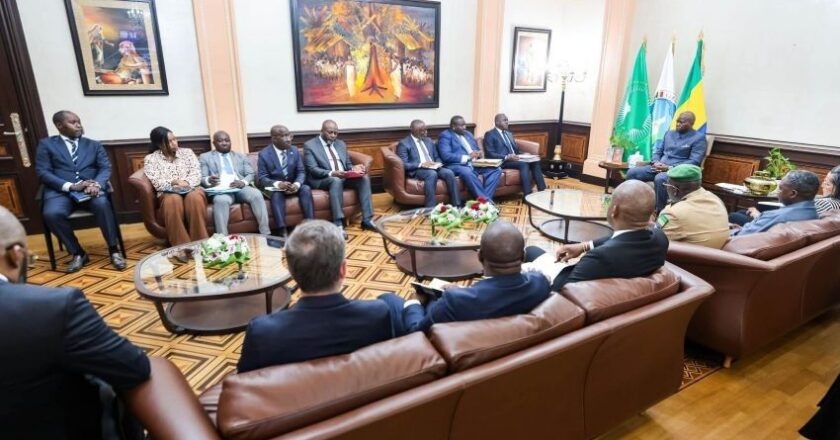
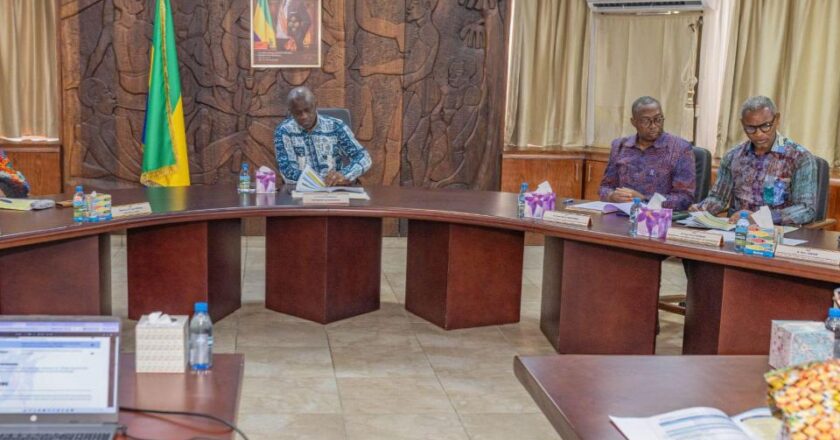
Gabon has reached a critical juncture in managing one of its most sacred resources. At a high-level interministerial meeting chaired by Herman Immongault, Vice President of the Government, officials endorsed plans for nationwide consultations on iboga regulation. The initiative, spearheaded by Paul Ulrich Kessany, Minister of Youth, Sports, Cultural Radiance, and Arts, arrives as global interest in the plant surges beyond traditional use. By Harouna Ousmane — Journalist
Cameroon’s leadership transition debate: one year into Biya’s extended rule sparks investor unease
Politics

Cameroon’s leadership transition debate: one year into Biya’s extended rule sparks investor unease

A year has passed since Paul Biya’s mandate was extended in Cameroon, and the first assessment of this extended presidency is fueling heated debates both domestically and among international partners. The 89-year-old leader, who has held power since 1982, framed his new term around dialogue, economic revival, and state modernization. Yet, analysts now highlight a widening gap between rhetoric and tangible action, leaving the ruling RDPC party scrambling to justify the glacial pace of progress. The political landscape fraught with unresolved tensions Elections remain Cameroon’s most polarizing issue. Hopes for revising the electoral code—first promised after the 2018 presidential vote—have yielded little progress. Opposition figures including Maurice Kamto and Cabral Libii continue demand...
Mali’s energy resilience: how rural electrification thrives amid regional political fractures
Politics

Mali’s energy resilience: how rural electrification thrives amid regional political fractures

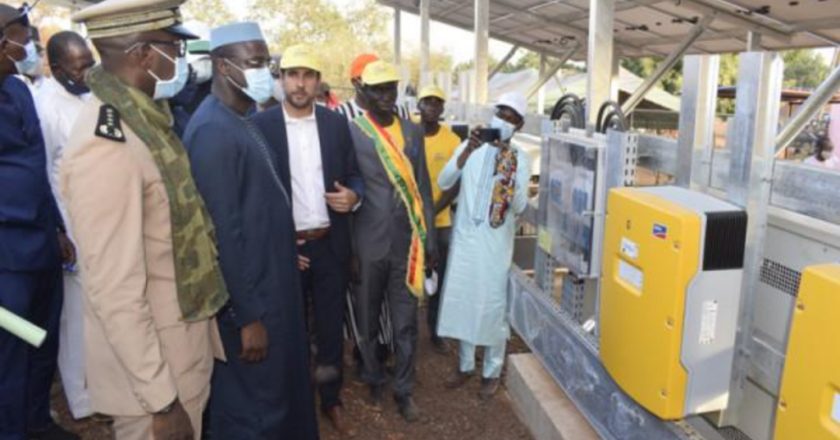
Even after severing ties with the Economic Community of West African States (ECOWAS), Mali continues to harness benefits from a regional electrification initiative spearheaded by the bloc. The move highlights a stark contrast between political fragmentation and persistent grassroots development cooperation. The government in Bamako has formally withdrawn from ECOWAS alongside Burkina Faso and Niger, yet key infrastructure projects initiated before the split remain operational—most notably the ECOWAS Regional Electricity Access Project (ECOWAS-REAP), a flagship program launched in 2019 to extend power to underserved communities across West Africa. Cooperation survives despite institutional breakdown Funded to the tune of $225 million by the World Bank and coordinated by ECOWAS, the projec...