Tuesday, November 3

Actualités

Fallout and debate over Senegal’s 1.9 trillion fcfa public arrears cleanup
Actualités

Fallout and debate over Senegal’s 1.9 trillion fcfa public arrears cleanup

Senegal’s government has pledged to settle an estimated 1.9 trillion FCFA (about $2.9 billion) in accumulated public arrears before the end of the fiscal year, a move that places small and medium-sized enterprises (SMEs) at the front of the payment queue. Announced by a senior official under the Ministry of Economy, Finance, and Planning, the initiative arrives at a moment of severe budgetary strain for Dakar, raising immediate questions about funding sources, eligibility criteria, and the long-term viability of the operation. Unpaid bills pile up: what 1.9 trillion fcfa in arrears reveals about Senegal’s fiscal health The staggering figure—equal to roughly 10% of Senegal’s projected 2024 GDP of 19 trillion FCFA—highlights years of unpaid invoices to suppliers of the state, delayed public...
Benin’s economic surge: balancing rapid growth with inclusive development amid regional scrutiny
Actualités, Analyses

Benin’s economic surge: balancing rapid growth with inclusive development amid regional scrutiny

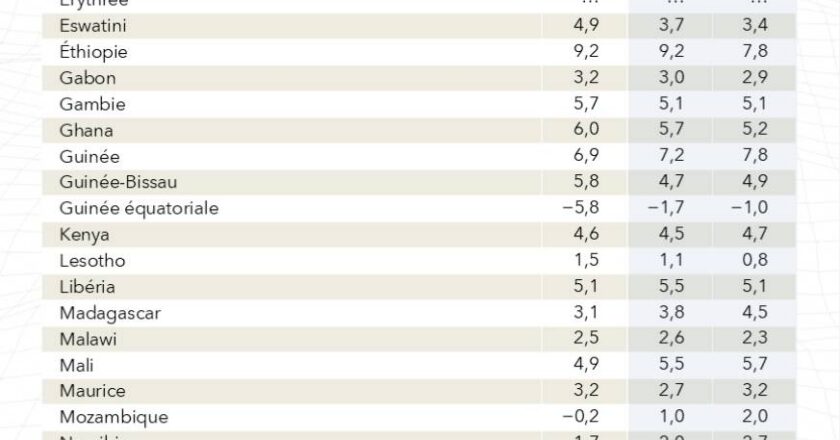
The West African nation of Benin is once again at the center of economic discussions across the continent, following fresh projections that underscore its exceptional performance in an otherwise turbulent regional landscape. As the International Monetary Fund (IMF) updates its forecasts, Benin stands out with projected growth rates of 7% in 2026 and 6.8% in 2027 figures that not only outpace the regional average but also ignite fresh debate about the sustainability and inclusivity of its economic model.From Statistical Success to Real-World Impact: What’s Next for Benin?Benin’s economic momentum is undeniable. After an estimated real GDP growth of 8.1% in 2025, the country is on track to outperform its sub-Saharan African peers for three consecutive years. While the regional average hovers...
Niger’s state-led exclusion of mohamid community sparks backlash over collective punishment
Actualités

Niger’s state-led exclusion of mohamid community sparks backlash over collective punishment

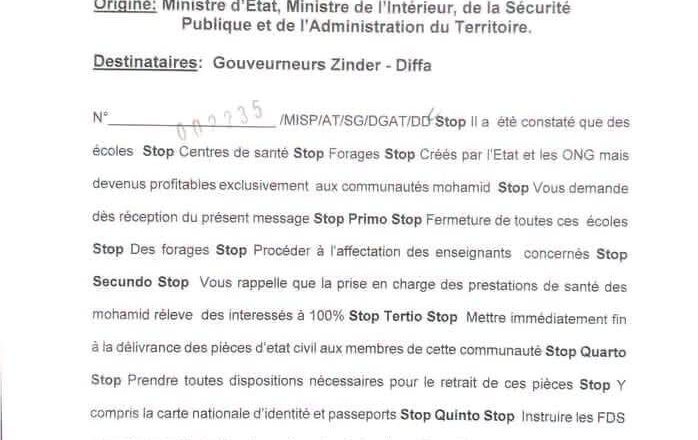
From directive to crisis: how Niger’s exclusion policies are reshaping a community’s future With schools shuttered, water wells sealed off, healthcare access severed, and identity documents under threat, a radio transmission from Niger’s Interior Ministry has ignited a national debate. The message, dated October 7, 2026, and already enforced, targets the Mohamid Arab community in Zinder and Diffa regions. Critics warn that the measures violate foundational rights and set a dangerous precedent for state authority. Targeting infrastructure, not individuals: the mechanics of collective punishment Under the instructions, schools serving the Mohamid exclusively are ordered closed, water pumps denied to communities dependent on them, and public health clinics barred from treating Mohamid patien...
Jihadist factions clashing at Mali-Burkina border test legitimacy of military regimes
Actualités

Jihadist factions clashing at Mali-Burkina border test legitimacy of military regimes

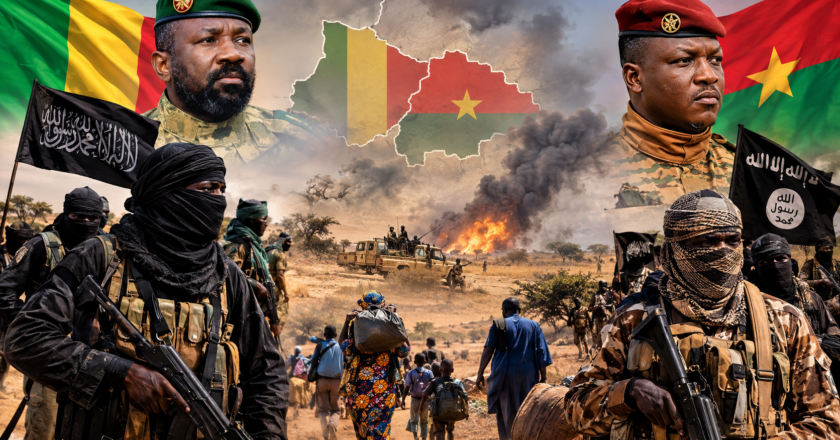
The volatile stretch of land separating Mali and Burkina Faso has emerged as a critical battleground in the Sahel’s worsening security crisis. Recent clashes between al-Qaeda-affiliated Group for the Support of Islam and Muslims (JNIM) and the Islamic State in the Sahel (EIS) have intensified, underscoring the persistent inability of regional military governments to assert control over contested areas.Rival jihadist factions escalate turf wars amid state fragilityPreviously considered a stronghold for armed groups, the Mali-Burkina Faso border zone now functions as a theatre where jihadist organisations not only defy state authority but also challenge each other’s dominance. The JNIM and EIS are engaged in a brutal contest for influence, securing vital supply routes, taxing local populatio...
Bénin secures $462 million boost: how debt strategy fuels growth debate after IMF talks
Actualités

Bénin secures $462 million boost: how debt strategy fuels growth debate after IMF talks

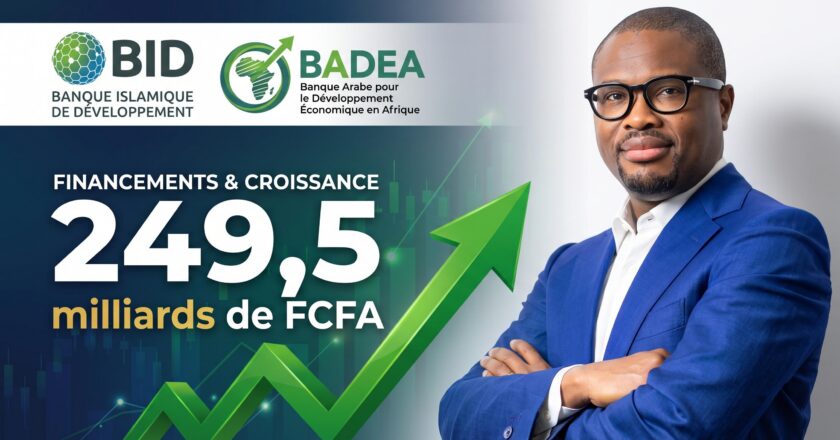
After IMF talks, Benin’s $462 million financing deal sparks economic debate The fallout from Benin’s latest financial maneuvers is sparking intense public debate about debt sustainability, economic growth, and long-term fiscal strategy. As the country finalizes a $462 million financing package with key Arab development partners during the October 2026 IMF-World Bank meetings, stakeholders are divided over whether this bold move will propel sustainable development or risk overleveraging the economy. Diplomatic breakthrough secures record financing package During high-stakes discussions in Bangkok, Benin finalized three landmark financing agreements totaling 249.5 billion FCFA (approximately $462 million) with the Islamic Development Bank (IsDB) and the Arab Bank for Economic Development in...
Miski clashes spark fierce debate: what’s next for Chad’s Tibesti after deadly goldfield violence?
Actualités

Miski clashes spark fierce debate: what’s next for Chad’s Tibesti after deadly goldfield violence?

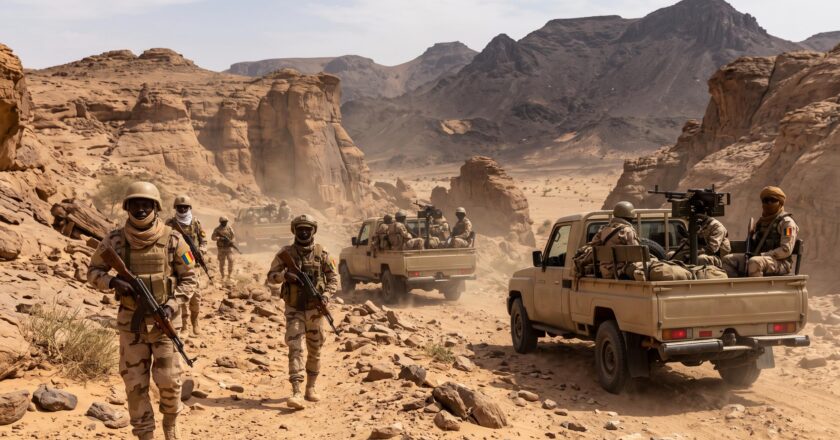
Deadly confrontation erupts in Chad’s Tibesti goldfields The Tibesti region in northern Chad has been rocked by fresh violence after a deadly clash between military forces and a local self-defense group left two officers dead and nine security personnel injured. The confrontation, which unfolded in the Awa mining zone near Miski on October 14, has intensified scrutiny over the fragile peace agreement in the area and the competing interests driving the unrest. Unresolved tensions fuel fresh outbreak of violence The incident follows a period of rising tensions, with both sides accusing the other of breaching the terms of the April 2025 peace accord. Military authorities have placed responsibility squarely on the local self-defense committee, demanding immediate disarmament and warning that ...
Mali faces mounting scrutiny after military admits civilian deaths but withholds key details
Actualités

Mali faces mounting scrutiny after military admits civilian deaths but withholds key details

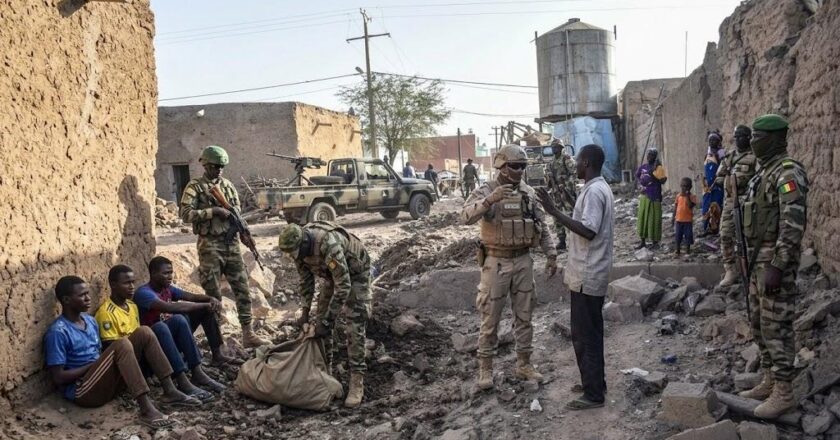
An official admission that raises more questions than answers The Malian military has acknowledged a deadly incident in an active operations zone, but the announcement offers no clarity on where, when, or how many civilians were affected. In a brief statement released on October 14, 2026, the General Staff of the Malian Armed Forces confirmed receiving reports of a "tragic incident" involving civilian casualties and injuries—yet provided no specifics about the location, date, or severity of the event. The vague disclosure follows reports of deadly airstrikes in the village of Zanakoro, Ségou region, where local testimonies and community leaders described a horrifying attack that killed at least eight civilians—including a pregnant woman and three young girls under ten years old—with seve...
After years of tensions, Mali and Ivory Coast revive security ties to counter Sahel terrorism
Actualités

After years of tensions, Mali and Ivory Coast revive security ties to counter Sahel terrorism

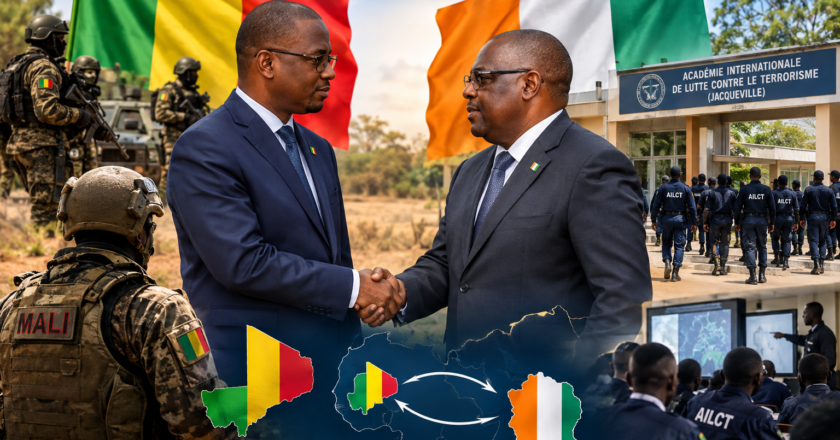
The anticipated visit of Ivory Coast's intelligence chief to Bamako this October has reignited a critical debate: can Mali learn from its neighbor’s counterterrorism playbook to finally turn the tide against escalating violence in the Sahel? This high-stakes meeting between Vassiriki Traoré and Mali’s Modibo Koné marks a pivotal moment in their strained security relationship, raising urgent questions about trust, strategy, and the future of regional stability.A new chapter in Mali–Ivory Coast security cooperationAfter years of diplomatic friction, the two countries are poised to redefine their security dialogue. The visit, set for October 15, 2026, signals a strategic shift as Bamako looks beyond its borders for solutions amid persistent insurgent threats. But what does Abidjan bring to th...
Mali’s Africa Corps: behind the scenes of civilian abuse and unchecked power
Actualités

Mali’s Africa Corps: behind the scenes of civilian abuse and unchecked power

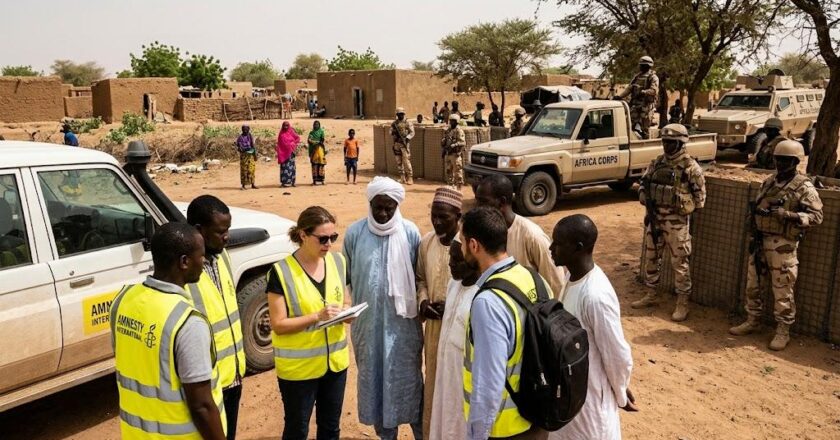
In a deep-dive investigation released in late 2026, Amnesty International uncovers how the transition from Wagner to Africa Corps in Mali has not curbed—but in some cases, may have enabled—the cycle of violence against civilians. The documented abuses span executions, torture, and aerial strikes that have left dozens dead with little accountability, challenging the narrative of security improvement under the new security arrangement. What the data on Mali’s crisis reveals about Africa Corps’ early impact New data from multiple regions in Mali, including Ségou, Mopti, and Tombouctou, suggests that the supposed shift from Wagner to Africa Corps has not translated into meaningful protection for civilians. While the Malian government has promoted Africa Corps as a key partner in fighting arme...
Mali’s hidden cost: how military strikes in Ségou left civilians in the crossfire
Actualités

Mali’s hidden cost: how military strikes in Ségou left civilians in the crossfire

The central region of Mali has once again become a battleground, but this time, the victims are not militants—they are the most vulnerable. On October 12, 2026, a series of airstrikes in the village of Zanakoro, near Ségou, claimed the lives of at least eight civilians, including women and children. The incident has exposed critical flaws in military operations and raised urgent questions about the protection of civilians in the fight against terrorism. Behind the tragedy: what really happened in Zanakoro The strikes, attributed to Malian forces, reportedly targeted what authorities described as a jihadist stronghold. However, eyewitness accounts paint a different picture. Residents who were present during the attack described hearing the roar of aircraft engines followed by explosions t...
Unveiled: how a Russian oil tanker exploited Benin’s maritime registry to bypass sanctions
Actualités

Unveiled: how a Russian oil tanker exploited Benin’s maritime registry to bypass sanctions

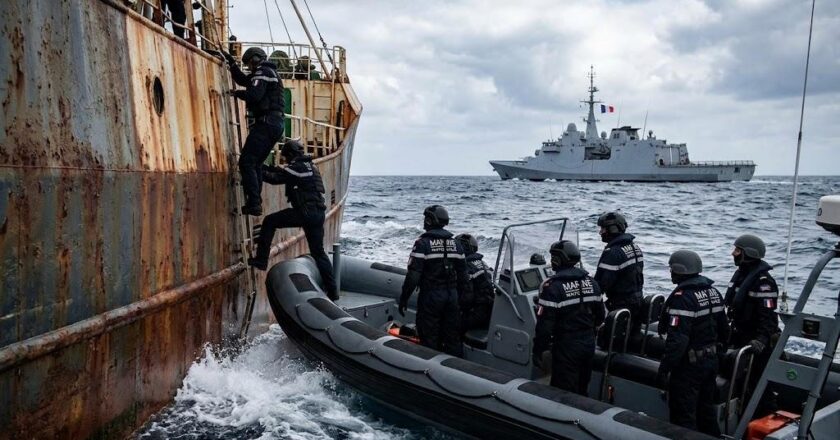
The interception of the DF Peak on October 12, 2026, far from African shores, has pulled back the curtain on a sophisticated scheme concealed beneath the Beninese flag. The operation, led by French naval forces deep in the Indian Ocean, exposed not just one rogue vessel but the intricate web of tactics employed by Moscow’s shadow fleet to evade global sanctions. The arrest in high seas: a meticulously planned operation Under the cover of darkness 450 nautical miles south of Réunion, the French Navy intercepted the 45,000 dwt DF Peak. The vessel, en route from Venezuela with Venezuelan crude reportedly bound for Asian markets, was sailing under what appeared to be a Beninese registration. French marines boarded the ship and immediately uncovered discrepancies in its documentation, fueling ...
Niger’s Goumeri W-8 oil blowout: what the delayed response reveals about local energy gaps
Actualités

Niger’s Goumeri W-8 oil blowout: what the delayed response reveals about local energy gaps

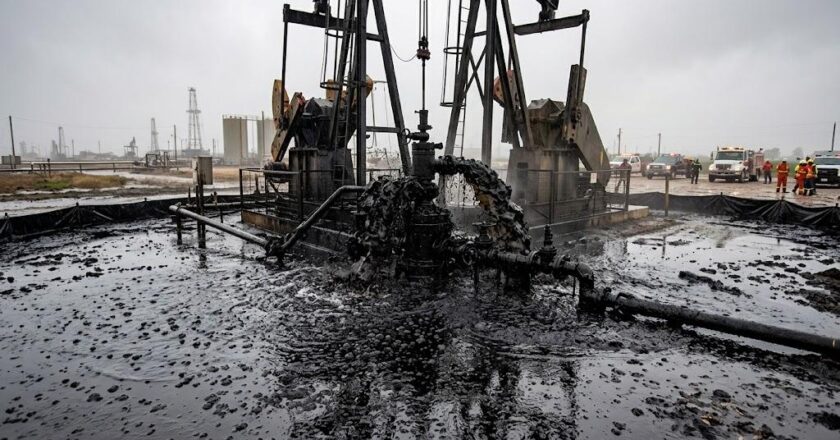
The clock was ticking faster than the crude spewing from well Goumeri W-8. For 17 days after the site began erupting on 25 September 2026, Niamey remained publicly silent while oil and gas roared skyward in a twelve-metre geyser on the Agadem block. Only on 12 October did the government acknowledge what satellite images and local activists had already documented: a blowout of ‘exceptional severity’ that threatens groundwater, two adjacent wells, and the livelihoods of nearby communities. The silence that amplified the crisis What delayed the official statement was not a lack of warnings, but a lack of technical capacity. Civil society groups, including the Environmental Network of Niger (GREN), had urged immediate action before hydrocarbons infiltrated soils and aquifers. While containmen...