Tuesday, November 3

A la Une

What the ECOWAS court’s five new judges reveal about West Africa’s judicial machinery
A la Une

What the ECOWAS court’s five new judges reveal about West Africa’s judicial machinery

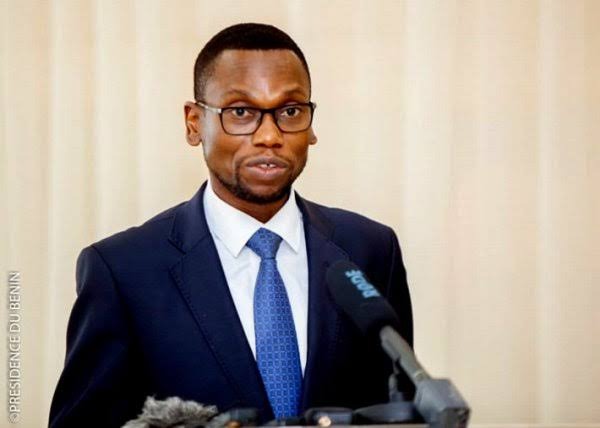
Five magistrates were sworn in on 6 October 2026 in Abuja, Nigeria, to join the Court of Justice of the Economic Community of West African States (ECOWAS). Among them is Désiré Henri Aihou of Benin. They begin a four-year non-renewable term. But behind the ceremony lies a deeper story about how West Africa's judicial machinery is being recalibrated — and why the composition of this bench matters far beyond the courtroom walls. The five jurists and the political process that selected them The new judges are: Awa Bah from The Gambia Charlyne M. Brumskine from Liberia Henrietta Uzoamaka Didigu from Nigeria Yaouza Ouro-Sama from Togo Désiré Henri Aihou from Benin Their appointment was decided at the 69th ordinary summit of the ECOWAS Authority of Heads of State and Government, held on 19...
Niger’s IMF programme: the $203 million thread weaving through Niamey’s refoundation paradox
A la Une

Niger’s IMF programme: the $203 million thread weaving through Niamey’s refoundation paradox

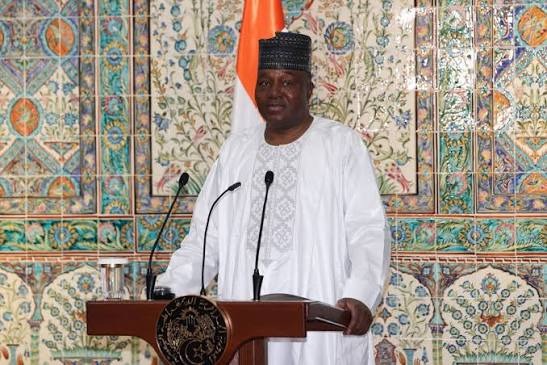
When Niger's transitional authorities made "national sovereignty" and "rejection of foreign oversight" the defining slogans of their political project, public finance arithmetic was always going to have the final word. On Thursday 8 October 2026, the International Monetary Fund announced a staff-level agreement reached after a mission to Niamey led by Ms Julia Bersch between 28 September and 8 October 2026 — a deal that quietly returns Washington's teams to the centre of the country's economic policymaking. A fresh 38-month arrangement and what sits beneath it Far from the rhetoric of self-reliance and rupture, Niamey has just completed the tenth and final review of its existing programme and committed to an entirely new one under the Extended Credit Facility. Running for 38 months, this...
Inside Benin’s 14 health projects: the driving forces behind a decisive push
A la Une

Inside Benin’s 14 health projects: the driving forces behind a decisive push

The strategic logic behind Benin's latest health investment Benin's government has taken a significant step in its ongoing effort to modernize public healthcare and narrow the persistent gaps in medical access. During a cabinet meeting on Wednesday, October 7, 2026, the executive branch approved the contractual arrangements with selected contractors, effectively clearing the way for construction to begin on fourteen health centers across the country. In parallel, the plan includes a comprehensive overhaul of the maternity ward at the Ouidah zone hospital. While the announcement may appear to be a routine infrastructure rollout, a closer look reveals a deliberate effort to address structural weaknesses that have long shaped health outcomes in underserved areas. The decision to bundle the co...
Inside Benin’s 2027 budget: the strategy behind the 4,757 billion FCFA figure
A la Une, Actualités

Inside Benin’s 2027 budget: the strategy behind the 4,757 billion FCFA figure

Benin's government has sent its draft finance bill for the 2027 fiscal year to the National Assembly for review and a vote. Balanced at 4,757.029 billion FCFA in both resources and spending — up from 4,148.357 billion FCFA in the amended 2026 budget — the plan represents a 14.7% increase. Behind that headline number lies a deliberate strategy: the government is aiming for 7.5% economic growth, holding the deficit at 2.8% of GDP, and channeling more money into sectors seen as pivotal to economic and social transformation. What the 14.7% jump really tells us The draft budget for 2027 marks a major expansion of Benin's financial firepower. At 4,757.029 billion FCFA, resources and charges rise by 608.672 billion FCFA compared with the amended 2026 projections. That gap points to a clear int...
Why Moussa Kaka’s case exposes deeper fault lines in Niger’s security apparatus
A la Une, Actualités

Why Moussa Kaka’s case exposes deeper fault lines in Niger’s security apparatus

The anatomy of a confirmation that raised more questions than it settledWhen Nigerien authorities finally broke their silence on the fate of journalist Moussa Kaka, the admission was as notable for what it revealed as for what it left unsaid. More than a month after Kaka vanished upon leaving the premises of Radio Télévision Saraounia in Niamey, the government confirmed on 6 October that he was "alive" and "held by the authorities." The disclosure, conveyed to Reporters Without Borders, marked the first official acknowledgment of his detention.Yet this confirmation, significant as it is, does not resolve the central ambiguities surrounding the case. The authorities have not publicly disclosed where Kaka is being held, what specific accusations he faces, or the precise legal basis for his d...
Inside Benin’s projected 7.7% growth for 2027: the forces behind a rare economic streak
A la Une, Actualités

Inside Benin’s projected 7.7% growth for 2027: the forces behind a rare economic streak

Benin is once again positioning itself as one of West Africa's most dynamic economic performers, and the latest World Bank projections explain why. Behind the headline numbers lies a story of deliberate policy choices, steady infrastructure investment, and a logistical overhaul that is quietly reshaping the country's growth path through 2027. The mechanics of a sustained expansion The World Bank expects Benin's economy to grow by 7.7% in 2027, following estimated expansions of 8.1% in 2025 and 7.8% in 2026. That trajectory places the country well above the average for sub-Saharan Africa, and it is not driven by extractive industries. Instead, the momentum comes from a combination of continuous infrastructure spending, the modernisation of port and agricultural logistics chains, and reform...
Inside Gabon’s poultry ban: why Washington’s WTO move is only half the story
A la Une

Inside Gabon’s poultry ban: why Washington’s WTO move is only half the story

With less than three months to go before Gabon's ban on imported broiler chicken takes effect on 1 January 2027, Libreville and Washington are squaring off in the arena of international trade. Yet the real story behind the poultry dispute runs deeper than chicken: it raises a question that has quietly shaped trade policy for decades — how far can a state go to shield its own producers before it runs afoul of World Trade Organization rules? The roots of the standoff The confrontation did not emerge overnight. In May 2025, Gabonese authorities announced that imports of broiler chicken would be prohibited from 1 January 2027. The stated aim was straightforward: give domestic production more room to grow, draw investment into the poultry sector, generate rural jobs and cut the country's reli...
Inside the Nigérienne des Eaux crisis: what Niger’s water audit reveals about contamination, stalled contracts and weak governance
A la Une

Inside the Nigérienne des Eaux crisis: what Niger’s water audit reveals about contamination, stalled contracts and weak governance

In West Africa, water security remains one of the most persistent challenges. For millions of households in Niger, access to safe drinking water is the last line of defense against disease. Yet a provisional audit by the country's Court of Accounts covering 2023 and 2024 — alongside recent public procurement procedures — paints a troubling picture of the state-owned water utility, the Nigérienne des Eaux (NDE). The findings point to a deeper story: a utility caught between aging infrastructure, financial hemorrhage and internal governance failures that together threaten public health and the continuity of a vital service. Bacterial contamination far above WHO safety thresholds Bacteriological analyses conducted across several regional centers reveal staggering deviations from World Healt...