Cameroon’s prolonged leadership gap fuels governance concerns
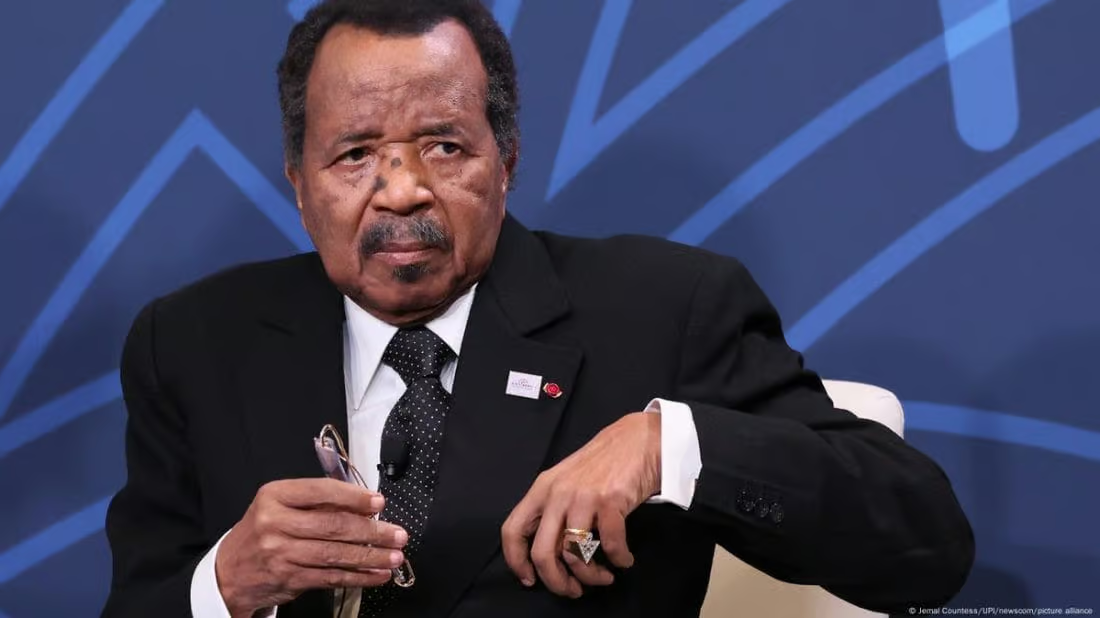 Paul Biya, the world’s oldest sitting leader © Jemal Countess/UPI/newscom/picture alliance
This prolonged silence has intensified rumors about his health, circulating widely across media outlets and social platforms. While authorities insist all state institutions remain fully operational, critics argue the lack of transparency raises serious questions about governance continuity.
Government defends stability amid growing doubts
In response to mounting speculation, the ruling Cameroon People’s Democratic Movement (CPDM) has sought to reassure the public. Writing in the party’s official newspaper L’Action on July 15, Christophe Mien Zok, the party’s propaganda director, dismissed claims of a power vacuum with a bold statement: “Power is not vacant. The Lion has not departed.” He emphasized that Cameroon’s political system operates without interruption, rejecting notions of remote governance or institutional paralysis.
State communications have continued to feature official messages from President Biya, including congratulatory notes to foreign leaders such as French President Emmanuel Macron on Bastille Day and to the President of Montenegro. Yet, no public appearances or detailed updates on the president’s activities have been released.
Opposition demands accountability and legal clarity
The prolonged absence has emboldened opposition voices calling for constitutional review. Deputy Jean-Michel Nintcheu has formally petitioned the Constitutional Council to assess whether the situation constitutes a potential power vacuum. Meanwhile, the Democratic Union of Cameroon (UDC) has underscored that while extended absences do not automatically trigger a vacancy, they expose critical gaps in governance continuity and the absence of clear mechanisms for temporary presidential incapacitation.
The UDC has also highlighted the lack of a designated vice president following a 2024 constitutional revision, warning that this structural weakness underscores the urgent need for institutional reforms. The party advocates for precise legal frameworks to govern presidential absences, ensuring state continuity and preventing institutional uncertainty.
Legal experts weigh in on constitutional gaps
Constitutional law specialists point out that once the 45-day absence threshold is crossed, the Constitutional Council may be compelled to examine the situation. However, Cameroon’s laws currently lack provisions defining a maximum duration for presidential absences from national territory.
The UDC reiterates that without legal safeguards, prolonged presidential absence risks destabilizing governance. As the debate intensifies between the government and opposition, authorities maintain that institutions function normally, while critics demand greater transparency and a robust constitutional response to such exceptional circumstances.