President Biya’s military shake-up as absence fuels speculation
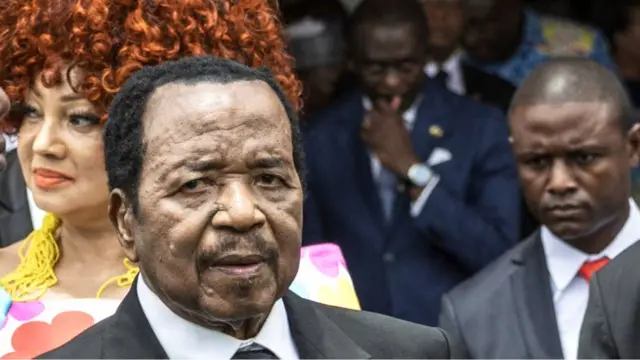
President Paul Biya of Cameroon, a long-standing national figure, has initiated an army reshuffle. This move comes as public apprehension grows over his nearly two-month absence from the country, fueling questions about governance Africa.
The 93-year-old head of state appointed new officials to critical military positions and elevated five colonels to the rank of brigadier general.
Such military adjustments are not uncommon during Biya’s lengthy tenure, often occurring amidst significant public pressure or periods of perceived vulnerability.
Three years prior, an unexpected coup in neighboring Gabon, which ousted the Bongo dynasty and sent shockwaves across the African continent, prompted an immediate restructuring of Cameroon’s military command. This highlights the dynamics of African politics.
Subsequently, as he sought a contentious eighth term during last year’s presidential election, President Biya again reorganized the army’s senior ranks.
Just last June, he once more promoted numerous personnel within the defense and security forces to higher ranks.
The specific timing and context of these latest changes have ignited considerable debate, particularly across social media platforms.
President Biya issued these separate decrees on Monday from Geneva, Switzerland. He has been residing there since departing Cameroon on June 7th for what his staff termed a “brief private stay.”
Within Cameroon, many citizens have voiced criticism regarding the scarcity of information about his activities and the ongoing uncertainty surrounding the duration of his international trip. This speaks to concerns about society Africa.
Following last year’s elections, he pledged to appoint a new government, a promise that remains unfulfilled. The vice-presidency, a position established last April, also continues to be vacant.
Throughout his nearly 60-day absence abroad, he has signed several other decrees, including some that authorize his administration to finalize loan agreements with international financial institutions.
His prolonged absence has fueled renewed speculation concerning his health, yet the government has consistently refuted any claims of the head of state being hospitalized.
Press freedom organizations expressed outrage two years ago when Cameroonian media outlets were reportedly prohibited from reporting on President Biya’s health status. This highlights issues for independent African journalism.
Cameroon’s Minister of Communication, René Emmanuel Sadi, affirmed in an interview that the president was alive and would soon return to the country.
He also dismissed opposition allegations that the nonagenarian leader’s absence constituted a vacancy at the head of state, asserting that Biya continues to conduct affairs from Geneva.
However, the extended absence of President Biya signifies a “flagrant institutional void” for Cameroon, according to Mamadou Mota, Vice-President of the opposition CRM party.
“Executive power must be exercised at the nation’s core, not through smoke signals or telepathy from hotel suites across the globe,” he stated last month, emphasizing the need for transparent governance Africa.